“We cannot be indifferent to the desperate situation that Cubans are experiencing today,” said Dmitry Peskov.
Following weeks of anticipation, the Russian oil tanker Anatoly Kolodkin finally arrived in the Cuban port of Matanzas this Tuesday morning after breaking the Trump administration’s de facto energy blockade of the Caribbean island. The oil arrives as the deadly consequences of Washington’s energy embargo began to attract the attention of MSM outlets in the US.
The Russian tanker Anatoly Kolodkin has arrived in Cuba carrying a full load of crude oil, providing a critical energy supply to the island amid a U.S. oil blockade. This video by a local TV Yumurí journalist shows the vessel docking at the port of Matanzas this morning. pic.twitter.com/bwuTFwirHd
The last time the Cuban government received oil imports was in early January, just before the US commandeered the oil supplies of Cuba’s biggest oil provider, Venezuela, after kidnapping President Maduro. Trump then signed Executive Order 14380, imposing harsh tariffs on any country caught “directly or indirectly” supplying oil to Cuba. The main target of that order was Cuba’s second largest supplier, Mexico, which promptly suspended all oil shipments to Havana.
Carrying 730,000 barrels of crude, the Anatoly Kolodkin is not only subject to EU, UK and US sanctions; it is also named after a prominent Russian lawyer who specialised in maritime law. I trust readers will appreciate the irony given the flagrant illegality of the Trump administration’s energy blockade of Cuba. From the Russian shipping company SCF’s website:
Anatoly Kolodkin (1928-2011) was an outstanding Russian lawyer specializing in maritime law, doctor of legal sciences, professor of Moscow State Law Academy, judge at the UN International Tribunal for Ocean Affairs and the Law of the Sea (Hamburg), and member of the International Court of Justice (the Hague).
Anatoly Kolodkin dedicated most of his life to maritime transportation and international maritime law; becoming an established representative of the USSR, and then Russia, at various international organisations. Kolodkin’s scientific works in the field of international maritime law have been published in many countries around the world.
Anatoly Kolodkin is an Honoured Scientist of the Russian Federation and was awarded the Order of Honour and the Order of Friendship.
“We are pleased that this batch of petroleum derivatives has arrived on the island,” Russian President Vladimir Putin’s spokesman, Dimitry Peskov, said on Monday. The oil shipment was apparently discussed in advance with US officials. Peskov also suggested that Russia is considering sending more oil shipments to Cuba:
Russia considers it its duty not to stand aside and to provide the necessary help to Cuban friends… We cannot be indifferent to the desperate situation that Cubans are experiencing today.
Russia is pleased that a shipment of its oil reached Cuba despite a de facto US blockade of the island, Kremlin spokesman Dmitry Peskov tells reporters.#Russiapic.twitter.com/mo2rEG96CG
The Western media have tried to sell the news in the most positive light imaginable for the West by portraying the tanker’s arrival as the result of a magnanimous act by Washington. The NYT was the first outlet to break the story (early Sunday afternoon, EST) in its piece (emphasis my own): U.S. Allows Russian Oil Tanker to Reach Cuba, Despite Blockade:
The US Coast Guard has allowed a Russian oil tanker loaded with crude oil to reach Cuba, supplying crucial energy to the island nation after a months-long de facto oil blockade imposed by the Trump administration.
The tanker, which carries about 730,000 barrels of oil and belongs to the Russian government, was just a few miles from Cuban territorial waters on Sunday night, according to MarineTraffic, a maritime data company. At its speed of 12 knots, the tanker could reach its planned destination in Matanzas, Cuba, on Monday night.
The arrival of the Russian ship could change the course of a rapidly accelerating crisis in Cuba, giving the island at least a few weeks of leeway before its fuel reserves are exhausted, analysts say.
In the hours that followed, just about every other Western media outlet parroted the same line — in an act of generosity, the Trump administration was “allowing” energy to finally reach Cuba:
The worst headline came from Spanish public broadcaster RTVE, which suggests that it was Washington itself that had broken Trump’s energy blockade on Cuba:
The US breaks the Cuban blockade and allows the arrival of a Russian oil tanker to the island.
Estados Unidos rompe el bloqueo con Cuba y permite la llegada de un buque petrolero ruso a la isla https://t.co/iLCRdIzu2L
Hours later, Trump himself appeared to endorse this grandiose narrative, telling reporters on Air Force One that he had given Russia — “and other countries” — the green light to send oil to Cuba. How long this will last and which “other countries” it applies to is anyone’s guess:
Cuba, Trump said, “needs to survive” — words that might be comforting if they weren’t coming from the lips of a man whose actions have already led to the deaths of an unknowable number of Cubans. From the New York Times‘ recent piece, “Cuban Patients Are Dying Because of U.S. Blockade, Doctors Say“:
The U.S. oil blockade on Cuba is fast exhausting the country’s supply of fuel, causing daily blackouts, food shortages, canceled classes and black-market gas prices approaching $40 a gallon. It is also crippling Cuba’s universal health care system, a state institution once considered a triumph for a poor nation, but is now struggling to provide basic care.
In interviews, six Cuban doctors said that rapidly deteriorating conditions at hospitals and clinics across Cuba were causing deaths that would otherwise be preventable.
“I can’t tell you how many deaths, but I’m sure there are more than in the same period last year,” said Dr. Alioth Fernandez, chief anesthesiologist at Havana’s largest pediatric hospital. “I see it in shift handovers, in colleagues’ comments and in children I’ve operated on.”
Reporter: There's a report that the US is going to let a Russian oil tanker go to Cuba? Is that true?
Trump: If a country wants to send some oil into Cuba right now. I have no problem with that.
Reporter: Do you worry that that helps Vladimir Putin?
Needless to say, the new narrative framing, that the US is now letting oil tankers access Cuban ports, has a few flaws, most notably this one:
If Trump dictates which tankers can access Cuba’s ports, then he has no right to complain when Iran dictates which tankers can pass through the Strait of Hormuz.#Iran#Cubapic.twitter.com/98tdeBoI36
There are plenty of possible reasons why the US declined to enforce its de facto oil embargo on Cuba (five of which are explored in today’s cross-posted piece by Andrew Korybko). While we cannot know for sure which are the true reasons, it is hard not to see this latest policy reversal, however welcome it may be, as yet another instance of Trump chickening out.
Then again, the reversal could itself be swiftly reversed at any moment. As Fiorella Isabel points out that the arrival of the Anatoly Kolodkin, while most likely “not an act of defiance by Russia” but rather “a meditated and strategically pre-agreed move”, as hinted at by Peskov, nonetheless has potentially important implications.
Ultimately the people of Cuba will gain momentary respite which is needed. But this oil will last >3 weeks, a month tops. The UN has done nothing. If Trump’s serious, everyone who can should break the siege. But if this was just a deal with Moscow then Cuba will be left in peril again.
Russia is already emerging as one of the biggest beneficiaries of the Trump and Netanyahu’s disastrous and hugely distracting war on Iran — distracting not just in terms of focus but also resources. As Politico reported six days ago in “The Russian oil tanker playing chicken with Trump over Cuba,” while Russia’s attempt to provide oil to Cuba “may be half-hearted in the face of US maritime opposition, Russia watchers say the signal it sends is not”.
The Anatoly Kolodkin is steaming toward the Caribbean.
The Russian oil tanker’s official destination, according to one of its public broadcasts: “Atlantis, USA.” More probably, it’s the Cuban port of Matanzas.
Ferrying an estimated 730,000 barrels of crude oil across the Atlantic, the tanker is flying a Russian flag. A Russian warship escorted it through the English Channel, where it was tracked by the Royal Navy for 48 hours, only to turn back as soon as the tanker was clear.
While the Kremlin declined to confirm reports of Russian oil heading to Cuba, it also has made little effort to conceal its hand.
That’s because the tanker was never really about Cuba at all, people close to the White House, former ambassadors and Russia observers told POLITICO. It’s a message, they said — a negotiating chit, a provocation designed to force a disproportionate American response while Washington is consumed elsewhere.
“Russia loves to poke us in the eye,” Lawrence Gumbiner, who led the U.S. Embassy in Havana during President Donald Trump’s first term, said in an interview. Russia, he said, isn’t “serious about coming to Cuba’s rescue.”
“It’s not in their interest to pick a fight with Trump over something that is so, so clearly within the U.S. orbit as Trump has defined it,” Gumbiner said — a reference to Trump’s so-called “Donroe Doctrine” to assert U.S. dominance in the Western Hemisphere and diminish the influence of adversaries like Russia and China.
Note that the Politico article, and other MSM accounts, claim that the Anatoly Kolodkin was escorted by a Russian warship through the English Channel, but was then left to cross the Atlantic unaccompanied. Some pro-Russian social media accounts (such as this one) have made claims that the tanker was actually escorted by a military frigate and/or submarine, but I have found no evidence to support this.
One of the few things that is clear is that Trump’s policy reversal decision took place some time between March 20-29. On March 20, the US Treasury Department explicitly declared that Cuba would not be allowed to benefit from the US’ recent lifting of sanctions on Russian oil, even as Russian tankers headed its way. From CNBC:
In a general license published Thursday, the Treasury’s Office of Foreign Assets Control (OFAC) added Cuba to a list of countries that would be blocked from transactions involving the sale, delivery or offloading of crude or petroleum products that originate from Russia.
The U.S. had temporarily authorized the purchase of Russian oil stranded at sea last week, as part of an effort to stabilize energy markets during the U.S. and Israeli-led war on Iran. The short-term measure suspended sanctions that were first imposed on Moscow following its full-scale invasion of Ukraine.
The update comes as maritime intelligence providers have been tracking two tankers carrying Russian oil and gas heading toward Cuba.
Nine days later, this happened…
Russia has always opposed illegal unilateral sanctions harming ordinary people. Delivery of Russian oil to Cuba helps support electricity generation, healthcare, and essential services for the population. Cooperation & solidarity should prevail over pressure and restrictions 🇷🇺🇨🇺 https://t.co/rVUN4FJJ2B
— Russian Embassy in Kenya/Посольство России в Кении (@russembkenya) March 30, 2026
In an interview on Friday, just two days before the Kolodkin’s arrival, Secretary of State Marco Rubio made the absurd claim that Cuba doesn’t have a naval blockade surrounding it, adding that the reason why the island nation doesn’t have oil is that it wants the stuff for free. The lie regarding the blockade was so flagrant that it was even awarded a community note on X.
The community note is hilarious because everyone knows the truth and Rubio still acts like we can't see it. https://t.co/XLFFCxEjZW
Yesterday, Rubio doubled down on the lies, claiming in an interview with Al Jazeera that the blackouts in Cuba “have nothing to do with us.” While it is true that Cuba was already having power cuts long before the US’ de facto oil blockade, Rubio’s claims of US innocence are simultaneously risible and deeply disturbing. They also suggest that narrative control is becoming a serious problem for the administration’s Cuba strategy (if one can call it that).
🇺🇸🇨🇺 Secretary of State Narco Jubio on Cuba:
These blackouts that are occurring that I see people reporting have nothing to do with us. pic.twitter.com/oyGpmYFeF5
The US’ energy blockade of Cuba always had an obvious flaw — its reliance on the threat of tariffs against any country that broke it. After all, not all countries are intimidated by Trump’s tariffs. In our Feb 24 post, “Russia Just Denied Claims It Is Planning to Break the US’ Oil Blockade of Cuba, Albeit Only Partially“, we noted it would take only one or two countries to break the blockade, with the two most obvious candidates being China and Russia:
For its part, China has less to worry about from Trump’s tariff threats than just about any other nation. As we saw in its recent showdown with Washington over rare earth minerals, Beijing can more than hold its own in any tit-for-tat tariff escalation with the US:
Also, Cuba, unlike Venezuela, is a BRICS associate partner. As the Cuban commentator El Necio argues, if Cuba is hung out to dry, the message to the Global South will be that BRICS membership counts for little, if anything, especially as the US becomes increasingly assertive on the global chessboard…
Moscow could also send a tanker or two, though it would risk inflaming tensions with the US just as the two countries are locked in negotiations to end the Ukraine conflict. That said, those negotiations appear to be going nowhere as the US increasingly targets Russia’s shadow fleet. Russia certainly has oil to spare for Cuba as well as the capacity to provide naval protection. Plus, it’s already on the receiving end of just about every US, EU and UK sanction imaginable.
The two big questions that come to mind now are: a) whether Russia will send more shipments in the coming days or weeks; and b) whether other oil producing countries will try to follow Moscow’s example and take advantage of this brief window of opportunity…
While the War Department says it is currently focused on partner-led deterrence operations, it does not not rule out unilateral US strikes across Latin America.
Given the scale of the carnage and economic fallout from the US-Israeli war on Iran, it’s easy to forget all the other military misadventures Washington is currently engaged in. The Pentagon is still knee deep in the Ukraine conflict, even as the Trump administration talks of diverting military aid from Kiev to West Asia. It is also increasingly involved in military operations in its own “back yard”, as it likes to call Latin America — not just at sea but on land.
On March 6, we relayed that the US military was opening up a new front against so-called “narco terrorists” in Ecuador. The Pentagon had just announced the launch of joint US-Ecuadorian operations against “designated terrorist organizations” in the Andean country. The statement was accompanied by footage of figures boarding military helicopters, the helicopters then taking off and an explosion.
The video was intended to show that the Pentagon, which for months had been directing the bombing of boats it claimed was carrying drugs from South America, is “now bombing Narco Terrorists on land,” Defense Secretary Pete Hegseth wrote on social media.” In reality, as an exposé by the New York Times reveals, the actual target of the attack appears to have been a dairy farm in the small village of San Martín, on Ecuador’s northern border with Colombia:
Workers on the farm told The Times that Ecuadorean soldiers arrived by helicopter on March 3, doused several shelters and sheds with gasoline and ignited them after interrogating workers and beating four of them with the butts of their guns. Three of the workers, who requested anonymity for fear of retaliation by the government, said the soldiers later choked and subjected them to electrical shocks before letting them go.
Village residents said Ecuadorean helicopters returned to the farm three days later, on March 6, and appeared to drop explosives on the farm’s smoldering remains. It was at that point, they said, that Ecuadorean soldiers recorded the footage that U.S. and Ecuadorean officials said captured the bombing of a traffickers’ compound…
The Ecuadorean government said in the news release that it had relied on U.S. “intelligence and support” to target the farm, which it said was a camp used to train “about 50 drug traffickers.”
Ecuadorean officials also said it was a “resting place” used by the leader of Comandos de la Frontera, a Colombian armed group that moves cocaine along the Ecuador-Colombia border, according to the authorities.
The Ecuadorean military referred questions to President Daniel Noboa, who did not respond to a detailed list of questions…
The dairy farm’s owner, Miguel, said he bought the 350-acre farm about six years ago for $9,000, growing it to more than 50 cows used for milk and meat.
Miguel, a 32-year-old carpenter and father of two, asked to be identified by only his first name for fear of retaliation by the government. He showed The Times the land’s property title that listed him as its owner, as well as photos of the farm before it was demolished.
As Miguel stood in the rubble, he denied that his farm was used as a training camp, and said he was baffled by the military’s decision to bomb the property.
Jaw-dropping: The U.S. and Ecuador said they had cooperated to blow up a cocaine trafficking operation. Our reporters visited and found it was just a dairy farm, whose residents were brutalized by Ecuadorian soldiers acting on Pentagon intelligence. https://t.co/YHJvLXpnQCpic.twitter.com/IAbotYyIls
CEPR’s Jake Jonson adds more detail (for some reason twitter won’t let me embed the tweet):
More on that joint US-Ecuador military bombing, from @USATODAY
There is video of the Ecuadorian military taking away villagers, heads covered with black bags, days ahead of the bombing . The troops fire apparent warning shots at others watching.
Days later, after being tortured, they were dropped on the side of the road hours away from their homes and told they’d be killed if they said anything. US response: our operations are meticulously planned and “any insinuation otherwise is false.” This is going to get worse and worse…
This was all too predictable. We ourselves flagged the risks of the US’ militarisation of Ecuador back in May 2024, six months before Trump re-entered the White House, when the then-commander of US Southern Command, General Laura Richardson, was describing the disastrous “Plan Colombia” as a model for the entire region:
All of Ecuador is now one giant US military base. And its president is arguably more American than Ecuadorian. At least three years of careful planning and deliberation has finally borne fruit: the US has a new ops centre in Latin America — and what’s more, in one of the few countries on the planet to have the temerity to vote in a referendum to close down all US military bases on its territory and force all US soldiers to withdraw. That was in 2009. Now, US soldiers and military bases are back with a vengeance.
To give a little flavour of the new situation in Ecuador, here are a few excerpts of the “Statute for the Permanence of US Troops in Ecuador” signed by the Noboa government in January (machine translated):
Article 2
United States personnel will be granted privileges, exemptions and immunity equivalent to those granted to the administrative and technical personnel of diplomatic missions under the Vienna Convention on Diplomatic Relations of April 18, 1961. United States personnel will be able to enter and leave the territory of the Republic of Ecuador with US identification and with orders for collective movement or individual travel… United States personnel will be authorised to wear a uniform while fulfilling official duties and to carry weapons while on duty, if authorised by their orders…
Article 4
Personnel of the United States Department of Defense such as those of the United States will not be responsible for paying any tax or similar charge imposed within the territory of Ecuador, and such personnel may import into Ecuador, export from it and use in its territory any personal property, equipment, supplies, equipment, technology, training or services in connection with activities under this Agreement. Said import, export and use will be exempt from any inspection, license, other restrictions, customs fees, taxes or any other charge applied within the territory of Ecuador.
Given the long, storied history of involvement of US troops and CIA agents in drug trafficking operations…, one can’t help but wonder whether Ecuador is about to see a sharp increase in cocaine exports to Europe and other parts of the world, just as happened with heroin in Afghanistan after the US-NATO invasion and occupation of that country. Ecuador is already believed to be the largest departure point for cocaine to Western and Central Europe.
Now, just under two years later, Ecuador is the largest departure point for cocaine to the entire world. As Infobae reported in December, Ecuador has become the global “superhighway” for cocaine, with 70% of global traffic passing through its territory.
Most of that traffic passes through the country’s coastal ports, where President Noboa’s family’s businesses, Noboa Trading Co., has a particularly large presence. The company has been accused of participating in a massive conspiracy with the Albanian mafia to transport drugs to Europe in banana crates.
Here's US DHS Secretary Kristi Noem with the head of the Noboa Trading Co. implicated in a massive conspiracy with the Balkan mafia to ship drugs to Europe in banana crates
US-born Pres. Daniel Noboa has transformed Ecuador into one of the world's most dangerous countries https://t.co/mXfVU8xmdx
Meanwhile, Noboa’s US-assisted security crackdown is intensifying. Washington recently established its first permanent FBI branch in Ecuador, where it joins agents from the US Drug Enforcement Administration and the Department of Homeland Security.
As the US presence in the country has grown, so too has the Noboa government’s political repression. Earlier this month, Ecuador’s largest political movement, the left-leaning Citizen Revolution party, was banned, to a chorus of almost total silence from the Western media.
These developments bear disturbing echoes of the US’ dirty wars in Latin America during the Cold War as well as the human rights abuses committed under Plan Colombia (2000-15), including more than 3,000 extrajudicial executions by the US-funded security forces.
Plan Colombia itself had little to no impact on cocaine trafficking. In fact, global cocaine production reached the highest level ever reported in 2016, with most of the production coming from Colombia, according to the United Nations’ World Drugs Report 2018 (quelle coincidence!).
In 2020, the US House of Representatives Foreign Affairs Committee admitted that Plan Colombia had been a resounding failure from a counter-narcotics perspective. It did, however, provide short-term benefits from a counter-insurgency perspective, which was almost certainly one of the initiative’s main goals.
“Operation Total Extermination”
Teaming up with narco-controlled governments is a common feature of US counter-narcotics policy. Throughout the post WW2 period, Washington has partnered with governments in the region that were either directly engaged in trafficking or closely allied with traffickers, from Cuba’s Fulgencio Batista to Chile’s Augusto Pinochet, to Panama’s Manuel Noriega, to Colombia’s Alvaro Uribe and Honduras’ Juan Orlando Hernandez, whom Trump just pardoned.
As reader Tom Dority put it a few weeks back, “this is not a ‘fight against’ (narco-terrorists) but is a fight for control of the ownership of the drug trades” — a fight that US government agencies, particularly the CIA, have been waging for decades. It is also a pretext for reimposing US dominion over Latin America and its vast deposits of strategic minerals, at a time when the US is trying to ween itself off Chinese-controlled supply chains.
The recent military attacks in Ecuador are a foretaste of what could be in store for the broader region as the US expands its so-called “war” on the drug cartels. In an excellent piece for The Intercept, Nick Turse notes that the US’ intensifying military efforts in the Western hemisphere has a new name, and it’s not exactly subtle: “Operation Total Extermination”:
Attacks on Latin American drug cartels are “just the beginning”, Joseph Humire, the acting assistant secretary of war for homeland defense and Americas security affairs, told members of the House Armed Services Committee last week.
Humire indicated that many more strikes in Latin America are on the horizon. The comments came a day after President Donald Trump again teased American annexation of Cuba. “I do believe I’ll be the honor of — having the honor of taking Cuba,” Trump said last week. “Whether I free it, take it, I think I can do anything I want with it.”
Humire announced that the Department of War supported “bilateral kinetic actions against cartel targets along the Colombia-Ecuador border” — Pentagon-speak for March 3 strikes on unnamed “Designated Terrorist Organizations” previously reported by The Intercept. “The joint effort, named ‘Operation Total Extermination,’ is the start of a military offensive by Ecuador against transnational criminal organizations with the support of the U.S.,” he said.
The U.S.–Ecuadorian campaign has already strayed into Colombia after a farm was bombed or hit by “ricochet effect” on March 3, leaving an unexploded 500-pound bomb lying in Colombia’s border region. In response to a request for comment, U.S. Southern Command referred The Intercept to a statement on X by the Ecuadorian Ministry of Defense confirming the bomb landed in Colombia.
On May 17, Colombia’s President Gustavo Petro said that Ecuador’s bombings on the Ecuador-Colombian border had left “27 charred bodies” in Colombia. The alleged cause of death was a bomb recovered near homes that had been “dropped from a plane,” and did not match weapons used by armed groups or Colombia’s military, which he said did not authorize any strike.
Petro apparently asked President Trump to speak to Noboa “because we don’t want to go to war.” Daniel Noboa rejected the accusation, claiming military operations — supported by “international cooperation” — are being carried out within Ecuador’s territory against organized crime and illegal mining groups, some of them linked to Colombia.
As Drop Site News notes, citing separate reporting by Revista RAYA, there have been similar unexplained bombings in Nariño in recent weeks, leaving dozens dead with no group claiming responsibility. The dispute take place amid a deepening trade war that began in late January 2026, when Ecuador imposed tariffs of up to 50% on Colombian goods. Colombia responded soon after with 30% tariffs and halted electricity exports.
New Regime Change Target
Noboa is clearly happy for the US to use Ecuador as a lancehead against Colombia’s left-wing government and other thorns in the US’ side. Washington is also resorting to lawfare campaigns against Colombian President Gustavo Petro. Just a few days ago, the US Justice Department leaked to the Times that Petro is under criminal investigation for allegedly receiving electoral financing from drug traffickers for his triumphant run in the 2022 presidential election.
The timing is certainly curious — just two months before Colombians head to the polls to vote in new presidential elections…
“We will not be complicit in something that is bad for the world and that is also contrary to our values and interests, simply out of fear of reprisals from someone.”
After refusing to take part in Trump and Israel’s “illegal” war in Iran, Spanish Prime Minister Pedro Sánchez has become an unlikely hero in parts of the Middle East, particularly Iran. Tasnim news agency reported yesterday (March 23) that members of Iran’s Revolutionary Guard had even taken to placing stickers on their missiles bearing a photograph of Sánchez alongside a text in Arabic and English that reads:
“Of course, this is not only an illegal war, it is also an inhumane war. Thank you, Prime Minister.”
🇪🇸🇮🇷 A missile launched in the 75th wave of “Operation True Promise 4” bore a sticker of Spanish Prime Minister Pedro Sánchez’s face, video shared by Iranian media shows.
The display comes as Sánchez has repeatedly labeled the U.S.-Israeli actions “illegal,” “unjustified,” and… pic.twitter.com/WdbAyPbVDa
The news, of course, was manna from heaven for Israel’s Netanyahu government, which is trying its damnedest to drag European governments into the war — including, allegedly, by launching a false flag attack on the UK’s Diego Garcia base in the Indian Ocean. Here’s the Israeli Foreign Ministry’s response to Sánchez’s newfound popularity in Iran, presented with the usual breathtaking hypocrisy:
🇪🇸 Pedro Sánchez – Iran’s mullah regime is thanking you by putting your words on the missiles it fires at civilians in Israel and the Arab world.
How does it feel knowing your face & words are on these missiles?
Just over three weeks ago, Sánchez became the first European head of state or government to categorically deny US forces permission to use jointly operated bases in their territory for the purpose of Trump’s war against Iran. As we warned at the time, the move risked incurring the wrath of Trump, especially coming on top of Madrid’s refusal to increase Spain’s military spending to 5% of GDP and its recent imposition of sanctions on Israel.
Trump responded initially by threatening to cut off all trade with Spain — a threat he has not yet delivered on, perhaps because the US has an actual trade surplus with Spain. Also, Spain’s exports to the US account for around 4-5% of its total export base, according toEuro News. That is significantly less than some other European economies, including the Republic of Ireland (25%), Germany (10%), Italy (10%) and France (9%).
Further complicating matters is the fact that many of the US’ trade ties with Spain fall within broader trade agreements with the European Union. Meanwhile, new tariffs could get held up in US courts. But all’s not lost. In a recent WSJ op-ed, subtly titled “How Trump Can Punish Spain“, Eugene Kontorovich, a senior research fellow at the Heritage Foundation, proposed another option: adding Spain to the US federal list of foreign boycotters:
These laws provide significant authority to impose economic costs on Spain. They are a fitting tool, since they respond to the leftist turn by Spain—a North Atlantic Treaty Organization member—against America and its allies.
These laws were adopted in the late 1970s with the Arab League Boycott of Israel in mind but were written generally to cover boycotts of any country with which the U.S. has normal trade relations. The laws have been repeatedly sustained by U.S. courts against challenges on First Amendment grounds. That is because they don’t forbid companies themselves from boycotting a country on ideological grounds, only from doing so at the behest of or in concert with a foreign boycotting state.
These antiboycott measures have been enforced with far less frequency in recent decades as Arab states increasingly abandoned their boycott of Israel. But late last year Spain joined Yemen, Iraq and a handful of other states maintaining an Israel boycott. The move was part of the same political orientation that led it to turn down the U.S. in its time of need.
The Ribicoff Amendment, passed as part of the Tax Reform Act of 1976, requires that the Treasury Department maintain a “current list of countries which require or may require participation in or cooperation with an international boycott.” Being on the list isn’t harmful in itself but it does trigger tax consequences for U.S. companies doing business in listed countries.
“No to War”
Sánchez’s response to Trump’s threat to cut all trade with Spain was to deliver a 10-minute televised address with the rather insipid title: “An institutional declaration by the prime minister to assess recent international events.” In the speech, Sánchez dusted off the slogan used by millions of anti-war protesters 23 years ago against Bush, Blair and Aznar’s Iraq misadventure: “no a la guerra” (no to war).*
The thrust of the Spanish prime minister’s argument was that another war in the Middle East would claim numerous lives, further destabilise the world and have dire economic consequences – but many of its paragraphs were unambiguously personal.
A government’s overriding duty, said Sánchez, was to protect and improve the lives of its citizens, not to manipulate or profit from global conflicts.
“It is absolutely unacceptable that those leaders who are incapable of fulfilling this duty use the smokescreen of war to hide their failure and, in the process, line the pockets of a select few – the same ones as always; the only ones who profit when the world stops building hospitals and starts building missiles,” he said.
Then came the lines: “It is naive to believe that democracies or respect between nations can spring from ruins. Or to think that practising blind and servile obedience is a form of leadership … We will not be complicit in something that is bad for the world and that is also contrary to our values and interests, simply out of fear of reprisals from someone.”
Who “someone” was needed no explanation.
A little added background to Spain’s “No to War” historic moment, courtesy ofEl País:
It is a slogan that brings back painful memories (for the PP) of Spain’s support for a US invasion justified by a falsehood – weapons of mass destruction – of the start of a war that left Iraq in chaos and the demonstration of the left’s capacity to rally and stage a comeback. Indirectly, it refers to the subsequent refusal of the government of José María Aznar and the PP of Mariano Rajoy to recognize the Islamist authorship of the 11-M attacks to prevent these attacks from being linked to Iraq.
Since making his “No to War” speech three weeks ago, Sánchez has continued to express opposition to the conflict in West Asia, including from the seat of EU power in Brussels:
NOW : Spanish 🇪🇸 PM Pedro Sánchez went for European Council meet and took stand against Trump on behalf of Europe
"Not just Spain, entire Europe is against this illegal war in Iran. We won't join it no matter what"
In a speech to Spain’s Congress on Friday, Sánchez stepped up his the war in a broadside against the refusal of his biggest opposition rival, the People’s Party’s Albert Feijoo, to take an unambiguous position on the war:
You do not make it clear whether you support Trump and Israel’s war in Iran. You do not make it clear. But you cannot encourage and support those who start the fire and then complain about the effects of the smoke the fire causes. He has been wrong for 18 days of war.
🇪🇸🇺🇸 Spaniard PM Pedro Sanchez on Iran war:
"Trump is someone who will set the world on fire and then blame smoke caused by that.
If Spain’s two main opposition parties, the Popular Party and far-right Vox, were to win the next election, the resulting government would not only unquestioningly support Trump’s illegal wars in the Middle East, Latin America and wherever else but would also lend its full backing to Israel’s genocide in Gaza. It would be like having a Milei government in Southern Europe.
Sánchez demanded on Sunday the prompt reopening of the Strait of Hormuz and “the preservation of all energy deposits” in the Middle East as strikes from both sides increasingly target energy infrastructure.
The Art of Political Survival
A few months ago, Sánchez appeared to be on the ropes as a succession of scandals, including one involving his own wife, rocked his government. Now, he is being held up as one of Europe’s most important leaders after first downgrading Spain’s diplomatic ties with Israel, earlier this month, and now emphatically rejecting Trump’s demands for Europe to lend support for his disastrous illegal war of aggression against Iran.
Sánchez’s foreign policy shift over the past year is as much about political expedience as it is morality. The “Frankenstein” coalition he has led for almost eight years includes pacifist left-wing parties like Podemos, Bildu and Esquerra Republicana that could collapse the government if it agreed to support or facilitate the US’ attacks against Iran. They consider what Israel is doing in Gaza as genocide, as does an overwhelming majority of the Spanish people.
When thousands of pro-Palestine protesters brought the final stage of the Vuelta cycling race to a grinding halt in protest of the participation of an Israeli team, Sánchez was left with a choice: condemn the acts and trigger the likely collapse of his government or hitch his wagon to the anti-genocide movement. And Sánchez is, if nothing else, an innate political survivor.
The contrast could not be starker with other European “leaders”, who have hemmed and hawed nonstop since the war against Iran began over three weeks ago. On Day one, Germany’s Friedrich Merz pronounced from the Oval Room that he and President Trump were on the same page regarding Iran. He even backed Trump’s proposal to embargo Spain, citing Madrid’s failure to increase military spending.
NOW – Germany's Merz supports U.S. embargoing Spain, claims it's to "convince" them to increase NATO spending. pic.twitter.com/YdVEi4ucsF
It then took Merz all of thirteen days to come to the conclusion that the US-Israeli war on Iran is not, after all, Berlin’s war. But that does not mean that Berlin is not party to it:
GERMANY EXPOSED AS US VASSAL BY IRAN: RAMSTEIN WAR ROLE DEMANDED
Iran's ambassador has delivered a sharp challenge to Berlin's claims of neutrality. He demanded clarity on whether Ramstein Air Base is coordinating or supporting strikes against Iran. This question under… pic.twitter.com/BCc8YU2lBv
Under UN General Assembly Resolution 3314, the closest provision is Article 3(f). It states that aggression includes: “the action of a State in allowing its territory, which it has placed at the disposal of another State, to be used by that other State for…
The same goes for the United Kingdom whose Starmer government insists it will not be drawn into the US-Israeli war with Iran even as multiple US bombers take off each day from UK airbases to attack Iranian targets — but only as part of “defensive” manoeuvres.
Nick Watt, "Keir Starmer said there is an attempt to put pressure on me and I'm not going to buckle"
Yanis Varoufakis, "Except, he did buckle"
Nick Watt, "Well, I'm not here to defend Keir Starmer"
European Commission President Ursula von der Leyen continues to provide cover for Washington and Tel Aviv’s blatant war crimes in the Middle East, which has even prompted a stinging rebuke from former EU head gardener chief diplomat Josep Borrell.
“Ursula von der Leyen is incapable of standing up to Washington. She is systematically biased when it comes to the USA and Israel, despite Europe suffering consequences in terms of energy prices, while Trump boasts that it is good for the United States because they are an oil exporter,” Borrell noted, adding that Brussels “loses credibility by selectively applying international norms.”
The less said about NATO chief Mark Rutte, the better. Suffice to say, as an op-ed in Spain’s newspaper of record, El País, points out, his credibility, like that of Von der Leyen and current EU chief diplomat Kaja Kallas, is at rock bottom as he desperately tries to present NATO as a united front in support of Trump’s disastrous war…
We thought no head of state was mad enough to volunteer for such a mission. Maybe we were wrong.
As Yves reported in her daily update on the Iran War on Tuesday, “none of the US’ putative (ex-Israel) allies are willing to bail him out of the mess he created, by sending naval assets on a suicidal mission to try to open the Strait of Hormuz to all traffic”. The FT’s Martin Wolf went some way to explaining why in his article, “Trump Broke It. Now He Owns It“:
“The only thing prohibiting transit in the straits right now is Iran shooting at shipping. It is open for transit, should Iran not do that.”
This staggering remark from “secretary of war” Pete Hegseth explains why none of the US allies being asked to join in the fight to reopen the Strait of Hormuz are prepared to do so: they were not consulted; this is not a Nato operation; and, above all, the people in charge are plainly careless.
In the past 24 hours, seven US allies (the UK, France, Germany, Italy, the Netherlands, Canada and Japan) have signed a joint statement announcing their support for the creation of a coalition to reopen the strait of Hormuz for commercial ships and oil tankers. Conspicuously absent from that statement is any commitment to send naval vessels or other resources to actually make that happen. It’s not hard to see why.
Given that both the US and Israeli navies have refused to enter the straits of Hormuz and currently have zero assets inside the Gulf, why one earth do you think the Europeans would do it? https://t.co/iy9Z0vQmYb
In his latest conversation with Daniel Davis, John Mearsheimer likened any US attempt to force open the Strait of Hormuz to the allied forces’ disastrous 1915 Gallipoli campaign, which coincidentally resulted in roughly 220,000 casualties on the allied side (out of a force of almost 500,000), according to the UK’s National Army Museum.
In other words, you’d have to be stark raving mad to even contemplate such a mission. This sort of level of madness:
Cometh the Hour, Cometh the Man
In Javier Milei, Argentina has a national leader that not only fits that description to a tee but also prides himself on being the world’s “most Zionist president”, even as the Zionist project brings the world to the brink of World War III. According to one Israeli source, Milei has already offered to send part of Argentina’s threadbare naval fleet into battle.
On Wednesday, Marc Zell, an American-Israeli lawyer and chairman of Republicans Overseas Israel, posted a tweet claiming that Argentina “is sending” naval units to the Strait of Hormuz to collaborate with the US in the conflict with Iran. Zoll proposed that, in return, Washington should support Argentina’s claim to the Falkland Islands (Malvinas). In other words, screw the Brits:
Argentina is sending naval units to assist the U.S. in safeguarding international shipping in the Strait of Hormuz. The UK has refused. In 1982 President Reagan came to the aid of then PM Margaret Thatcher who was defending the UK colony in the Falkland Islands, claimed by Argentina which refers to them as the Malvinas Islands. In light of the UK’s cowardly refusal to support the US in the Persian Gulf conflict, I think it only appropriate for the Trump Administration to consider reversing US policy on the Falklands and support the Argentinian claim.
Argentina is sending naval units to assist the U.S. in safeguarding international shipping in the Strait of Hormuz. The UK has refused. In 1982 President Reagan came to the aid of then PM Margaret Thatcher who was defending the UK colony in the Falkland Islands, claimed by…
So, the Trump administration will purportedly now be urged by this prominent Israeli lobbyist (and perhaps others) to reverse US policy on the Falklands (Malvinas) and support the Argentinian claim — all in retaliation for the UK’s refusal to send its own depleted naval fleet on a kamikaze mission to the Strait. This is despite the fact that UK airbases have been at the heart of the US’ bomber operations against Iran — for “defensive” purposes only, of course.
After aiding Israel's genocide in Gaza, Keir Starmer is now aiding the illegal war on Iran. https://t.co/JrB3MWixnh
Zell’s claims regarding Argentina are as yet unsubstantiated. There has so far been no official confirmation from the Milei government that it is willing to deploy naval units in the Strait of Hormuz. What’s more, Argentina’s Constitution holds that any decision of this type must go through Congress, and so far no efforts have been made in that direction.
In other words, this could be one big fat piece of fake news, intended to put additional pressure on the US’ traditional military allies in Europe, Asia and North America. That said, the Milei government has shown no compunction about bypassing Congress before, including when it donated Argentine weapons to Ukraine’s war effort last year. Also, recent off-the-cuff remarks from government officials suggest that Milei is more than open to the idea.
“If the United States requests it, yes. Any help they consider will be given,” government spokesman Javier Lanari told Spain’s El Mundo, adding that as yet no formal request had been made. This is perhaps due to the small size and decrepit state of Argentina’s naval fleet.[1]
Argentina’s Foreign Minister Pablo Quirno has also refused to rule out speculation that the Milei government is considering sending two warships to the Persian Gulf to support the US-Israeli war effort.
“We should not talk about rumours but about certainties,” Quirno said. “Everyone knows where we stand.”
The national senator for Milei’s party, Freedom Advances, and former security minister, Patricia Bullrich, put it in starker terms:
“A lot has happened with Iran in our country. We have had two attacks against two institutions (NC: in reference to the 1992 suicide bombing of the Israeli embassy and the 1994 attack on the Argentine Israelite Mutual Association centre). This war has roots here… We are not getting into someone else’s far-off war, we are going against someone who already attacked Argentina.”
“The World’s Most Zionist President”
As for Milei himself, he has made it crystal clear where his loyalties lie in the latest West Asian conflict. In a recent visit to the US — his 15th since taking office just over two years ago — Milei described Iran as “an enemy of Argentina”, said that “we will win the war”, and proudly crowned himself “the world’s most Zionist president”.
In a talk at the Yeshiva University in New York, Milei did not mince his words. “I don’t like Iran,” he said, adding: “They bombed us twice, once at the AMIA and again at the Israeli Embassy. Therefore, let’s say, they are our enemies. But I also have a strategic alliance with the United States and Israel.”
Milei did not provide any evidence of Iranian involvement in the aforementioned attacks. Meanwhile, a new opinion poll by the consultancy firm Zuban Córdoba suggests that 7 out of 10 Argentines oppose the country’s involvement in the US-Israeli war against Iran.
Their main concerns are probably closer to home, especially as Milei’s chainsaw economics has shrunk domestic industry to pre-WW2 levels, according to a new study by the University of Buenos Aires. In just over two years, more than 100,000 jobs have been lost in industrial sectors as more than 22,000 factories and companies have hit the wall.
Argentinians are taking on loans, selling their belongings, and living on credit cards to pay for basics including food.https://t.co/ynQ7DO39a0
Meanwhile, the heat is rising on Milei as fresh allegations suggest he and his sister, Karina, pocketed $5 million to promote the LIBRA meme coin that ended up stiffing “investors” out of hundreds of millions of dollars. As the Buenos Aires Herald notes, the $LIBRA scandal is the biggest threat Milei faces.
Like Trump, Argentina’s president needs a diversion from growing problems at home. Which may explain why Milei keeps acting as if Argentina is already part of the war effort. In an act to commemorate the 34th anniversary of the attack on the Israeli embassy in Argentina a couple of days ago, Milei said that “in the face of terrorism there can be no truce”:
The ceremony, in commemoration of the attack that occurred in 1992, causing 29 deaths and more than 250 wounded, was held in the place where the embassy was located, in the Buenos Aires neighbourhood of Retiro, under the slogan “The first time is not forgotten.”
…
He maintained that our country “faces terrorism,” and described the State of Israel as “a sister nation that shares the same values as ours.”
Those “shared” values…
A group of Israeli soldiers filmed themselves looting homes in Lebanon – like they did in Gaza.
Israel’s assault on Lebanon has forcibly displaced over 1 million Lebanese people in less than 3 weeks. pic.twitter.com/YsQw4krtxd
Absolute bombshell. Mearsheimer reveals Trump secretly allowed Iran to sell its oil to keep global prices under 100 dollars. But Israel intentionally bombed Iranian gas fields to ruin the plan, sending prices skyrocketing and destroying the US economy. pic.twitter.com/Of4ScS0pmR
Since it launched the 12 day war last year without provocation, Israel has been slaughtering hundreds of innocent people in order to assassinate Iranian leaders and nuclear scientists, simply because they live near them – the same crime they committed again and again in Gaza https://t.co/FCaPyZNHT0
Boasting the world’s sixth-largest Jewish population, of around 300,000, Argentina has traditionally been a close ally of Israel. In fact, the southern Argentinian region of Patagonia was on the short-list of candidates for the founding of a Jewish state in the late 19th century.
Relations between the two countries have only got stronger since Milei, an aspiring Jewish convert with close ties to the highly influential Chabad Lubavitch movement, took over as president in December 2023. A Roman Catholic by upbringing, Milei not only wants to convert to Judaism when he leaves politics, he has also claimed to have Jewish heritage.
Milei has made two official visits to Israel since coming to office where he wailed at the wall (on both occasions), danced and sang with Israeli settlers as Israeli bombs rained down on Gaza, and unveiled plans to move his country’s embassy to Jerusalem.
Argentinian President Javier Milei danced with Israeli settlers at the Western Wall plaza in occupied East Jerusalem's historic Old City of Jerusalem amid Israel's brutal bombardment of Palestine’s Gaza, which has killed at least 27,947 Palestinians since October pic.twitter.com/Vt334ylMEy
Milei has also signed a memorandum of understanding with Israel that sets the stage for unprecedented cooperation in counter-terrorism and economic activity, establishing fast-track customs lanes, joint satellite launches and water technology centres on the Paraná River, Argentina’s most important trade and transport waterway. It also enables the payment of welfare benefits to Israeli citizens with residency permits in Argentina.
When news about the scale of British Labour Party grandee Peter Mandelson’s ties to Jeffrey Epstein broke in early February, it was clear the resulting fallout would be significant. Since then Mandelson has been arrested, Starmer’s chief of staff, Morgan McSweeney, has resigned, and calls are rising for Starmer himself to walk following revelations that he had ignored and overruled his own vetting team in appointing Mandelson as ambassador to the US.
If Starmer were to resign in the coming days or weeks, perhaps, just perhaps, some of the more dystopian policies his government has aggressively pursued may be halted, or even binned, before they become an irreversible reality. They include the hugely contentious proposal to restrict trial by jury, one of the most important pillars of justice in common law systems like the UK’s, which has already passed its second reading in the House of Commons.
🚨NEW – Lammy's proposal to scrap trial-by-jury has been roundly condemned by the country's top lawyers in another blow to the doomed policyhttps://t.co/NjQPosrwFs
As readers may recall, one of Mandelson’s few “accomplishments” during his brief tenure as UK ambassador to the US was to arrange a visit for Starmer to Palantir’s facilities in Washington.
As we noted at the time, the visit immediately sparked accusations of conflicts of interests:
Palantir is a long-standing client of Global Counsel, the lobbying company Mandelson co-founded during his time out of politics. Now that he’s back, Mandelson may have stepped down as chairman of Global Counsel but still retains “significant control,” according to Companies House.
Palantir UK’s chief executive, Louis Mosley, the grandson of Britain’s most famous fascist, Oswald Mosley, who was also in attendance, said Starmer “gets” Palantir — hardly a surprise given Starmer’s authoritarian impulses…
Palantir is not only closely tied to Mandelson but also features prominently in the latest Epstein files drop. It is now clear that Palantir co-founder and Chair Peter Thiel maintained a business relationship with Epstein from 2014 to the paedophile’s final arrest in 2019.
That business relationship seemingly extended to Thiel and Epstein’s joint ownership, together with former Israeli PM Ehud Barak, of the Israeli-linked intelligence company Carbyne, which now runs and controls the 911 emergency systems throughout multiple states and counties in the US, reports investigative journalist Whitney Webb, author of One Nation Under Blackmail:
Their initial software descriptions revealed that they harvest tons of data from phones that call into those 911 call systems and store that information, previously touting they would use it for pre-crime-style functionality.
You may be outraged about the Epstein files and the Epstein cover-up, but you should also be investigating how nothing practical is being done to dismantle what Epstein helped build. This foreign company should be nowhere near essential US services, but it continues to rack up local contracts.
Indeed, Webb has argued in recent interviews that Palantir is essentially taking over the job of sex blackmail rings like the one operated by Epstein:
“[A]nother thing I argue is that Epstein, the type of sex blackmail activity he was engaging in was no longer, is no longer needed to blackmail people. You can do all of that stuff digitally now. And I think it’s no coincidence that, I argue— that, you know, Epstein told Ehud Barak to check out Palantir, which I argue in my book is really, you don’t need an Epstein blackmail style operation if you have Palantir operating.
“And there’s a straight line as I’ve noted in other past articles from the Promise Software scandal, which involved Israel, the CIA, this exact network, including Robert Maxwell among other figures that pop up repeatedly in the story, all the way through Palantir’s creation as a rebranding of the… Bush era Total Information Awareness program.”
Straight-Up Corruption
In recent weeks, reports have surfaced that Mandelson had maintained a 24% stake in his lobbying firm, Global Counsel, even as he, as then-British ambassador to the US, personally brokered a deal between the firm’s client, Palantir, and the UK’s Ministry of Defence. The resulting contract, awarded directly to Palantir, was worth around £250 million.
Massive scandal brewing: Lord Mandelson facilitated a meeting between the PM and the CEO of Palantir. Shortly after, the government signed a 250 million pound defense deal with Palantir, a client of Mandelson's lobbying firm. Absolute corruption. pic.twitter.com/Ziyap7MitI
The government has so far refused to release the documents from the secret meeting between Starmer, the UK defence secretary and Palantir’s CEO, on the absurd grounds that it’s too expensive to find them.
More shocking than #Mandelson's £75k payoff is that he retained a stake in his lobbying firm Global Counsel till just few weeks ago – after the Govt signed the £250 mn Palantir – but we're being refused access to the documents because the govt claims it's too expensive to find… pic.twitter.com/WEwDitNO00
In a letter released as part of the “Mandelson Files” published by the government last week, Mandelson said how “proud” he was of the “UK-US tech deal” signed during his time in Washington. The deal, he said, would “help write the next chapter of the special relationship” between the UK and the US.
A lot has happened since that letter was written. Pressure is now rising on the government to terminate its dealings with Palantir. The reason this is important is that the company was still relatively little known in the UK until Mandelson-gate.
As we wrote in our June 17, 2025 post, Welcome to Peak Palantir, “the darker the world grows, the richer the pickings for Silicon Valley’s darkest unicorn.” Now, however, Palantir appears to have hit a stumbling block, at least in the UK and other European markets.
The leader of the Liberal Democrats, traditionally the UK’s third largest party, Ed Davey, told LBC yesterday that “there should be an investigation into all the meetings Mandelson had where subsequently there were contracts signed by the government”:
Asked if there was anything he could do from a Parliamentary perspective, Sir Ed told LBC, “We’re going to press the government, just as we have been doing with files relating to Andrew Mountbatten-Windsor.
“I hope the government is not going to come to the House of Commons and force their hand again. They should publish all these notes and minutes.
“This reeks. Palantir has loads of contracts in our health service, in our defence, probably other parts of the government too.
“Many of us have been worried for some time about how this American technology company, with links to Donald Trump, has got such a vested interest across our government.”
Deep Penetration
Palantir now has 24 contracts with UK public institutions including the Ministry of Defence, the Police Force, the Cabinet Office, the National Health Service and the DLUHC. The following infographic gives an idea of just how far and deeply Palantir has penetrated UK government institutions:
These are the contracts that Palantir has with the UK government. It is a company that rejoices in the killing of innocents, is insanely pro-Israel and is helmed by a racist white South African pic.twitter.com/rPNlrBSKj4
One of the biggest causes of concern is Palantir’s management of the National Health Service’s Federated Data Platform, which we formerly covered here and here. As the British Medical Journalreported a few days ago, every hospital in England has been urged to disobey an NHS directive to use software operated by controversial US analytics software company Palantir:
A coalition of human rights, health and patient organisations, and unions sent out the plea to NHS trusts by email, out of concern over Palantir’s federated data platform (FDP).
They urged hospitals to not follow NHS England’s instructions to sign a memorandum of understanding to use the FDP, as set out in planning guidance issued in October.1
This guidance said all trusts should be using FDP “core products” from April, although this, NHS sources indicated, was a policy decision rather than an enforceable instruction.
The FDP was created during the covid pandemic with the aim of helping manage a federalised, siloed health service at a time of national crisis. Palantir won the now £1bn contract to supply the service using its Foundry software, a platform that can connect incompatible databases and allows customers to integrate and analyse data from across many different sources.
In the post-covid NHS this involves monitoring things such as waiting lists, hospital supplies, and available beds and operating theatres.
But a new briefing document from the health worker campaign group Medact, called Concerns Regarding Palantir Technologies in NHS Data Systems,4 emphasises that hospitals have the ability to refuse NHS England’s directive and urges them to do so.
The document, shared with The BMJ and Guardian, outlines concerns over Palantir’s past behaviour, data security of the FDP platform, potential harm to trust among patients, and the risk of the FDP being used by other government departments to access people’s health data.
“We know the FDP rollout is not going to plan, and we know that NHS England is under intense pressure to cancel the contract when it reaches its break clause in February 2027,” said Medact’s Rhiannon Osborne.
She spoke for a collection of groups concerned about Palantir, including Amnesty International, the Good Law Project, Privacy International, Just Treatment, Corporate Watch, and the United Tech and Allied Workers Union.
She added, “Fifty thousand patients have written formal complaints to their hospitals, and the BMA is telling members to explore ways around using Palantir products.
“It’s a key time for local hospitals to exercise their autonomy when NHS England isn’t listening.”
Medact is also concerned that, with Palantir systems in place, the Home Office border control, police forces across the country, and current or future UK governments could use NHS data for other purposes.
In the US, Palantir is already using the health data of millions of people to help ICE hunt down down undocumented workers, according to a recent investigation by 404 Media.
“National Security Threat”
One of the most common arguments trotted out by successive UK governments to justify their ever-multiplying contracts with Palantir is that the data remains in-house. Palantir, they say, manage it but does not own or control it. As a Ministry of Defence spokesperson told the Nerve, “all data remains sovereign and under the ownership of the MoD”.
Unfortunately, this is simply not true. In a recent exposé, the Nerve spoke to two high-level MoD insiders with detailed knowledge of the underlying technology. They warned that not only are such statements “ignorant” and/or misleading, but also that Palantir poses “a national security threat to the UK”:
The insiders, who are senior systems engineers with knowledge of the Palantir software systems the MoD is using, have come forward to speak after the Nervepublished an investigation in January that revealed Palantir had at least £670m worth of contracts across the UK government, including £15m with the UK nuclear weapons agency…
In that investigation, data and security experts claimed that the contracts with the firm, owned by Peter Thiel, are a critical risk to Britain’s national security…
It’s believed to be the first time individuals currently working with the ministry have spoken out about the national security risks Palantir poses. They are doing so because they believe that these are matters of the highest public interest and that parliament needs to act.
The first, a senior systems engineer with the MoD who has decades of experience across the defence industry, told the Nerve: “Ministers clearly have a lack of understanding of Palantir’s technology. The statements with respect to sovereign data appear to be missing the point entirely. [They’re] missing the realities of data scraping, of aggregation, and the fact that Palantir is building its own rich picture of our nation that they can use for their own ends.
Allowing a single entity, foreign or domestic, to have such far-reaching, pervasive access is inherently dangerous. How our national cybersecurity centre has allowed this beggars belief.”
At the heart of the claims is that while the underlying data may remain under the MoD’s control, any insights derived from that data do not. The implications of this, the insiders say, are far-reaching, especially because of the vast quantity of personal and other data the company has access to across UK government departments.
One source said: “Palantir does not need to own the data or even have stewardship. They can extract, transform and exploit the metadata to build their own rich picture.”
A second source, who has a background in intelligence, said Palantir probably has “a complete profile on the whole UK population. They have visibility into wildly different focus areas, yet their data is all condensed into one foreign supplier’s control/visibility. At the very least I’d call that a security risk.”
The UK is apparently not the only country that appears to be suffering pangs of buyer’s remorse after finding out its government has outsourced data management responsibilities to Palantir…
A taste of things to come under Trump’s “Shield of the Americas”?
As the world’s attention is fixated, for obvious reasons, on developments in West Asia, big things are happening elsewhere. That includes in the US’ “backyard”, which Washington once again wants to commandeer. As Michael Klare put it in a recent interview, the Western hemisphere is seen as a vast store of strategic resources that the US wants to control and exploit in its confrontation with the other great powers.
To that end, the Trump administration has launched an alliance of right-wing Latin American presidents totally subservient to closely aligned with Trump. The guest list for Trump’s “Shield of the Americas” summit, held last weekend in Doral, Florida, included the following heads of state and government:
Argentine President Javier Milei
Bolivian President Rodrigo Paz
Chilean President-elect José Antonio Kast
Costa Rican President Rodrigo Chaves
Dominican Republic President Luis Abinader
Ecuadorian President Daniel Noboa
Guyanese President Mohamed Irfaan Ali
Honduran President Nasry Asfura
Panamanian President José Raúl Mulino
Paraguayan President Santiago Pena
Salvadorian President Nayib Bukele
Trinidad and Tobago Prime Minister Kamla Persad-Bissessar
Some of the attendees, of course, owe their position, at least in part, to Trump’s direct meddling in their national elections. They include Honduras’ Nasry Asfura, Bolivia’s Rodrigo Paz and José Antonio Kast, who on Wednesday became Chile’s first far-right president since Pinochet. As for Milei, he owes Trump for helping elect his party members to Argentina’s National Assembly in late 2025 by threatening to withdraw US economic support if any other party won.
The summit spawned the creation of the Americas Counter Cartel Coalition (ACCC) through a proclamation by the Trump White House. The proclamation included the following excerpt:
“My Administration has designated a number of cartels and transnational gangs as foreign terrorist organizations and has since dedicated unprecedented resources towards their destruction. These international entities control territories and commerce, extort political and judicial systems, wield arms and field military capabilities, and use assassinations and terrorism to achieve their ends.”
According to Trump, five additional countries signed the proclamation: Guatemala, Peru, Uruguay, Venezuela (presumably under duress), and Suriname, making for a grand total of 17 — almost exactly half the total number of countries in Latin America and the Caribbean.
To lead the ACCC, Trump appointed the disgraced former Secretary of Homeland Security Kristi Noem. Rather than facing the firing squad for her multiple scandals and controversies, ICE Barbie was given a nice little promotion. Now, rather than overseeing the security of the US homeland, she will be leading the US’ projection of force across its direct neighbourhood.
The main objective, she says in the clip below, is “to destroy the cartels” — a feat the US has supposedly been trying to pull off for decades, to no apparent avail.
🚨 OBJETIVO DEL “SHIELD OF THE AMERICAS”: DESTRUIR LOS CÁRTELES La exsecretaria de Seguridad Nacional de EE.UU., Kristi Noem, fue designada Enviada Especial del “Shield of the Americas”, la nueva alianza de 17 países del hemisferio impulsada por el presidente Trump. ⚠️Su misión:… pic.twitter.com/zhhIwUJpR2
This is the broad backdrop against which the government of Ecuador’s US-born, narco-connected president, Daniel Noboa, just made its most brazen move yet against the country’s democratic system. And it did so either with Washington’s tacit blessing or at its direct behest.
Killing the Opposition
Just a few days ago, an electoral judge in Ecuador, acting on the request of the government-aligned Prosecutor General, ordered a nine-month suspension of the Citizens’ Revolution (RC) party, Ecuador’s largest political movement that was founded years ago by supporters of former President Rafael Correa (2007-2017).
The temporary disqualification means that the centre-left party will not be able to register its candidates by the October deadline for the elections of local authorities, such as mayors and prefects, to be held in February 2027.
The move has triggered howls of protest from left-wing policy think tanks and a deafening wall of silence from Western governments and media, who are usually so quick to denounce anti-democratic moves by non-US aligned governments in the region. In a press release, the London-based Centre for Economic Policy Research (CEPR) condemned Noboa’s latest putsch:
“The government of President Daniel Noboa, who is strongly backed by President Trump, is trying to accelerate the destruction of what is left of democracy in Ecuador,” said CEPR Co-Director Mark Weisbrot.
In recent weeks, a series of judicial and administrative measures have been launched against the RC. Led by former president Rafael Correa, the RC is widely considered the principal opposition force in Ecuador, with the country’s largest member base and territorial presence.
“Democracy has been under attack since the presidency of Lenín Moreno (2017–2021), with not only the exclusion of political parties, but with persecution by lawfare, the imprisonment or forced exile of political opponents, and Noboa’s repeated assumption of ‘emergency’ powers and other abuses that have gutted civil liberties,” CEPR Director of International Policy Alex Main said.
Noboa has expanded the use of extraordinary measures in response to the country’s escalating security crisis. Nevertheless, the homicide rate has continued to rise, from 5.8 per 100,000 at the end of Correa’s presidency in May 2017, to 50.6. Prolonged states of emergency, curfews, and increased military deployment have been implemented nationwide.
On the same day as the ban on the RC, the Ecuadorian and US militaries conducted joint airstrikes near the Colombian border targeting an alleged FARC dissident site. These “lethal kinetic operations,” as SOUTHCOM called them, represent the culmination of Noboa’s efforts since his 2023 election to deepen ties with Washington — including attempts to reestablish a US military base in the country.
We will rid the world of dictators and one-party states – well, unless they're our dictators and one-party states. https://t.co/yysda2ZuIv
As we reported last week, the US military has opened up a new front in the Western hemisphere by launching joint military operations against “narco terrorist” organisations in Ecuador. The move came just three months after the Ecuadorian people voted unanimously in a referendum against the deployment of US military bases.
The military operations were conducted in an area close to Ecuador’s border with Colombia that is known for Indigenous resistance to President Daniel Noboa’s government, reports Arturo Dominguez for The Antagonist:
The White House and Noboa’s government claim the attack was against Comandos de la Frontera, a dissident group of the Revolutionary Armed Forces of Colombia (FARC). However, the U.S.-led attack targeted coastal and border areas like Guayas and El Oro, where the Ecuadorian military previously deployed heavily to Imbabura to break Indigenous-led blockades. The Confederation of Indigenous Nationalities of Ecuador (CONAIE) condemned the military operation as an “unprecedented military occupation” and a “siege” on the city of Otavalo. Two days later, many Indigenous activists had their bank accounts frozen.
As we noted last week, another reason why this latest deployment of US troops, with the ostensible purpose of bolstering the Noboa government’s fight against the drug cartels, is controversial is that the Noboa family’s banana export business has been repeatedly implicated in cocaine trafficking.
Here's US DHS Secretary Kristi Noem with the head of the Noboa Trading Co. implicated in a massive conspiracy with the Balkan mafia to ship drugs to Europe in banana crates
US-born Pres. Daniel Noboa has transformed Ecuador into one of the world's most dangerous countries https://t.co/mXfVU8xmdx
This is standard operating procedure in the US’ War against Drugs. Throughout its 80-year history, the CIA has, for its own ends, supported the operations of narcotics manufacturers and distributors across the world, from Taiwan’s anti-communist Kuomintang to the Corsican mafia, to Colombia’s Pablo Escobar and Mexico’s Guadalajara and Sinaloa cartels.
NC reader Tom Dority distilled the US’ long history of involvement in the networks producing, distributing, and selling drugs with the following sentence:
“This is not a ‘fight against’ (“narco-terrorists”) but is a fight for control of the ownership of the drug trades.”
As for Noboa, he is accused not just of drug trafficking but also political assassination. On February 25, Darwin Chavarría (aka Pipo), the leader of Ecuador’s largest cartel, Los Lobos, alleged that Noboa had masterminded the assassination of former presidential candidate Fernando Villavicencio, in August 2023, which opened the way for the current Ecuadorian president to win that year’s elections.
The suspension of Ecuador’s largest political party is part of a gradual authoritarian drift that began under President Lenin Moreno, Rafael Correa’s hand-picked successor who ended up betraying his mentor by evicting Julian Assange from Ecuador’s London Embassy, allegedly in return for an IMF bailout, and allying with former political opponents to implement a neoliberal economic agenda. That drift was later accelerated by Guillermo Lasso and Noboa.
Since the right’s return to power after Correa’s departure in 2017, Ecuador has become one of Washington’s most loyal vassals in the sub-region. During that time, the Andean nation, wedged between the world’s two largest cocaine producers (Colombia and Peru), has also become the main regional hub for cocaine trafficking to the United States and Europe.
One of Noboa’s first acts in power was to declare a permanent state of “internal conflict” which has seen the homicide rate explode to an unprecedented high of 50.9 per 100,000 — the highest in the Americas. Like Milei, Noboa has taken a chainsaw to government ministries and departments — particularly those that were key to the supporting basic rights and environmental protections, explains an article by Frontline Defenders:
In July 2025, the government reduced the number of ministries from twenty to fourteen through Executive Decree No. 60. As a result, ministries that were key to guaranteeing rights, such as the Ministry of Women and Human Rights, were incorporated into the Ministry of Government and reduced to an undersecretariat. The decree also included the absorption of the Ministry of Environment, Water and Ecological Transition (MAATE) by the Ministry of Energy and Mines, forming the new Ministry of Environment and Energy.
This decision eliminates the autonomous oversight of the mining sector by the environmental sector, as the powers of the MAATE became subordinate to extractive policy, seriously weakening the protection of ecosystems and the communities that inhabit them, and increasing the risk of socio-environmental conflicts. This… is particularly concerning for the human rights defence landscape in Ecuador, where most cases of defenders at risk occur in contexts of socio-environmental conflicts, with repeated cases of criminalisation of social leaders who seek to guarantee their right to participation and prior consultation in decision-making processes on extractive projects to be implemented on their territories and communities.
Right now, the US is determined to extract as much mineral wealth as possible from the subsoil of countries like Ecuador, which will inevitably leave a vast trail of environmental damage and human rights abuses in its wake. Like Noboa, Milei has loosened mining regulations, including, most controversially, in protected areas close to glaciers.
In the last few days, Noboa has opened the doors even wider to US influence and outright control. In a televised interview, he said he would happily let US troops enter Ecuador to hunt down members of Hamas, Hezbollah and the Iranian Revolutionary Guards being trained in Ecuador while providing no evidence that these groups are even present on Ecuadorian soil.
🇪🇨 Ecuador's President Daniel Noboa, western-educated puppet and son of an oligarch, asked if he'd allow US military presence in Ecuador:
"Yes, of course."
He claims Ecuadorian cartels are being trained by Hezbollah, Hamas, and the IRGC operating out of Venezuela. No evidence… pic.twitter.com/qMYf9u2IPp
As we warned in early September, Washington is looking to merge two “failed” wars in Latin America: the War on Drugs and the War on Terror, with the ultimate goal of securing exclusive domain over Latin America’s vast trove of strategic resources for it to exploit in its confrontation with its main strategic rivals, particularly China:
Like the Global War on Terror, the whole edifice of the US’ war on the drugs cartels, is built on a foundation of lies. Just as Iraq had no weapons of mass destruction, Venezuela is a relatively minor corridor for drug trafficking organisations. Just as the US supported Islamist terrorist groups whenever it served its interests (Syria, Libya, Chechnya…), the US has a long history of supporting drug trafficking organisations (Fast and Furious, IranContra, the Medellin cartel, Corsican mafia, Kuomintang…).
That fight is now escalating rapidly. On Wednesday, the US announced the opening of its first Federal Bureau of Investigations office in Ecuador to combat the trafficking of drugs and weapons, along with money laundering and the financing of terrorism — in partnership with President Noboa, whose family business has been shown to have ties to drug trafficking…
This is part of a broader European — or more specifically, Central European — trend.
On Sunday, (March 9, 2026), Swiss citizens voted in a referendum to enshrine the right to cash in the country’s constitution. Just over 73% of voters supported the legal amendment, which the government proposed as a counter to a similar initiative by a pro-cash group called the Swiss Freedom Movement. From Politico:
The Swiss Freedom Movement triggered the national referendum after its initiative to protect cash collected more than 100,000 signatures, triggering a national referendum. Its initiative secured only 46 percent of the final vote after the government said some of the group’s proposed amendments went too far…
Switzerland’s decision to put cash into the national constitution, thus making it more difficult for future governments to abandon cash, is part of a broader European — or more specifically, Central European — trend. The first country to take the plunge was Slovakia.
In June 2023, the Robert Fico government passed an amendment to the constitution stating that “everyone has the right to make a payment for the purchase of goods and the provision of services using cash as legal tender.” The amendment also specified that cash payments can only be refused for reasonable or generally applicable reasons,” including security (e.g., risk of robbery) and technical reasons (e.g., a vending machine that does not accept cash).
The constitutional law was unanimously adopted by the National Council of the Slovak Republic. In total, 111 of the parliament’s 150 MPs supported the amendment, reports English-language newspaper Slovak Spectator. According to the deputies, the complete abolition of cash in the future could seriously impact low-income groups as well as civil associations that finance their charitable activities from fundraising. Preserving the right to cash, they said, is also an essential step in promoting the financial literacy of the younger generation.
A Letter from Lagarde
But the new law has already run into trouble. On January 13, the European Central Bank published a letter signed by the ECB President Christine Lagarde warning that: a) it had not been consulted on the law before its passage; and b) no euro zone member has the competence to introduce such measures in the monetary policy realm. Put simply, as the letter states, rules governing the status of legal tender of euro banknotes are “an area of exclusive competence of the Union under Article 133 of the Treaty.”
In other words, national member governments of the Euro Area do not have the right to protect cash’s status as legal tender. As such, the ECB (emphasis my own) “recommends that the provisions of Article 39a… of the Constitution guaranteeing the issuance of cash as legal tender and the right to make a payments in cash should either be deletedor, alternatively, amended to merely refer to the relevant provisions of Union law” — in other words, brought back in line with EU laws on legal tender.
Since then, the ECB has pledged that will work together with banks, arguably the biggest enemies of cash, to ensure that communities across the Euro Area will have adequate access to cash services. It has also set new, clearer guidelines for the mandatory acceptance of cash across the Euro Area.
That didn’t stop Hungary’s Viktor Orban government from elevating the use of cash as a constitutionally protected right, closely tied to personal freedom, privacy and social inclusion, in March last year. Hungary, unlike Slovakia, is not a member of the Euro Area, which means its government has far more leeway to take action in the monetary policy arena.
As in Slovakia, the amended legislation adopted by the Hungarian parliament imposes a general obligation on Hungarian businesses to provide a cash payment option in addition to any digital payment methods they may already offer. As CEE Legal Matters notes, by adopting this legislative package, “Hungary has assumed a distinctive position within the European legal framework by embedding the right to use cash into its constitutional order.”
More recently, Slovenia amended its constitution in December 2025 to enshrine the right to use cash for transactions, protecting financial privacy and access. As in Switzerland, the process began with a grassroots campaign and a petition supported by tens of thousands of signatures. Unlike Slovakia, Slovenia appears to have sought ECB input before passing the new law.
Next up could be Austria, one of Europe’s cash bastions, where politicians have been talking about constitutionally protecting physical notes and coins for the best part of a decade. But no government has yet delivered on that promise.
Cash No Longer King in Switzerland, But Still Important: SNB
Since COVID-19, cash’s role has shrunk significantly in most jurisdictions, even in cash-loving ones like Switzerland and Austria. According to the findings of the Swiss National Bank’s latest survey of people’s spending habits, conducted in late 2024, cash has already been overtaken by the debit card as the most frequently used means of payment.
Just 30% of retail transactions were settled using physical money, according to the survey. That’s down from 40% in 2020 and 70% in 2017. By contrast, some 35% of in-store transactions were settled using debit cards. Another 18% were settled using mobile payment apps and 14% via credit cards.
In terms of transaction value, the debit card already overtook cash as the payment method with the highest share for non-recurring payments some years ago, though cash is still used more often for small purchases. That being said, cash is still a very emotive issue for most Swiss citizens, reports Forbes:
[E]very [Swiss] inhabitant on average holds the equivalent of $10,481 in bills and coins. That’s the second-largest holding of all economies where the Bank for International Settlements collates data.
This was largely the result of a public backlash against the Swiss National Bank’s negative interest rate policy that ended in 2022, as customers took large quantities of their money out of bank accounts to avoid fees, and stored it in bills instead, reportsBloomberg.
The SNB’s 2024 payments survey also revealed that a clear majority of Swiss citizens (68%) would like the option of using cash to remain unchanged in the future. Despite marked differences in payment behaviour, respondents across all age groups want cash to be retained as a payment method.
Interestingly, as the following graph from Swiss Info reveals, Switzerland is now among the European countries that least use cash after being one of the biggest users less than a decade ago.
One major difference between Europe and the US, and other so-called “advanced” economies, is that cash is still the number one retail payment method in Europe, though, as the graph above, the scale of its use diverges sharply among countries.
The amount of cash in circulation in the Euro Area’s 20 member states is once again growing after “plateauing” for a couple of years (2023-2024), as the ECB reported last year. Even most 18-37 year olds in Europe increasingly see cash as a necessary fallback solution, according to the ECB’s 2024 Study on the Payment Attitudes of Consumers in the Euro Area (SPACE) report.
That said, the graph above is somewhat misleading given it does not include the old continent’s least cash-friendly countries, Sweden, Norway and the UK. But even in Sweden and Norway, efforts are underway to reverse the trend…
But what if one of the country’s biggest drug cartels is being run by the US-born president’s family business?
The Pentagon announced on Tuesday that the US and Ecuador have launched joint military operations against “designated terrorist organizations” in the South American country. The statement was accompanied by footage of military helicopters taking off, as well as black-and-white aerial surveillance imagery of figures boarding helicopters on the ground.
The Times described the move as a “major expansion of the US military’s (NC: flagrantly illegal) unilateral strikes against boats in the Caribbean Sea and Eastern Pacific that the Trump administration has accused of carrying drugs (NC: without presenting a shred of evidence)“:
U.S. Special Forces soldiers are advising and supporting Ecuadorian commandos on raids across the country against suspected drug shipment facilities and other drug-related sites, according to a U.S. official who spoke on condition of anonymity to discuss operational matters.
The Americans are not believed to be participating in the actual raids, but are helping the Ecuadorian troops plan their operations, and are providing intelligence and logistics support, the official said.
In a 30-second video released by the military’s Southern Command, a helicopter is seen taking off in early morning or dusk, flying over an area, then picking up soldiers. The U.S. official said the video depicted the first in what was expected to be a series of raids across the country, some with U.S. advisers nearby assisting, some with Ecuadorian forces only. In this instance, involving mostly Ecuadorian forces, the official said, it was unclear what the mission’s objective was or whether it was successful.
On March 3, Ecuadorian and U.S. military forces launched operations against Designated Terrorist Organizations in Ecuador. The operations are a powerful example of the commitment of partners in Latin America and the Caribbean to combat the scourge of narco-terrorism.
“The operations are a powerful example of the commitment of partners in Latin America and the Caribbean to combat the scourge of narco-terrorism,” the United States Southern Command said in a statement, which did not provide other details about the operations.
The White House did not immediately comment on the military activity.
So, even as Washington helps Israel rain down death and destruction upon Iran and its allies in West Asia, triggering a regionwide conflagration, it is also escalating its so called “war” on Latin America’s “narco-terrorist” drug cartels — a war that is really nothing more than a flimsy pretext to justify deploying US military forces in yet another wave of resource plunder.
This is not just about seizing Latin America’s critical minerals but also keeping them out of the hands of the US’ peer rival, China, whose footprint in the region has mushroomed in recent years. As we first warned in September 2023, the US is seeking to reimpose its strategic and economic stranglehold over South America — or failing that, to sow enough chaos and division in the region to undermine China’s growing economic influence there.
The Trump administration has already taken control of Venezuela’s oil, making sure China is left out of the equation; now, it has its eyes on the country’s gold. And by the way, Venezuela is believed to hold the largest untapped gold resources in Latin America — at least 644 metric tonnes, according to 2018 estimates by the Chavista government.
JUST IN: While missiles were flying over Tel Aviv, Trump was quietly brokering a gold deal in Caracas.
Venezuela’s state-owned Minerven just signed a contract to ship up to 1,000 kilograms of gold to US refineries.
— Shanaka Anslem Perera ⚡ (@shanaka86) March 5, 2026
Meanwhile, Washington has threatened to indict interim leader Delcy Rodríguez if she doesn’t toe the line. According to sources cited by Reuters, “federal prosecutors have put together possible corruption and money laundering charges, and have communicated to Rodriguez that she is at risk of prosecution unless she continues to comply with Trump’s demands.”
“Plan Ecuador”
The deployment of troops to Ecuador, while hugely controversial in the Andean country (for reasons that will be explained shortly), has been on the cards for some time. As long-standing NC readers may recall, Ecuador’s government — both in its current form and that of its predecessor, the scandal-tarnished, Albania mafia-tied Guillermo Lasso administration — have been calling for a “Plan Colombia”-style arrangement with the US since at least June 2022.
In a June 21, 2022 article on left-leaning Gustavo Petro’s historic electoral victory in Colombia, “A Political Earthquake Just Took Place in Latin America“, we noted that while said victory may spell the end of the US’ decades-long military “partnership” with Colombia, Washington is already putting a contingency plan in place — in neighbouring Ecuador:
Just two weeks [earlier], the right-wing president of Ecuador (and former senior banker and Coca Cola executive) Guillermo Lasso [had] asked the United States for a military and security aid package similar to Plan Colombia, ostensibly to help in the fight against organized crime.
That plan began taking shape over the next couple of years. Lasso himself would end up being forced to resign after just two years in office over his alleged ties to the Albanian mafia, which played a key role in turning Ecuador into the world’s largest exporter of cocaine. As the NYT article notes, though Ecuador does not produce the drug, it has come to serve as a key trafficking route for criminal groups operating in Colombia and Peru.
Before leaving the scene (to head off into the Floridan sunset, where he was awarded the keys to Miami no less), Lasso spent his last months in office stitching together secret agreements with lawmakers in Washington — all with the ostensible aim of combatting drug trafficking organizations.
Obviously, that was not what this was about. If Washington were serious about tackling the violence generated by the drug cartels, the first thing it would do is pass legislation to stem the southward flow of US-produced guns and other weapons. But that would hurt the profits of arms manufacturers.
And if it were remotely serious about tackling the major cause of its drug problem — the rampant consumption of narcotics within its own borders — it would never have let Big Pharma unleash the opium epidemic in the first place. And once it had, it would never have let the perps walk free with the daintiest of financial slaps on the wrists.
Ultimately, if the US government were genuinely serious about tackling the drug trafficking cartels, which have become a major problem for both the US and its continental neighbours, it would shut down the CIA.
“Internal Armed Conflict”
Needless to say, Plan Colombia (2000-15) was a resounding failure from a counter-narcotics perspective, as even the US House of Representatives Foreign Affairs Committee admitted in 2020. However, it provided benefits from a counter-insurgency perspective, which was presumably the goal all along.
When Daniel Noboa, the US-born son of Ecuadorian banana magnate Alvaro Noboa, came to power in late 2023, not only did he sign on to Lasso’s “Plan Ecuador” plan; he quickly declared an “internal armed conflict” against the drug cartels, whom he designated as “terrorist organisations” and “belligerent non-state actors”.
This move opened the door wider to the prospect of more US military support, and even direct military intervention from the US armed forces — just as is happening now. As we warned at the time, Noboa’s “internal armed conflict” would trigger an even sharper rise in the country’s homicide rate, which was already among the highest in Latin America. So it has proven.
Last year saw a total of 9,216 homicides — more than one per hour and a 30% increase on 2024, according to official figures. It was Ecuador’s most violent year on record. The second most violent was 2024, the year Noboa declared the “internal armed conflict”. To put this in perspective, if Ecuador were the size of Mexico (in population terms), the death toll in 2025 would have been 68,000 — more than double Mexico’s worst year of violence this century.
Which brings us back to the present. Ecuador’s presidential office has issued a statement indicating that the “visit (of the Southern Command) is part of the bilateral dialogue to deepen cooperation and coordination in the face of transnational threats that affect national and regional stability”:
“[D]uring this meeting, lines of technical and institutional coordination aimed at strengthening hemispheric security and confronting transnational organized crime and narcoterrorism were reviewed, with a joint work approach that prioritizes the protection of citizens and the strengthening of the capacities of the State, in strict respect of sovereignty and internal regulations.”
“…[To this end,] joint initiatives are planned to strengthen controls, the exchange of information and operational coordination, both at airports and port terminals, in order to identify risks and prevent criminal activities”.
On Tuesday, Noboa himself published a tweet announcing”:
“We are starting a new phase against narco-terrorism and illegal mining. In March, we will conduct joint operations with our allies in the region, including the United States. The security of Ecuadorians is our priority and we will fight to obtain peace in every corner of the country.”
The images showing US helicopters landing at the airport of the Ecuadorian coastal city of Manta are particularly controversial given that the people of Ecuador already voted in a referendum 17 years ago to close down the US military base at Manta. Besides evicting US military personnel from Ecuador, the then-Rafael Correa government inserted an article (#5) into the country’s 2008 constitution stipulating that Ecuador is a country of peace, and expressly prohibiting the establishment of foreign military bases or foreign facilities for military purposes.
The Noboa government recently tried to overturn this article through a constitutional amendment, but in a November referendum an overwhelming majority of Ecuadorians voted against the reinstalment of foreign military bases on Ecuadorian soil. Some Ecuadorians are now, understandably, asking how the stationing of US military personnel at Manta for an indeterminate period of time does not constitute the de facto establishment of a joint military base.
Bananas + Cocaine = Big Business
Another reason why this recent deployment of US troops, with the ostensible purpose of bolstering the Noboa government’s fight against the drug cartels, is controversial is that the Noboa family’s banana export business has been repeatedly implicated in cocaine trafficking.
In April last year, the Grayzone’s Oscar Leon interviewed Andres Durán, an Ecuadorian investigative journalist who was forced to flee his country after making allegations that Noboa, his family and their inner circle are intimately involved in the international drug trade. In that interview (featured below), Durán explained that:
Multiple cocaine trafficking scandals have involved Noboa-owned companies (e.g., Noboa Trading, Blasti S.A., Transmabo) and a family farm (San Luis), including shipments intercepted in Europe and 193 kg seized in 2025.
Ecuador is the primary point of departure for cocaine shipments to the US and Europe, with Noboa’s family businesses repeatedly linked to drug seizures
Investigations are allegedly obstructed without thorough probes, no arrests of high-level figures, while cases are dismissed as “contamination” despite Noboa companies controlling the full supply chain
Ecuador’s criminal economy is estimated at a staggering 18-22% of GDP thanks to weak state oversight, dollarization, and documented ties to the Albanian mafia.
Durán also accused Noboa of heading a “criminal economy” enabled by government policies seeking to defund port security, deregulate banana exports, gut financial oversight, and use shell companies for money laundering.
Dark Alliance: key US ally Daniel Noboa linked to S. American drug trade
The Grayzone's Oscar Leon interviews Andres Durán, an Ecuadoran investigative journalist who has had to flee his country due to his allegations that billionaire, US-allied President Daniel Noboa, the Noboa… pic.twitter.com/OWFIyudL8l
It doesn’t end there. In recent days, Noboa has been accused by Wilmer Chavarría, alias “Pipo”, one of the leaders of Ecuador’s most powerful drug trafficking cartel, Los Lobos, of ordering the 2023 assassination of the former journalist and presidential candidate Fernando Villavicencio…
Madrid’s words and actions regarding West Asia once again stand in stark contrast with those of the continent’s “Big Three”, Germany, France and the UK.
Spain’s Pedro Sánchez government was already in Donald J Trump’s bad books, particularly over his refusal to increase Spain’s military spending to 5% of GDP and his government’s imposition of sanctions on Israel. However, his announcement yesterday (March 2) that US planes would not be allowed to use jointly operated bases in Rota and Morón for the purpose of its war against Iran is likely to draw even more flak.
Defence Minister Margarita Robles said “no assistance of any kind, absolutely none,” had been provided from the Rota and Morón bases in southern Spain, which are shared with the US but remain under Spanish command.
“We have condemned the Iranian regime’s brutality towards its people, we have supported the brave women [of Iran] and we have voted in favour of sanctions,” said Foreign Minister Manuel Albares. “But the unilateral action of the US and Israel has no place in the UN Charter. Neither peace nor stability nor democracy ever come hand in hand with the use of violence.”
In short, Madrid sees the US-Israeli offensive against Iran as an illegal war of choice, not a defensive action, and as such feels legally bound to deny the use of its bases for anything outside its bilateral treaty with the US.
The announcement was quickly followed by confirmation from Reuters that roughly a dozen had left the two bases since Saturday, including nine tankers that departed Sunday from Morón for Germany. Flight map data from FlightRadar24 apparently showed that seven of those planes landed at NATO’s Ramstein base in Germany.
The move represents another logistical setback for the US’ war efforts. Spain is home to NATO military infrastructure and bases used by the United States, making it a link in the Western logistics chain.
Spain’s Premier Pedro Sánchez has explicitly condemned the US and Israel’s “unilateral military action” against Iran while also criticising Iran for attacking many of its neighbours, some of them key energy providers for the EU.
“Violence is only going to bring more violence,” Sánchez warned in a speech at the Mobile Congress in Barcelona.
Spain’s PM Pedro Sanchez has condemned the US-Israel war on Iran as a breach of international law, emerging as one of the sole Western leaders to denounce the attacks. pic.twitter.com/R6h2rn25YX
For his part, Albares on Monday said that while the government wanted “democracy, freedom and fundamental rights for the Iranian people”, it would on no account allow its bases to be used in the ongoing military action.
“Each country makes its decisions in foreign policy. Spain has a very clear position: the voice of Europe has to be at this time a voice of balance and moderation, of working for de-escalation and for a return to the negotiating tables,” said Albares. “A logic of violence… only leads to a spiral of violence and unilateral military actions outside the Charter of the United Nations… Europe must defend international law, de-escalation and negotiation.”
The Spanish government’s words and actions regarding West Asia once again stand in stark contrast with those of many of its European counterparts, particularly the so-called “Big Three”, Germany, France and the UK. As the BBC’s Katya Adler puts it, “since the US-Israeli attack started on Iran three days ago, this continent has looked at best uncoordinated, if not fractured and decidedly without leverage, caught up in the maelstrom of events.”
European Commission President Ursula von der Leyen is once again providing cover for Washington and Tel Aviv’s blatant war crimes. In the statement below, she doesn’t even mention the US and Israel’s role in launching this war of choice while telling Iran that it “must cease its reckless and indiscriminate attacks on its neighbours and sovereign countries.”
The situation in the Middle East remains volatile.
But three things are clear:
First, there is renewed hope for the long-suffering people of Iran.
We strongly support their right to determine their own future.
Unelected Eurocrat warmonger gets off the phone with an unelected Gulf monarch from a family dictatorship and declares that Iran must undergo "a credible transition" https://t.co/7Xyurv3d9S
VdL has adopted this position even as many of Europe’s top legal minds have described the US and Israel’s attack on Iran as a flagrant war crime. The European Journal of International Law said that “this use of force by the US and Israel is manifestly illegal. It is as plain a violation of the prohibition on the use of force in Article 2(4) of the UN Charter as one could possibly have.”
Even retired Air Force Lt. Col. Rachel Van Landingham, the former legal chief at US Central Command — i.e., the people who are carrying out the bombings on Iran — had this to say:
Not only does this violate international law in numerous respects, it clearly violates the U.S. Constitution and the War Powers Resolution.
None of this has stopped the UK’s Keir Starmer, another supposed expert in international law, from allowing the US to use not only military bases in the UK to strike Iranian targets but also its Diego Garcia base in the Indian Ocean, describing it is a “defensive” step. The irony is that for a brief moment Starmer hesitated to make that decision, probably due to all the legal ramifications, and that was enough to draw Trump’s ire, reports the Guardian:
The UK “took far too long” to allow US forces to use its airbases to attack Iran, Donald Trump has said.
The US president added that he was “very disappointed” in Keir Starmer over the British government’s deal to hand sovereignty of the Chagos Islands to Mauritius as a means to preserve the status of the UK-US airbase on Diego Garcia, part of the Indian Ocean archipegalo.
The Chagos deal, which Trump initially supported before changing his mind, was a “very woke thing”, the US president argued…
Speaking to the Daily Telegraph, Trump said Starmer was too slow to change his mind, adding: “It took far too much time. Far too much time.
“That’s probably never happened between our countries before. It sounds like he was worried about the legality.”
As commenters have pointed out, Starmer’s decision to allow the US to use UK airbases makes the UK a co-belligerent in yet another US-Israeli misadventure.
The UK doesn't just support the US-Israeli war of aggression against Iran; it is directly complicit.
PM Keir Starmer is allowing the US to use British military bases to attack Iran.
The UK is now a belligerent in this imperialist war of conquest.
Once again, the leaders of Europe’s largest countries are bending over backwards to accommodate a US government that doesn’t give a family blog about them, and constantly reminds them of that fact. Meanwhile, that same US government has admitted that it joined Israel’s attack on Iran solely because it knew Israel itself had already greenlit its own attack.
As Arnaud Betrand notes below, it’s literally the equivalent of saying, “I knew that guy was a threat because I knew he’d shoot back after getting shot by my friend.”
Insane: according to Rubio the "imminent threat" that Iran posed – that justified "preemptive war" – was that the U.S. knew Israel would attack them, and they expected Iran would respond. pic.twitter.com/lSvqDeqid8
It's literally the equivalent of saying "I knew that guy was a…
It is also definitive proof that Israel is, and always has been, the tail that wags the US’s dog, as even CNN’s security analyst reluctantly admits in the clip below.
Like the Starmer administration, Germany’s Merz government is also allowing US planes to refuel at German bases, and may even have harboured Israel’s “wanted” prime minister Benjamin Netanyahu for a brief period. As the FT reports, “Merz, who is due to meet the US president at the White House on Tuesday, has suggested the strikes that killed Ayatollah Ali Khamenei were justified while condemning Iran’s retaliatory strikes”:
“International rules have relatively little effect — all the more so when violations carry few consequences,” Merz said on Sunday. “Now is not the time to lecture our partners and allies. For all our doubts, we share many of their goals — even if we are not in a position to achieve them ourselves.”
Merz has form — when Trump joined Benjamin Netanyahu in targeting Iranian nuclear facilities last year, he said Israel was doing “our dirty work”.
Yet for Germany — long the self-styled guardian of international law, which joined France in condemning the US invasion of Iraq in 2003 and helped negotiate the 2015 nuclear deal with Tehran — the shift is particularly striking.
On late Sunday night, the leaders (for want of a better word) of Europe’s so-called “E3” — Germany, France and the UK — issued a statement blasting Iran for its “indiscriminate and disproportionate missile attacks… against countries in the region.”
This is a common thread in many of the official statements from European leaders — that Iran’s response to the US and Israel’s unprovoked attack that not only killed its national and religious leader but also laid waste to schools, hospitals and residential areas, killing hundreds of civilians, was somehow disproportionate.
Proportionate? Iran's not trying to be proportionate. Proportionate would be for Iran to kill Trump. Kill his entire cabinet. Kill his opposition. Bomb the shit out of New York and Los Angeles. Bomb a school full of American kids. Bomb some hospitals. That would be proportionate. https://t.co/3VzLZBrKJQpic.twitter.com/6SqD2FlXNc
The three leaders also said they would take steps to defend both their own and allied interests in the region by “enabling necessary and proportionate defensive actions to destroy Iran’s capability to launch missiles and drones.” They plan to coordinate these actions with the US.
Those actions will no doubt further undermine the European economy — and by extension, its political stability, social cohesion and regional unity…
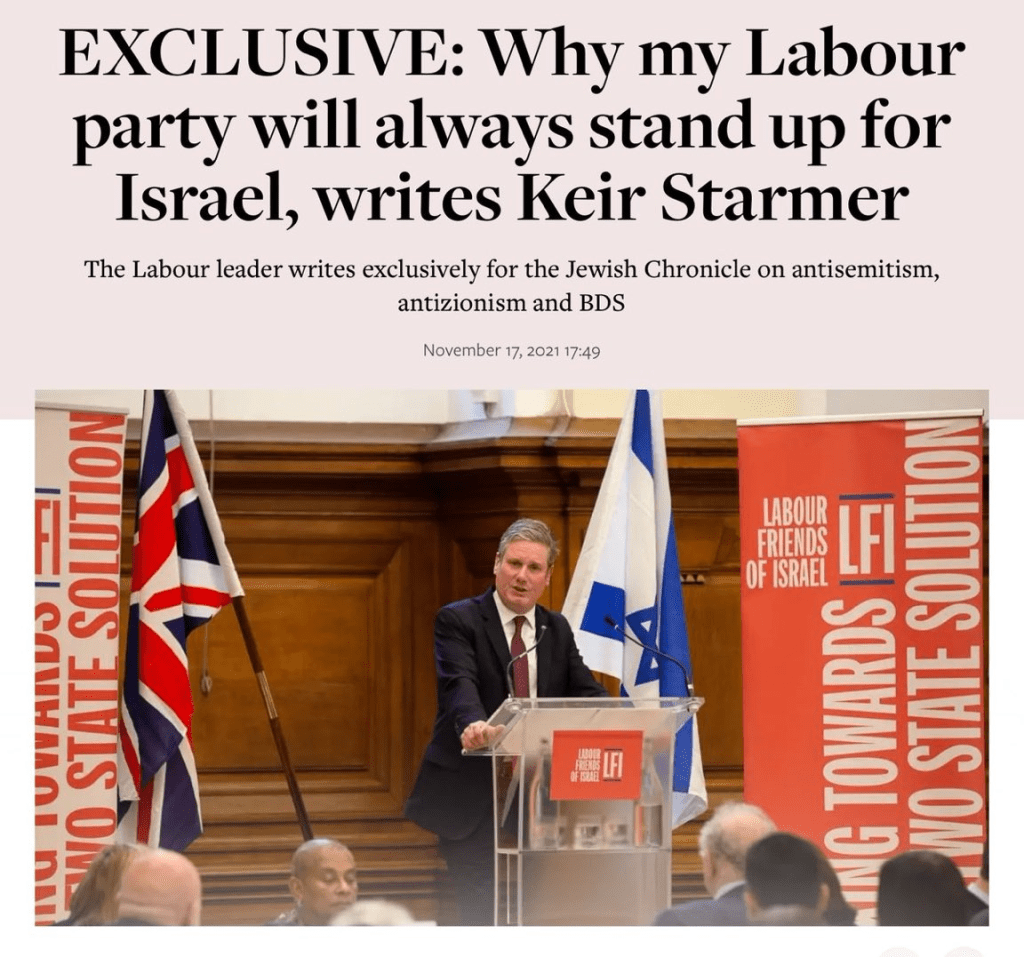

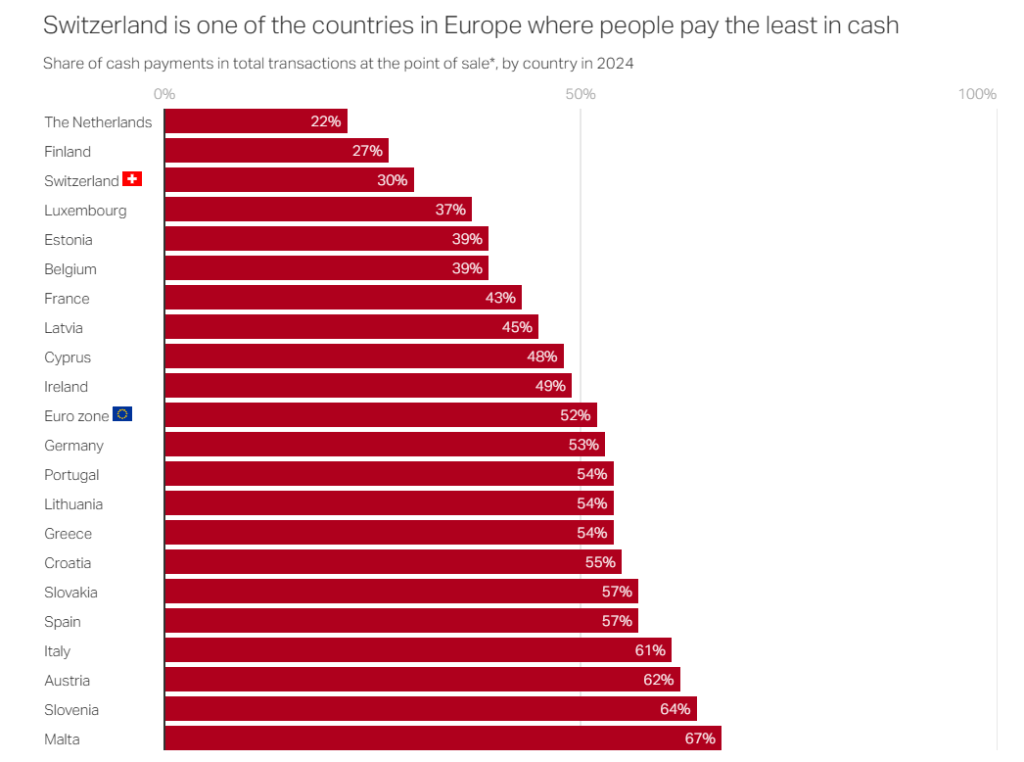
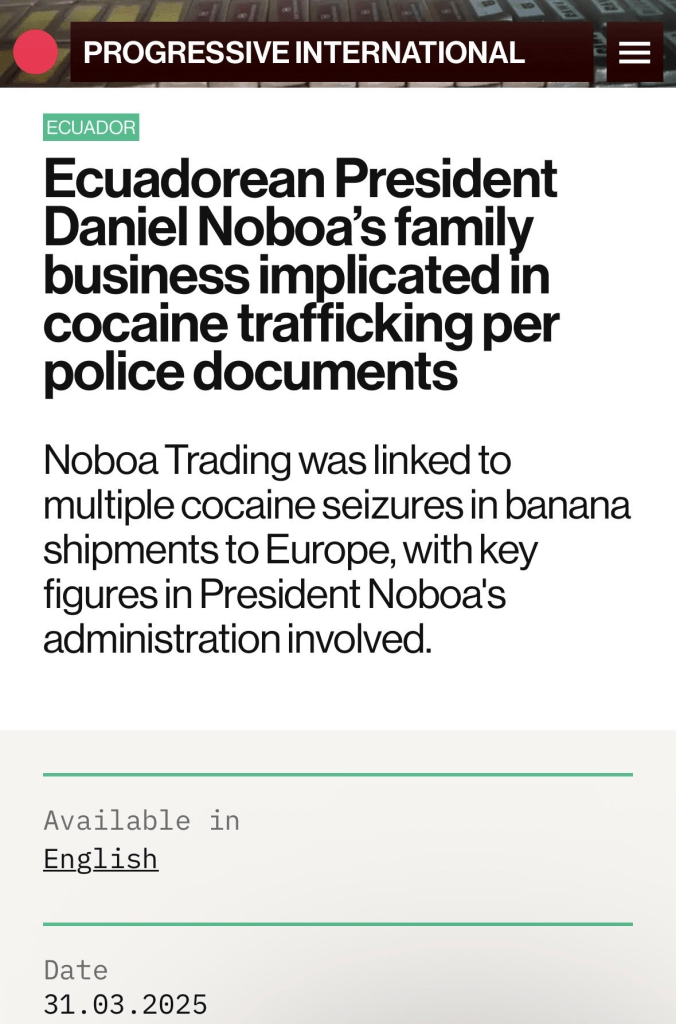
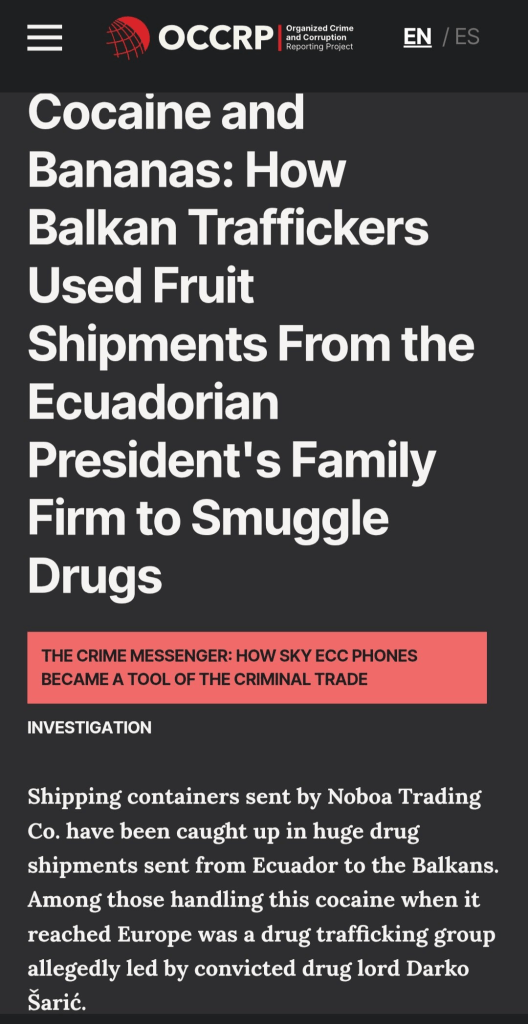
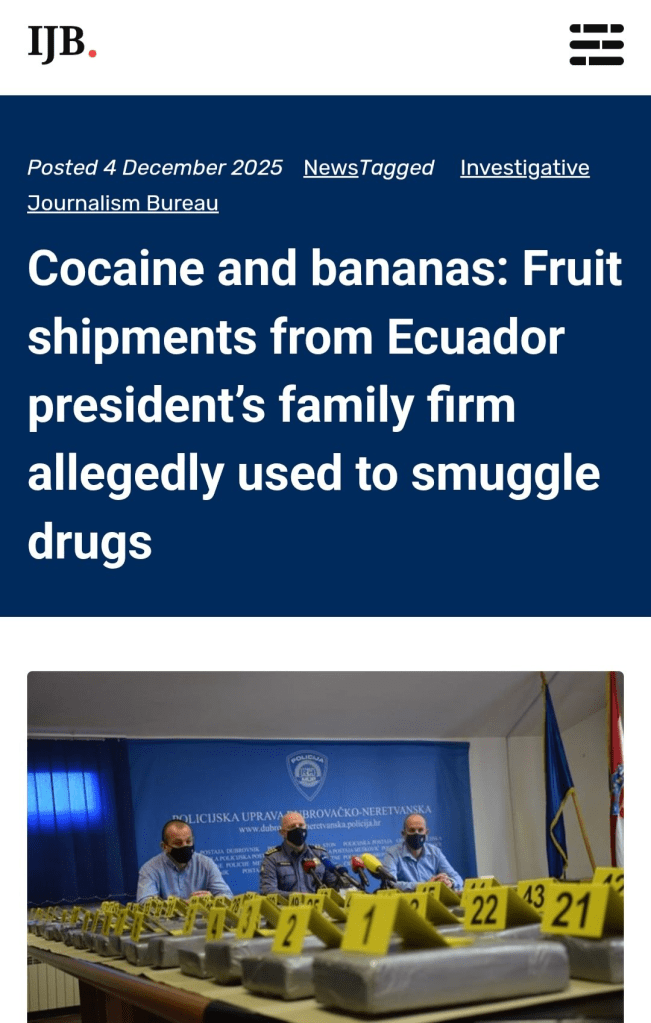
 Nick Corbishley