“Argentina has become the centrepiece of the United States’ strategy for Latin America”: US Treasury Secretary Scott Bessent.
On Sunday (Jan 25), a Boeing C-40 Clipper belonging to the US Air Force landed in Ushuaia, Argentina’s — and the world’s — southernmost city under a blanket of near-total secrecy. Argentina’s Ministry of Foreign Affairs was silent on the matter and the local Tierra del Fuego government, run by a self-declared opponent of Javier Milei’s, said it had been kept in the dark.
On the same day, at least two private flights departed from Buenos Aires’ San Fernando airport to Ushuaia. Again, no details were provided. The information blackout has local authorities on high alert, especially given the timing of the visit. Just two days earlier, the Milei government had formalised a 12-month administrative takeover of the port of Ushuaia, citing financial irregularities and the diversion of public funds.
[Rumours] are circulating about a possible agreement between Presidents Javier Milei and Donald Trump to cede control of the port of Ushuaia to the United States, which has a strong interest in installing an integrated naval base in the capital of Tierra del Fuego that will serve as a gateway to Antarctica.
The Boeing C-40 Clipper, which operated under the call code RCH (Reach), a characteristic designation of the US Air Mobility Command, is not a conventional transport aircraft.
The 737-700C, often described as an “office in the sky”, is equipped to transport senior military commanders and government officials. Hence all the speculation about the people who flew to Ushuaia.
There are those who suggest that a high-level delegation from the Pentagon or the State Department arrived in the country, although due to the cloak of secrecy maintained by the libertarian government there is no official information about the flight occupants or the activities they carried out in the capital of Tierra del Fuego.
The first official press release was provided on Monday by the US Embassy in Argentina. In a brief statement, it said:
“A bipartisan delegation of members of the US House of Representatives’ Energy and Commerce Committee is visiting Argentina. The delegation’s visit includes meetings with government officials and key stakeholders to discuss the degradation of natural environments, mine and waste management permitting, critical minerals processing, and public health research and medical safety.”
Argentina’s Milei government will be nothing if not obliging; Milei’s obsequious behaviour toward Trump is by now so legendary that it has become the stuff of Saturday Night Live sketches.
Hicieron una imitación de Milei en el programa Saturday Night Live y la sacó baratísima. Está bañado y hasta habla de corrido. Debe ser la primera persona en la historia que su parodia es mucho más digna que su persona real jajsjsjpic.twitter.com/3yHdI6oLY1
Meanwhile, the real Milei clown show continues. A few days ago, the president (again) took to the stage to sing 80’s rock classics, this time accompanied by Fátima Florez, while forest fires raged in Patagonia and Buenos Aires Province. The fires have been burning for a whole month yet Milei is still to visit any of the affected sites.
The public backlash has been fierce.
“Patagonia is burning, the fire brigade members are exhausted and there is a complete lack of resources (NC: a direct result of Milei’s chainsaw austerity),” thundered Juan Grabois, leader of Union for the Homeland (UxP). “There is total indifference to this tragedy and the president, instead of taking measures, is fooling around in Mar del Plata.”
"SINVERGÜENZA"
Por la reacción de millones de argentinos al ver que Milei se fue a cantar a Mar del Plata, mientras la Patagonia es arrasada por el fuego. pic.twitter.com/gwMuiD8umU
Milei’s alleged sell-off of Ushuaia is even more controversial. According to a report by Radio Universidad, Milei has offered the US control of the port in exchange for a place on President Trump’s Gaza peace board exempt of the standard $1 billion membership fee. The deal was apparently brokered on the side lines of the WEF’s annual meeting in Davos.
It was an offer that Trump could not refuse. As we discussed previously, Ushuaia’s location is of clear strategic value to the US:
On the one hand, it is on the doorstep to the Antarctic, with its vast stores of unexplored and unexploited resources, including the largest freshwater reserve on the planet… On the other hand, [it’s right next] to the Drake Passage, a wide waterway connecting the Atlantic and Pacific Oceans between Cape Horn (the southernmost point of South America) and the South Shetland Islands off Antarctica. If the US could control both the Drake Passage and the Panama Canal, it would control the two bi-oceanic passages on the American continent.
The deal has been some time coming. Since Milei came to power in December 2023, Ushuaia has been visited by two US SOUTHCOM commanders, Laura Richardson and Alvin Hosley. In 2024, Milei travelled 3,000 kilometres to meet up with General Richardson — someone of lower rank to him — to announce the establishment of a joint naval base that would allow Argentina and the US to control this key entry point to Antarctica.
El "anarco"capitalista de Milei no es más que un títere. Acaba de anunciar una base militar de Estados Unidos en Argentina. Mientras grita "Viva la libertad, carajo" vende su país. pic.twitter.com/cRoKpd45wy
[Translation of tweet: “The anarcho-capitalist Milei is nothing more than a puppet. He just announced a US military base in Argentina. While he shouts ‘long live freedom, carajo’ he sells out his country.“]
US is establishing a naval base at Ushuaia, south Argentina
Approved by US/Israel client Javier Milei while Biden was in White House
Will cement US dominance of South Atlantic and Antarctic
US client regime in London already has huge airbase on nearby Malvinas (Falklands) pic.twitter.com/T9i81mLjnU
While the Ushuaia deal may have been in the pipeline for some time, it’s only now that most Argentines are learning about it. And many are not impressed. During Milei’s recent visit to Mar de Plata, crowds of people lined the streets chanting “la patria no se vende” (the country is not for sale”).
Milei quiso hacer un "Tour de Agradecimiento" en Mar del Plata y la gente fue solo para cantarle LA PATRIA NO SE VENDE. A sus votantes les da vergüenza votar a este engendro y se quedan en sus casaspic.twitter.com/UfcLsbeOJD
The legal secretary of Tierra del Fuego, which is governed by the leftist Peronist opposition, Emiliano Fossatto, told Radio 10 that the visit had “generated a lot of noise and a lot of insecurities”, adding that the “geostrategic location of the port of Ushuaia should not to be taken lightly.”
The government’s takeover of the port comes in the middle of the cruise season, heightening political tensions between the central government and the province of Tierra del Fuego, Antarctica and South Atlantic Islands, reports the Buenos Aires Herald:
The government of Tierra del Fuego, Antarctica and South Atlantic Islands said it will take legal action against the takeover of the port.
“There is a significant infringement on the province’s autonomy,” officials in Governor Gustavo Melella’s administration said.
Sources in the provincial government told the Herald’s sister title Ámbito that they are working on “the best legal strategy for the Provincial Ports Directorate to regain real and concrete autonomy.”
“It will be a strictly legal strategy. We are going to court,” they confirmed in comments to the outlet.
“The Centrepiece of US Strategic Interest”
As readers may recall, US Treasury Secretary Scott Bessent arranged a pre-election bailout of Milei’s government and Wall Street hedge funds invested just a few months ago. On Sunday, the same day the US military plane landed in Ushuaia, Bessent confirmed the US’ strategic interest in Argentina:
“Argentina has become the centrepiece of the United States’ strategy for Latin America.”
That strategy appears to involve keeping Milei’s government and Wall Street hedge funds invested in Argentina financially whole while at the same time ensuring that Argentina’s strategic resources and geolocation are put to the benefit of Washington and Tel Aviv.
Those resources include vast deposits of natural gas and lithium. For most Argentineans, however, the Argentine economy continues to zombify, as Freddie Ponton reports for 21st Century Wire:
According to a report from Martín Rapetti, the economic director of Equilibra, an economic analysis centre in Argentina, economic activity has been effectively stagnant since the beginning of 2025, with output levels nearly identical to those of the third quarter of 2023, before Milei assumed power. After a historic collapse during the first phase of adjustment in 2024, the economy rebounded temporarily, albeit mechanically—and then suddenly stopped.
In reality, what has been marketed as “reactivation” by Milei’s spin doctors, is little more than a partial rebound from a self-inflicted shock followed by paralysis.
Recent official data analysed by Reuters underscores just how fragile Milei’s so-called recovery really is. In November 2025, Argentina’s economic activity contracted, marking the first monthly decline in months, with manufacturing, commerce, fishing, and construction all posting losses, a reminder that even the macro indicators used to sell stability remain volatile and easily reversible.
Still, the gap between the official narrative and lived reality is not a misunderstanding. Rather, it is the logical outcome of Milei’s economic model—a project engineered to stabilise macroeconomic variables and reassure creditors, while leaving the majority of the population suspended in permanent adjustment.
Next Up: Chilean Cobalt and Rare Earths
On the other side of the Andes, in neighbouring Chile, the US is also making moves. The US Ambassador to Chile Brandon Judd recently called the cobalt and rare earth supply chains from Chile as “essential for US national security”.
On January 20, the diplomat posted a tweet from his official X account expressing his support for the efforts of the Chilean Cobalt Corp. (aka C3) to resume cobalt extraction, arguing that this “benefits the relationship between the U.S. and Chile and generates good jobs with good salaries for the Chilean people.”
Las cadenas de suministro diversas y seguras de cobalto y tierras raras son esenciales para la seguridad nacional de EE.UU. Reanudar las operaciones de extracción de cobalto en Chile por parte de C3 beneficia la relación entre EE.UU. y Chile y genera buenos empleos con buenos… pic.twitter.com/z5bZ1W7KjD
The ambassador’s tweet, accompanied by a photograph of him in a meeting with executives of the firm, comes after the signing of a letter of intent from C3 to acquire up to 100% of a rare earth deposit in November 2025. As an article in El Ciudadano notes, the statement is a clear indication of Washington’s strategic and priority interest in these critical minerals, which are fundamental for the US’ technology and defence industry:
This unusual statement by a diplomatic representative, which explicitly links a sovereign country’s resources to US national security, marks a clear intention to influence and accelerate specific extractive projects in Chilean territory, framing them in a narrative of bilateral benefit.
However, as we’ve seen in Argentina, the benefits will be for the very few — namely those closely tied to the national government as well as those closely tied to Trump and Bessent’s immediate circle. The article in El Ciudadano appears to confirm this:
While the ambassador exerts public pressure, other companies with projects in Chile are deepening their ties with key figures in the Republican Party. According to an investigation published by Resumen.cl, the mining company Aclara Resources – which seeks to exploit rare earths in Penco – has entered into a strategic alliance with Louisiana Governor Jeff Landry, a political figure closely aligned with Donald Trump. In an official company video, its CEO, Ramón Barúa, met with Landry to discuss collaboration on mineral separation technologies, a project the governor supported for its potential to “strengthen the U.S. rare earth supply chain.”
The Resumen.cl investigation highlights that Landry is not only a Republican militant close to Trump, but also a military veteran and former police officer who has advocated for tough security policies, and who currently serves as the Trump administration’s special envoy for Greenland, territory designated as vital to U.S. national security. Trump himself has endorsed Landry, saying he understands how essential Greenland is to such security. This context significantly politicizes the alliance with Aclara, inserting the Chilean project into a broader and militarized geopolitical agenda.
These coordinated moves – direct diplomatic pressure and business deals with the Republican political environment – reveal a comprehensive strategy by the Trump administration to secure access to and processing of rare earths and cobalt, using Chile as a key supplier. The narrative of U.S. “national security” and “local benefit” clash with the environmental and sovereignty concerns that these projects generate in local communities, creating a complex scenario of economic dependence versus strategic autonomy for Chile.
When the president elect José Antonio Cast takes office in a few weeks’ time, it’s fairly obvious what he will do: align Chile as firmly as possible with the US and Israel. In a previous visit to Washington, in December 2021, Kast, then merely a billionaire far-right presidential candidate, met with then-US Senator and now US Secretary of State Marco Rubio. After that meeting, Kast said:
“We were able to address different issues of international interest that should be very interesting for what the future of Chile may be.”
Here’s Trump commenting on Kast’s electoral triumph late last year as well as the broader rightward shift taking place across Latin America — a trend the Trump administration is helping to facilitate by threatening voters in the region with economic disaster if they choose the wrong candidate or party, as has already happened in Honduras and Argentina:
"Justo ahora me entero que en Chile también ganó el candidato que apoyamos, que tampoco estaba puntero y terminó ganando fácilmente, así que ansío mostrarle mis respetos pronto"
If, as expected, Kast shifts Chile’s allegiances towards Israel, it will mean that a long strip of nations in South America, from Ecuador in the north to Argentina and Chile in the south, will be fully aligned with Israel — and fully on board with its genocide in Gaza. As the map below, by Yousef Ibrahim, a member of the US Anti-Zionist Political Action Committee (Azapac), makes clear, “South American Israel” is already taking shape.
🇮🇱🇦🇷 BIBI IS HEADING TO SOUTH AMERICA!!!
According to Israeli Channel 14, PM Netanyahu is planning a visit to Argentina soon.
This could kick off a new wave of normalization across the region under the 'Isaac Accords' – modeled after the Abraham Accords.
However, while the Trump Administration invokes the so-called “Donroe Doctrine” to claim dominion over the American continent, turning it into a giant quarry for strategic resources extraction (h/t Rev Kev), the economic reality is likely to be far more complex…
The US’ gold holdings, allegedly the largest on the planet, have not been subjected to a comprehensive audit since the 1950s.
To begin with, a couple of important caveats. First, Naked Capitalism is not a platform for gold bugs. As Yves noted in the preamble to an April 2022 cross-posted article by The Saker, The Importance of Custody, Or NATO’s Internal Gold War, “even mentioning gold on this site makes [her] nervous, since it brings forth all the gold bugs and other super-hard currency fans”:
Repeat after me: Japan created money supply like a drunken sailor for the better part of two decades and still barely prevented deflation. William Jennings Bryan’s “Cross of gold” speech came about because the gold standard in the latter 1800s produced the so-called “Long Depression” that hit farmers hard.
Even though this post is about not taking proper care of one’s gold, as in poor custody practices, we suspect some readers will use it as an excuse to talk up a gold standard. Please don’t. Read this instead:
Second, there is a huge amount of chatter, in both social and financial media, that the recent price surges are being driven by central bank buying. We’re not convinced. While central banks are certainly buying more of the yellow metal, it is retail, and to a lesser extent, institutional buying, that are the main catalysts here, as Robin J Brooks lays out in his latest substack:
The chart below shows IMF data on gold buying for all emerging markets. Four points are worth noting. First, there is no acceleration of gold buying after Feb. ‘22, which is when Russia invaded Ukraine and the sanctions onslaught began. Second, central banks are certainly buying gold, but they’re doing so at a slow and steady pace. They’re not in a buying frenzy that explains the massive rise in gold prices underway. Third, it’s possible that countries are hiding their gold purchases. China is almost surely doing that. After all, it conceals its intervention in foreign exchange markets via state banks, so what’s to prevent it from hiding gold purchases? But – again – this is unlikely to be happening with the kind of frenzy that can explain the current run-up. Fourth, even if foreign central banks are buying gold, they’re not also buying silver, platinum or palladium.
[NC: It would be nice to know what central bank buying was like before 2017, given that was the year that gold was reclassified from a Tier 3 to a Tier 1 asset under the Basel III banking reforms, turning gold into a more effective backstop for debt, currencies and bank capital.]
At the root of the surging retail and institutional demand for gold is a generalised fear about unsustainable fiscal policy and dollar debasement, says Brooks:
The Dollar was stable in the second half of 2025, even as gold prices and the debasement trade got going. That is changing. As the chart below shows, the Dollar had a very bad start to 2026, in line with my call that Dollar weakness will resume after the hiatus of H2 2025. A falling Dollar will super-charge the rise in gold prices and the debasement trade because it boosts the purchasing power of non-Dollar buyers. The trajectory is thus for the debasement trade to accelerate as Dollar weakness resumes.
Goldman Sachs has already revamped its 2026 price target for gold, arguing that investors are treating gold as an insurance against long-term risks, including soaring debt levels, rising risks in the bond markets, and growing uncertainty over central bank independence. That’s not to mention the growing fears of a collapse in the AI bubble.
And there you have it: Gold is officially trading above $5,000. About a year ago, I stated that I felt we’d hit this milestone by the end of 2025—so we are a month behind where I thought we would be, Next stop? We are likely to see $6,000 in 2026, though I expect the climb to be… pic.twitter.com/DbqVwCkYib
What rarely gets mentioned in mainstream media coverage is the historic role played by price manipulation, not just in the gold market but also in the silver, platinum and palladium markets. One of the most notorious cases involved JPMorgan Chase, which in 2020 was found guilty of spoofing silver and gold prices through illegal trading practices. The Wall Street lender ended up paying a $920 million fine.
In total, eight banks paid fines of $1.3 billion for decades of manipulation — just a minor cost of doing business. Since then the manipulation has tailed off, as JP Morgan has shifted from a massive net short position in silver to massive net long, allowing true price discovery (or at least something resembling it) to take place. As Michael Hudson explained in an interview on CTGN Europe’s The Agenda, the Fed is also similarly restrained in its ability to keep down gold prices:
So for the last few decades, the Federal Reserve and the U.S. Treasury have been trying to hold down the price of gold to make sure that it wouldn’t appear as an alternative investment. And it’s been selling gold forward or it’s been leasing its gold, not only from Fort Knox, but apparently from the Federal Reserve, to gold dealers, and selling gold short on the Comex Exchange. And by selling gold short, that prevents any opportunity for the price of gold really going up.
Well, finally, as you pointed out, in the last few years, it’s leased so much gold that it’s reached the end of its ability to hold it down. And now, for the first time, we’re having a real market developing in gold. And all that’s gone hand in hand with the desire of a number of governments to say they want to de-dollarize. And from the idea of people that, well, maybe we need to diversify out of the dollar, now that the political and military situation[s] are changing. So all of that has led to increased speculation of gold.
China’s opening of its own precious metal exchanges in recent years has also played a key part in muting the ability of US and UK authorities and Western bullion banks to engage in price manipulation of the metals markets.
IMO the real gold action started when CNY oil contract started in March 2018, because "The Law of One Price" tells us you cannot have 2 different Gold/Oil Ratios in 2 different currencies (USD GoR v. CNY GoR).
According to global markets expert Kathleen Turner, China, unlike the US and the UK, is banning High Frequency Execution server co-location at exchanges in order to prevent banks from “spoofing” markets.
I Spent Eight Years Spoofing Silver
I'm a precious metals trader at a major bank.
Was.
Am.
Depends on which LinkedIn I'm updating.
Between 2008 and 2016, my desk placed orders we never intended to fill.
Now, to the main story: the growing jitters in Germany about having so much of its gold reserves stored at the US Federal Reserve, especially given the Trump administration’s near-total disregard for a) international law; b) central bank independence, and c) the property rights of other nation states (c.f. Venezuelan oil and gold, Russian assets held in the West, Greenland).
German economists and politicians are once again calling for the full repatriation of Germany’s gold — understandable given the yellow metal just crossed the $5,000 per ounce threshold for the first time ever while concerns about sovereign bond markets continue to grow. According to official records, Germany has the second largest gold reserves in the world, totalling around 3,550 tons, of which roughly half are stored abroad.
The lion’s share (1,236 tons) are held at the Federal Reserve Bank in New York while another 405 tons are held at the Bank of England. This was a holdover from the Cold War, when Western Europe’s gold bullion was moved for “safe keeping” to London and New York, far away from the former Soviet Union and Josef Stalin.
German economists are now beginning to express concerns about how just safe that gold is, reports Tagesschau (machine translated):
Gold [held in the US] was considered safe for years. This is because central banks are usually independent and have a great deal of trust in each other. But US President Donald Trump is trying to change that. In recent months, he has increasingly launched attacks with the aim of undermining the Fed’s independence. Most recently, he threatened Federal Reserve Chairman Jerome Powell with charges in connection with the renovation of Fed buildings. Powell himself sees this as just a pretext to exert pressure.
Previously, Trump had already tried to fire Fed Governor Lisa Cook. The case is currently before the Supreme Court. For months, Trump has been urging Fed Chairman Powell to cut interest rates faster and more extensively, often with insulting posts on his Truth Social platform.
“Of course, the more central banks come under political pressure — and we are currently experiencing this in the USA — the more difficult it will be to maintain this basis of trust,” said gold expert Wolfgang Wrzesniok-Roßbach of Fragold in Frankfurt. One must closely observe how Trump continues to deal with the Fed and how independent it will be in the future.”
This account leaves out two key points: first, as Satyajit Das argued in a post last week for Naked Capitalism, central bank independence is a relatively recent phenomenon, dating back to the 1990s, and is not all it’s cracked up to be; and second, Germany has been seeking to repatriate its gold held overseas for over a decade, and has so far only managed to claw back 300 of the more than 1,500 tons held overseas.
What’s more, as the aforementioned The Saker article notes, Berlin had to wait five long years to repatriate that small portion of its gold from the BoE. Plus, it never got back any of the gold bars originally deposited, which clearly explains the delay. This raises some key questions:
(a) does the BoE still have all of the EU´s gold bullion… or has it been sold off or loaned out as many experts insist ?
(b) is the BoE willing and able to immediately return the EU gold it may still have left to legitimate owners, if any ?
(c) who are the legitimate owners of BoE-vaulted gold after decades of European reshuffling of political borders ?
(d) would the ECJ decide gold ownership… or the British Judiciary… or the BoE ? On what basis, exactly ?
(e) has the BoE lent, swapped, re-hypothecated, leased, leveraged or encumbered such bullion now lien with other many alleged legitimate claimees also standing in line with ´fractional un-allocated synthetic´ bullion custodies unfit-for-purpose per “Digital Derivative Pricing Schemes“ thru which no one can know who owns what where (if anything) ?
Audit the Fed?
All of these questions could just as easily be asked about the gold held at the Federal Reserve. After all, the US’ gold holdings, allegedly the largest on the planet, which include the gold holdings of dozens of other countries held in custody by the US Federal Reserve, have not been subjected to a comprehensive audit since the 1950s.
Last year, four members of Congress, led by Thomas Massie, introduced a bill to initiate the first full assay, inventory, and audit of all United States gold holdings in decades. Now, the whipsaw whims of Trump 2.0 pose an additional risk factor, notes the Tagesschau piece:
“The gold reserves are currently safe in the USA. But tomorrow it could be the case that suddenly the American government says: ‘We are now keeping the gold reserves as a bargaining chip’,” says [gold expert Wolfgang] Wrzesniok-Roßbach. The Donald Trump risk factor is great. “At the moment, the US is not a reliable partner of the EU,” the president of the Centre for European Economic Research (ZEW), Achim Wambach, told Reuters news agency.
Emanuel Mönch, a former head of research at the Bundesbank, called for the gold to be brought home, saying it was too “risky” for it to be kept in the US under the current administration.
“Given the current geopolitical situation, it seems risky to store so much gold in the US,” Mönch told Handelsblatt. “In the interest of greater strategic independence from the US, the Bundesbank would therefore be well advised to consider repatriating the gold.”
For the moment, Berlin is not looking to go there, says Stefan Kornelius, the spokesperson for Friedrich Merz’s coalition government. But calls are rising for the government to take action, including among some politicians. Meanwhile, nearly three-quarters of the German public now see the US as an unreliable partner, according to the most recent ARD-Deutschland trend poll.
Michael Jäger, the head of the Association of German Taxpayers, warns that the US’s stated ambition to seize Greenland should concentrate minds:
Trump is unpredictable and he does everything to generate revenue. That’s why our gold is no longer safe in the Fed’s vaults. What happens if the Greenland provocation continues? … The risk is increasing that the German Bundesbank will no longer be able to access its gold. Therefore, it should repatriate its reserves.
A Colossal Loss of Trust
Western central bankers are also up in arms about Trump’s recent moves against the Federal Reserve. It’s no coincidence that it was Mark Carney who called time on the rules based order from Davos last week. Carney may currently be prime minister of Canada but he is first and foremost a central banker.
Indeed, Carney is the only person ever to have run two different central banks: the Bank of Canada (2008-2013) and the Bank of England (2013-2020). As such, his speech was primarily on behalf of his constituents in Wall Street and the City of London.
The money quote: “compliance will not buy safety”…
“When I was in justice, my ultimate vision… was to achieve, by means of AI and technology, what Jeremy Bentham tried to do with his Panopticon.”
UK Home Secretary, Shabana Mahmood, the person nominally in charge of the UK Police, justice system and MI5, sat down for an in conversation event with the former Prime Minister (and current Labour government’s eminence grise) Tony Blair, organised by the Tony Blair Institute for Global Change. In that conversation, made a chilling admission about the government’s ultimate goal of AI surveillance.
From the Daily Telegraph, the only mainstream newspaper (besides Scotland’s The National) to cover the story:
“AI and technology can be transformative to the whole of the law and order space.
“When I was in justice, my ultimate vision for that part of the criminal justice system was to achieve, by means of AI and technology, what Jeremy Bentham tried to do with his Panopticon. That is that the eyes of the state can be on you at all times.
“Similarly, in the world of policing, in particular, we’ve already been rolling out live facial recognition technology, but I think there’s big space here for being able to harness the power of AI and tech to get ahead of the criminals, frankly, which is what we’re trying to do.”
Bentham, an 18th-century philosopher and social theorist, promoted the Panopticon as a circular prison with a central inspection tower from which a single guard could observe all inmates all the time while unseen.[1]
For those who do not know, the 'Panopticon' was a plan for a 'perfect' prison. The cells were arranged in a multistory disc around a central guard tower. Because the guards would have a complete view into any of the cells at any time, but the guards in the tower could not be… https://t.co/lkAxL9hngPpic.twitter.com/NE3dZCbLXW
Mahmood’s admission is shocking, not so much in terms of its actual message but rather the candidness with which it was conveyed. Seasoned NC readers will not be surprised that the British government, like many other governments, is trying to build an AI-enabled panopticon. Over the years we’ve covered in some depth the totalitarian thinking behind Bentham’s Panopticon, as well as the myriad threats posed by the construction of a digital panopticon. [2]
That said, this is probably the first time that a senior government official of a major Western nation has come out and openly admitted that they are building a digital panopticon in order to maintain total, constant surveillance of criminals. Such a system could be quickly expanded to the broader population — indeed, in the case of the UK it already is, through the nationwide rollout of live facial recognition systems, reports The Telegraph:
As justice secretary, Ms Mahmood proposed a major expansion of GPS tagging of criminals to create “virtual prisons” for offenders punished in the community. Since moving to the Home Office, she has announced a planned nationwide rollout of police-operated live facial recognition cameras.
Most senior government officials tend not to boast, in public at least, about building a digital panopticon (even if that’s exactly what they’re doing) for an obvious reason: it’s totally dystopian, the Stasi on steroids. But as we’ve been warning, the Starmer government has turbocharged the UK’s slide into dystopia, including by scaling back trial by jury, escalating its attacks on lawful speech and rolling out digital identity despite massive public opposition.
Like most governments in the West, the Starmer administration is also pushing for online age verification, which is essentially a Trojan Horse for digital identity. As the member of the House of Lords Claire Fox warns in the clip below, “this is a threat, potentially at least, to adult civil liberties and the right to privacy, and effectively means we’ll have to digitally verify to participate in the public square.”
🆔Social media ban = digital ID for the internet?
Aside from FAILING to keep children safe, this proposal could force us all to "digitally verify to participate in the public square."@Fox_Claire opposes the proposed social media ban for under-16s at last night's debate pic.twitter.com/zSvxEF00Bk
Yet there is scant reporting in the legacy media on these sweeping changes. As Jonathan Cook notes in the tweet below, Mahmood is effectively telling the British public that they are prisoners and that the government quite literally plans to become Big Brother using AI. Yet there is barely a word about it in the media (with the notable exceptions of The Telegraph and The National). This, of course, is also a feature, not a bug.
Simply astonishing how little media coverage the UK government's plan to have us all under 24-hour surveillance is getting – especially in the context of scrapping jury trials and labelling political dissidents, like opponents of genocide, as "terrorists".
The panopticon, in its original conception, is so controversial that it has barely been properly tried (though elements of it have been incorporated into the design of some prisons). The closest thing, the Presidio Modelo complex in Cuba, built in 1920, was so plagued by corruption and cruelty that it was abandoned. As Collingwood explains in the above tweet, the psychological effects of such living were considered too cruel for even prisoners to endure:
Many indeed consider the entire concept of the Panopticon the foundation of the theory of totalitarian regimes in operation: if it could seek to arrange society so [that] every citizen may be watched at any time but cannot know whether they are being watched or not (e.g. the telescreens in Nineteen Eighty-Four’s Oceania) a regime could force all citizens to act as though they were being watched at any given time.
And this is what our Home Secretary—the office in charge of the police and MI5 and the justice system—wants to impose on us. This is her dream society. Not even joking or embellishing.
It is as if people like Mahmood read Orwell’s 1984, Huxley’s Brave New World, Phillip K Dick’s Minority Report and a host of other dystopian novels and came away with an instruction manual. Meanwhile, their big tech paymasters came away with new business models…
“We hope and believe that 2026 will be the year of Latin America,… one in which we see a positive change in the relations of the continent’s countries with Israel.”
When it comes to Latin America right now, most of the attention is focused, understandably, on recently couped (or semi-couped) Venezuela, as well as all the other countries in the region trapped in Trump’s sights (Cuba, Mexico, Colombia, Panama, Nicaragua…). Yet amid all the noise, a quieter trend is playing out: the (attempted) Israelisation of Latin America.
Following the US’ abduction of Nicolás Maduro, Benjamin Netanyahu expressed “the support of [his] entire government” for the decision and action taken by the US to “restore freedom and justice” in this region.* “Latin America,” he said, “is experiencing a transformation,” in apparent allusion to the recent rapprochement of certain countries in the region to the US-Israel axis.
Big Moves in the Lithium Triangle
As readers may recall, Bolivia was one of the first countries to break off relations with Israel over the Netanyahu regime’s genocide in Gaza, in late 2023. But in the Andean nation’s recent presidential elections, a divided left meant that a right-wing candidate, Rodrigo Paz, was able to win for the first time in over two decades. One of Paz’s first acts in office was to restore relations with Israel.
In December, the country’s new Foreign Minister Fernando Aramayo met with his Israeli counterpart, Gideon Saar, in Washington. That meeting spawned an agreement not only to reinstate ambassadors but also to boost cooperation in areas such as security, tourism and, crucially, lithium mining. From Forbes:
The restoration of relations between the two countries means that Bolivia, the country possessing the world’s largest proven reserves of lithium, which are indispensable to manufacturing modern batteries, now has a partnership with one of the world’s most dynamic and technologically innovative societies. Although the concepts of “Net Zero” and “human induced climate change” are being questioned lately even more than in the last few years, there is little doubt that renewable energy sources, such as solar and wind, will continue to play an increasing role in future energy development on a world-wide basis.
That being the case, each of Israel and Bolivia now has a valuable (and viable) strategic partner, something that neither country really had in the past. In 2023, for example, the prior leftist government of Bolivia struck a deal with China to give that nation, which already produces over 75% of the world’s lithium-ion batteries, the right to develop Bolivia’s prodigious lithium reserves, which mostly are in the Andes Mountains near the borders with Chile and Argentina. (Bolivia Gives China The Whip Hand On Renewable Energy). However, that partnership did not work from the Bolivian’s perspective, and in June of 2025, a Bolivian Court ordered suspension of all Bolivian lithium deals with both China and Russia.
Bolivia, together with Argentina and Chile, hosts the so-called “lithium triangle”, a vast expanse of salt flats in the Andean highlands that accounts for an estimated 60% of the world’s known lithium reserves. It is not the only one of the three to have signed a strategic agreement with Israel, or Israeli companies.
In May last year, the Israeli mining company XtraLit forged a partnership with Argentina’s state-owned oil and gas company YPF and Y-TEC, an Argentine company that provides tech solutions for the energy industry, to apply state of the art technology for lithium extraction in northern Argentina.
Argentina boasts the third largest known reserves of lithium on the planet and is the fourth largest producer of the white metal. In 2022, the Argentine newspaper Página 12 exposed how then-US Ambassador to Argentina Marc Stanley had expressed the “strategic interest of the United States in Argentine lithium” in its race with China for the region’s resources”:
“The United States wants to have a relationship with Argentina so that it is a leader in Latin America, its intention is to help with infrastructure, food, energy, lithium,” he said. And he then said: “We don’t need it, but we want to help the world and partner with you.”
Now, both US and Israeli companies are looking to benefit from the rightward shift taking place in many Latin American countries. They include Chile, the third member of the lithium triangle, which recently voted in far-right politician José Antonio Kast as the new president. The son of a literal Nazi who escaped to Chile after the Second World War, Kast is the first president in Chile’s democratic era to have openly supported Augustin Pinochet’s military regime.
It’s worth keeping in mind that Chile is home to the largest Palestinian diaspora outside the Middle East, numbering as many as 500,000 people. That diaspora has been very vocal in its support for Gaza since Israel’s began its genocide, and Chile’s Boric government was quite vocal in its criticism of Israel’s war crimes. However, under Kast Chile is likely to align the country much more closely with Tel Aviv.
Kast’s appointment of Eitan Bloch as an international advisor to his government has already set off alarm bells. Bloch is a member of openly pro-Israel and Zionist organisations, and has maintained strong political and institutional ties with the State of Israel and its diplomatic apparatus, including as an advisor to the former Israeli ambassador to Chile.
I can’t believe I’m alive to see the Ambassador of Israel to the UN congratulating a son of a Nazi (literally) and a supporter of Pinochet who was just elected President of Chile. https://t.co/lNDz6l4dgCpic.twitter.com/3lFXP3aL33
If, as expected, Kast shifts Chile’s allegiances towards Israel, it will mean that a long strip of nations in South America, from Ecuador in the north to Argentina and Chile in the south, will be fully aligned with Israel — and fully on board with its genocide in Gaza. As the map below, by Yousef Ibrahim, a member of the US Anti-Zionist Political Action Committee (Azapac), makes clear, “South American Israel” is already taking shape.
🇮🇱🇦🇷 BIBI IS HEADING TO SOUTH AMERICA!!!
According to Israeli Channel 14, PM Netanyahu is planning a visit to Argentina soon.
This could kick off a new wave of normalization across the region under the 'Isaac Accords' – modeled after the Abraham Accords.
The Netanyahu government is also hopeful that upcoming elections in Brazil and Colombia could also bring friendlier leaders. As regular readers are well aware, Latin America is one of the regions of the world that has most stridently opposed Israel’s genocide in Gaza. Tel Aviv is determined to change that.
Two of the US’ axis of evil countries in Latin America, Cuba and Venezuela, already had non-existent relations with Israel when the genocide began. Cuba has had no formal relations with Israel since 1973. Venezuela cut its ties with Tel Aviv in 2009. The other axis of evil country, Nicaragua, did the same in November 2024.
While Netanyahu may have celebrated the removal of Maduro, he must also know that little on the ground has actually changed. The Chavista government is still in control, Israel’s favourite candidate, Maria Corrina Machado, has no hope of governing the country, and public support for both Chavismo and Maduro remains fairly strong, as even the New York Times is admitting.
3 weeks after reassuring us that Venezuelans were celebrating their freedom from dictator Maduro and manufacturing consent for his extrajudicial kidnapping and incarceration in Brooklyn, NYT is finally reporting how Venezuelans (in Venezuela) (not Florida) are responding:… pic.twitter.com/GL6nvoxMGn
Under the left-leaning government of Gustavo Petro, Colombia, a country with deep ties to the Israeli state, security forces and companies, has not only spoken out against Israel’s naked criminality in Gaza from the very start; it has consistently turned those words into actions, including by imposing unilateral sanctions on the country.
Of the 36 countries that have joined South Africa’s genocide case against Israel at the International Court of Justice, eight are in Latin America and the Caribbean (Mexico, Brazil, Bolivia, Chile, Colombia, Cuba, Saint Vincent and the Grenadines, and Venezuela). That’s twice the number of European countries that have joined the case.
The Isaac Accords
“More than any region beyond the Middle East, Latin America stands at the forefront of international opposition to Israel’s campaign of annihilation in Gaza”, notes Jack McGrath for the Washington Report on Middle East Affairs. Israel is determined to change that by launching a massive diplomatic campaign in the region.
At the Israeli Foreign Ministry’s ambassadors conference, Israeli Foreign Minister Gideon Saar said that 2026 would be the year of Latin America, and that the ministry would prioritise advancing ties with the continent, reports Ynet News:
Saar has already visited Paraguay and Argentina, two of Israel’s closest friends in the region. ‘We have very strong friendships on the continent today,’ [Amir Ofek, deputy director general for Latin America and the Caribbean at the Foreign Ministry, told Ynet].
He added, “Just yesterday we signed a free trade agreement with Costa Rica, and they announced their intention to open a branch of their embassy in Jerusalem in 2026 with diplomatic status. That is another step up in our good relationship with Costa Rica. Ecuador’s president has visited Israel once and its foreign minister twice, and Quito has designated Hamas, Hezbollah and Iran’s Revolutionary Guard as terrorist organizations. Ecuador also opened an innovation office at the Hebrew University of Jerusalem, which also has diplomatic status.”
The Ecuadorian and Costa Rican offices in Jerusalem will join three Latin American embassies already based in the capital: Guatemala, Paraguay and Honduras. In spring 2026, Argentine President Javier Milei announced about two weeks ago, Argentina will open an embassy in Jerusalem, becoming the fourth country from the continent to inaugurate an embassy in the capital.
“We hope and believe that 2026 will be the year of Latin America, a year that will look different diplomatically, one in which we see a positive change in the relations of the continent’s countries with Israel,” Amir Ofek, deputy director general for Latin America and the Caribbean at the Foreign Ministry, told Ynet.
Spearheading Israeli efforts to win back the fealty of Latin American governments is Javier Milei, Argentina’s faux libertarian president. Milei is the perfect man for the job: not only does he want to convert to Judaism on leaving office, he also has close ties to the powerful Jewish sect, Chabad Lubavitch, and has been one of the world’s most vocal, unabashed supporters of Israel’s war crimes in Gaza.
🇮🇱🇦🇷 AHORA: Milei hace un homenaje a Israel en pleno show por llevar a cabo un exterminio. Lo hace cantando NAGILA HAVA, una tradicional canción hebrea:
In November, Milei announced the “Isaac Accords” between Israel, Argentina and other Latin-American countries during Gideon Sa’ar’s visit to Buenos Aires. This new diplomatic initiative, aimed at strengthening cooperation between Israel and Latin American nations, is modelled after the Abraham Accords, the US-brokered agreements that normalised diplomatic relations between Israel and several Arab nations, including the UAE, Bahrain and Morocco.
President Milei announced the “Isaac Accords” between Israel, Argentina and other Latin-American countries during Gideon Sa’ar's visit to Buenos Aires pic.twitter.com/HyfvMCGATN
As readers may recall, Milei recently signed a Memorandum of Understanding that sets the stage for unprecedented cooperation against terrorism, cybercrime investigations, establishing fast-track customs lanes, joint satellite launches and water technology centres on the Paraná River, Argentina’s most important trade and transport waterway.
Milei’s government has made official a long-standing proposal for a social security agreement with Israel that will enable the payment of welfare benefits to Israeli citizens with residency permits in Argentina. As we noted at the time, Milei’s chainsaw austerity will not apply to Israeli residents of Argentina.
Buenos Aires is also exploring a range of additional joint projects with Israel, including in the fields of technology, security, and economic development, reports The Cradle:
Argentina’s Foreign Minister Pablo Quirno is scheduled to travel to Israel in February for additional talks to advance the initiative.
Since coming to power, Milei has opened Argentina’s economy to exploitation by foreign investors, including by evicting Mapuche tribes from their lands in the southern Patagonia region.
Foreign corporations with major investments in the Argentine Patagonia include the Israeli firm Mekorot, the Italian firm Benetton, and investment companies from the UAE, among others.
Israel’s state-owned water company Mekorot has operations not just in Patagonia but throughout Argentina and Latin America, including Mexico, Uruguay, Costa Rica and Colombia, Chile and the Dominican Republic. Those operations tend to follow a similar pattern, reports TRT World’s Spanish edition (machine translated):
First, the company is usually invited in by governments that, under the guise of “modernising” water networks, adopt technocratic and privatizing approaches. In this initial phase, cooperation agreements or framework contracts are signed without prior citizen consultations.
Second, the processes are developed without competitive bidding or transparency about the terms of the agreement. This facilitates the entry of the company as a “strategic partner” without needing to submit its proposals for public evaluation.
Third, projects are implemented without rigorous socio-environmental studies or with incomplete evaluations, making it much more difficult to assess the risks to communities and the ecosystem.
The negative impact of this model was evident in Bahía Blanca, Argentina, where Mekorot designed a sewage reuse plant for the local Petrochemical Complex. The project was approved without citizen participation or prior environmental studies, prioritizing the provision of water for industry rather than the needs of the local population.
“Companies come with promises of progress, but what they leave behind is pollution, inequality and imposed silence. They even deny us the right to decide about our own water.”
Mekorot controls 80% of the water in Palestine and has been denounced by human rights organizations such as B’Tselem for using it as a tool of domination and control — most recently, of course, in Israel’s systematic starvation of Gaza.
In Argentina, Mekorot already has strategic partnerships with 10 (out of 23) provinces, many of them run by Peronist administrations. The company could further expand its presence in the country if it chooses to buy up parts of Argentina’s soon-to-be-privatised state-owned water company, Agua y Saneamientos Argentinos S.A, on which it will presumably have first dibs.
But it is in the areas of technology and security that Israel will be making the biggest moves — these are, after all, Israel’s biggest areas of business and strategic influence. But if history is prologue, the re-Israelisation of Latin America is not going to end well for the region’s people…
The UK government has no intention of changing course. But can the resistance grow?
For a prime minister who enjoys a massive majority in the House of Commons, Keir Starmer is developing a serious habit of flip-flopping. His latest big U-turn, announced three days ago, involved rolling back his recent proposal to impose mandatory digital ID for job checks.
For opponents of digital ID, the announcement represents merely a symbolic victory, at least for now, since the Starmer government has no intention of abandoning its plans for digital ID — it is just going to take a more gradualist approach to get there.
That said, it clearly represents another embarrassing setback for Starmer’s deeply unpopular government. Both Starmer and his mentor, Tony Blair, seemingly believed that the UK public’s innate fear of immigration, much of it stoked by politicians and the media, would be enough to get the digital ID legislation over the line. That hasn’t happened.
The BBCreported that “the government has dropped plans to make it compulsory to have digital ID in order to prove a right to work.”
The Guardian‘s headline: “The UK Rolls Back a Key Part of Digital ID Plans.”
And from the Times of London: “Keir Starmer Abandons Plans for Compulsory Digital ID.”
“As Simple As That”
It was at the Global Progress Action Summit in late September that Starmer first announced his plans for compulsory digital ID. Striking an authoritative pose (or at least trying to), he said:
Let me spell that out. You will not be able to work in the United Kingdom if you do not have Digital ID. It’s as simple as that.
But it clearly hasn’t been simple at all. By insisting that digital ID would become mandatory for anyone wanting to work, Starmer instantly made the issue a lot more toxic. As we noted in late September, just days before Starmer made the announcement, opposition to the UK’s digital ID plans was already on the rise:
There are… major security concerns about all the additional data that would be harvested by and for the digital identity system. The UK has already suffered hugely costly data breaches in recent years, including the Afghan data leak whose total expected cost the government is currently unable to calculate but is likely to run into the billions.
[T]he government’s cavalier approach to security for its rapidly expanding digital governance and identity systems should be enough to give all UK citizens pause. According to a new poll, two-thirds of UK citizens do not trust the government to keep their data secure. What is perhaps most surprising is that one-third of the respondents said they do.
Even the New York Times recently asked whether Britain had gone too far with its digital controls under Starmer, describing the country’s embrace of digital surveillance and internet regulation as “one of the most sweeping” of any Western democracy. If your national government is drawing flak from the NYT for “surveillance overreach”, it means it probably crossed the line a long, long time ago.
In response to the government’s digital ID plans, a petition was launched on the UK parliament’s website. Calling for the government to commit to not launching a digital ID, the petition quickly garnered close to 3 million signatures, making it the fourth largest petition in British history.
Meanwhile, net support for digital identity had cratered from 35% in the early summer to -14% in early October, according to polling by More in Common. As we noted a few months ago, one potential silver lining of the government’s rush to launch a digital identity system and compel mass adoption as quickly as possible is Keir Starmer’s reverse Midas touch:
If anyone can turn the entire country off the idea of digital identity, tarnishing it forever, it is Starmer, who managed to establish himself as Britain’s most unpopular prime minister on record in just over 12 months.
And so it has proven. As the FT reports, “ministers will continue to press ahead with compulsory digital right-to-work checks for employers, but are planning to allow workers to offer other types of proof such as passports or commercial verification products.”
The U-turn comes as the government tries to argue for digital ID as a way to make life more convenient for Britons and drive reform of public services.
Senior Labour MPs had privately expressed concern about the proposed mandatory element and ministers have concluded it would get in the way of efforts to persuade voters to support it, according to people familiar with the matter.
However, the decision will add to a mounting tally of U-turns by Starmer’s government, which has been criticised by senior ministers.
While that may be true, it is clear the UK government’s attempts to foist digital ID on the British public had nothing to do with tackling illegal migration. It is equally obvious that restricting the right to work is not really the purpose of digital ID, as Iain M Davis pointed out in his September article, “The BritCard Digital ID Psyop“. In the government’s own words:
A new digital ID scheme will make it easier for people across the UK to use vital government services. The roll-out will in time make it easier to apply for government and private sector services, such as helping renters to quickly prove their identity to landlords, improving access to welfare and other benefits, and making it easier for parents to apply for free childcare.
Digital Identity for Everything
In other words, as Davis points out, “‘in time,’ we will supposedly need digital ID to access services like child care, to receive ‘welfare and other benefits,’ and to rent a home”:
But that’s not all. We will also need it to access ‘private sector services’ such as those offered by banks. You’ll need your government approved digital ID to buy a home too, in time.
“In short, a state issued digital ID gives the state total control over your life and, to a great extent, the economy.”
Nonetheless, Starmer’s U-turn, while largely symbolic, is still important, for the simple fact that digital identity systems, and digital public infrastructure in general (more on them later), are among the most important questions today’s societies could possibly grapple with, since they promise to transform our worlds and lives beyond recognition. As such, they should be under discussion in every parliament of every land, and every dinner table in every country.
But they aren’t. In many countries, there is no public discussion of any kind. That’s largely because the rollout of DPI is being driven at a global level, primarily by the United Nations and its “strategic partner”, the World Economic Forum and its corporate members and sponsors. Digital identity was set as a global objective by the United Nations as SDG 16.9 in 2016.
The EU, for instance, adopted digital identity legislation in 2024 without even the slightest pretence of public debate, awareness or acceptance. I would wager that even today most EU citizens and residents still don’t know that an EU-wide digital ID is on its way, or what it could mean for them. And that, unfortunately, is the norm in most jurisdictions.
The UK is one of the few outliers in this sense, having had a relatively open debate on the issue. The reason for this is that the UK, like Ireland and the US, does not have a national ID card system, so adopting a digital identity system is a much more contentious move, requiring at least some semblance of public buy-in. And the public is not buying in.
However, while the government is trying to give the impression that it is abandoning its commitment to mandatory digital ID, nothing of real substance has actually changed. Digital identity is still being rolled out, just somewhat less forcefully, and that can change at any moment.
In short, the government has staged a tactical retreat from the most coercive use-case, presumably in the hope that it will defuse the immediate backlash. But the digital ID system itself is still going ahead.
Indeed, One Login, the government’s centralised digital identity platform, is already up and running, and has 12 million sign-ups, roughly equivalent to one out of four English citizens. Once fully operational, One Login will underpin the forthcoming Gov.uk Wallet, which will be used to deliver digital versions of key government documents, such as driving licences, birth certificates and passports as well as private sector credentials.
Security Issues
One Login already has well-documented security issues. Computer Weeklyreported in April that the platform is still not compliant with cyber standards for critical services and has lost its certification against the government’s own digital identity system trust framework.
A recent simulated hack revealed that attackers could gain privileged access without detection, as The Telegraph’s Andrew Orlowski explains in the clip below.
DIGITAL ID: “You may be completely exposed to identity fraud” because of One Login – @AndrewOrlowski
The security flaws in One Login are deeply concerning.
The One Login system is also not exactly what you’d call user-friendly. Long-time NC reader Revenant recently shared his experience trying to register on it:
I just tried to use One Login today to file a confirmation statement. The app will not run on my mobile (eOS fork of Android, without Google spyware). Lol!
So I tried the web interface. It only allows you one attempt to be linked. I chose the wrong address (I have more than one) and it threw its hands up and said it would not be able to confirm my identity. I think this is because it uses credit bureau data (which I expected) and I now believe the electoral roll, which I have left in recent years (because I refuse to show ID to vote and all the choices are execreable). Using electoral roll data for validation is a very poor choice.
So I had to obtain a letter (really a QR code) via the website, take it to a post office, have them read my passport biometric data electronically AND photograph it AND then photograph me. This is overkill, it would have been enough for the postmistress to eyeball me and my passport and validate me as ID’d. This is all lawyers and accountants do for identifying you legally, including ironically for passport applications.
Stupid, broken, information greedy, anti-human system. Fortunately it will be badly written and die on live television in the near future, just watch!
Big Brother Watch, one of the digital rights organisations that led the push back against the UK’s digital ID plans, warns what while mandatory digital ID may have been defeated (for now), the fight is far from over, especially given how easily voluntary systems can become de facto mandatory.
💪We've DEFEATED mandatory digital ID
"We should recognise this as a win – we've been warning about the dangers of a digital ID + 3 million members of the population made their voices heard" – Jasleen Chaggar
This is precisely what happened in countries that already have full-fledged digital identity systems, such as India and Estonia. They started off by assuring citizens that digital identity was totally optional — until it became necessary for just about everything. In India, access issues to the Aadhaar system have locked millions out of their legitimate benefits, even resulting in deaths.
In the UK, it is already as good as mandatory for business owners to register with Companies House via One Login. That’s an additional six million people who will be corralled into the system — unless, of course, they refuse to or find work-arounds.
The stated reason for this new requirement is to attract investment to the UK by bolstering transparency as well as provide greater protection against fraud. While business registration processes could do with being beefed up, forcing business owners to register on One Login risks exposing millions of people to much greater fraud risk…
“Sanctions are becoming the preferred weapon of the United States and some allies – not because they are less destructive, but because the toll is less visible.”
In a recent paid speech for Maryam Rajavi’s People’s Mujahedin of Iran (MEK), former New York Mayor and Trump ally Rudy Giuliani said the quiet part out loud regarding the true intent of US sanctions on Iran — to sow economic desperation among the local populace, and in turn spark a nationwide revolt against the government:
People from Iran have now had enough. The sanctions are working. The currency is going to nothing. They are where Russia was, they’re where Poland was. We see signs of young men and women saying, ‘give me some food’. We saw a sign of a man trying to sell his internal organs for 500 American dollars — probably a fortune in Iran today. This is truly pitiful. These are the kinds of conditions that lead to successful revolution.
During a paid speech for Maryam Rajavi’s MEK cult, Rudy Giuliani celebrated claims that US sanctions had forced Iranians to sell their organs in the street pic.twitter.com/HyMqYEsQsyhttps://t.co/DalqJorGmb
The US and Israel’s goal is clear: to topple the Islamic Republic of Iran and impose in its place the son of the former Shah, Reza Pahlavi, who hasn’t been in Iran since 1978. It is their second attempt to effect a regime change in the country in just seven months.
As Giuliani gloats, the goal of US-led sanctions, coupled with the devaluation of the Rial, which Alastair Crooke claims was largely engineered by the West, is to break public support for the Iranian government by making the country’s economy scream. Since his return to office, Trump has escalated US sanctions on Iran seven times, according to Wikipedia.
The recent chaos in Iran also has the added bonus of diverting attention from Israel’s ongoing genocide in Gaza and attacks against Lebanon as well as Trump’s domestic problems, including his government’s handling of the Epstein scandal.
This is beyond horrifying.
New data shows Israel has killed over 680,000 Palestinians in Gaza.
Among them:
• 380,000 infants under 5 • 99,000 children over 5
The US has maintained a sanctions regime against Iran since the Iranian Revolution in 1979. In the first year of his first term, Trump reinstated the full gamut of US sanctions against the country when he unilaterally walked away from the 2015 Joint Comprehensive Plan of Action (JCPOA), an agreement to limit the Iranian nuclear program in return for sanctions relief that was actually working pretty well.
Again, the main goal of sanctions was not to hurt the government in Tehran directly but rather to make things much worse for the Iranian people in the hope they would rise up against the government, as then-Secretary of State Mike Pompeo bragged on CBS. Again, it didn’t work out that way, despite causing further immiseration in the country.
In 2019, then-Sec. of State Mike Pompeo bragged that, as a result of US sanctions, "Things are much worse for the Iranian people." pic.twitter.com/S2npdp9or3
For its part, the EU has also intensified its pressure on Iran’s economy and currency with 10 packages of sanctions since October 2022. One of the main reasons cited for the EU’s escalating sanctions on Iran is the regime’s “widespread, brutal and disproportionate use of force by the Iranian authorities against peaceful protesters”, which is kind of ironic given the growing crackdown on peaceful protest in EU Member States.
The EU’s chief diplomat, Kaja Kallas, is now talking about imposing another round in response to the Iranian government’s crackdown on recent protests — protests that were fuelled primarily by the economic sanctions. As is well documented, economic sanctions predominantly affect the general citizenry of the targeted nation, particularly the poorest and most vulnerable. It’s also worth noting that the EU is yet to impose any sanctions on Israel for its genocide in Gaza.
The UN has also played its part. In September, just three months after the 12-Day War between Israel and Iran, France, Germany and the UK invoked a “snapback” mechanism under UN Security Council Resolution 2231 that restored the sanctions that had been suspended since the 2015 nuclear deal. The restored measures include a conventional arms embargo, restrictions linked to Iran’s ballistic missile programme, targeted asset freezes, and travel bans.
The result, as Giuliani rejoices in the above clip, has been a gradual strangulation of Iran’s economy and the destruction of its currency. This, in turn, has triggered nationwide protests, some of which have turned violent — with a little help, of course, from the CIA and Mossad and their Iranian and foreign assets.
For those pretending the violent riots in Iran are not Mossad‑CIA‑orchestrated, this is a direct quote from Mike Pompeo, former CIA Director:
“Happy New Year to every Iranian in the streets. Also to every Mossad agent walking beside them…” pic.twitter.com/dRZqHzrH56
While European governments and media have been pulling out all the stops to paint the protests in Iran as a grassroots uprising, Israeli media and analysts are openly admitting Mossad’s role in fomenting the violence.
However, despite Israel’s best efforts, the protests appear to be dying down. On Judging Freedom, Alastair Crooke cites an Israeli security expert who grudgingly concedes that cracks are yet to appear in the regime’s government mechanisms or its two armies, the Regular and Revolutionary Guard. Nor are the protests taking on a larger dimension. Also, Pahlavi is failing to guide the uprising, as Khomeni did from exile in Paris during the Islamic Revolution.
The government in Tehran is also apparently using military jammers to successfully black out Elon Musk’s Starlink and has swept up many of the Mossad’s handlers and network.
I was expecting Israeli airstrikes Wednesday (like 12 June) or Friday (after New York market close is customary), but if Iran gets through tonight peacefully, I will call this round a win for Iran.
In the meanwhile Iran swept up the Mossad handlers and network, killed all… https://t.co/dn5v3xzADC
Another country that has been on the sharp edge of US sanctions and is once again facing the threat of regime change is Venezuela. The first round of sanctions went into effect under the Barack Obama administration in 2015, which designated Venezuela as an “unusual and extraordinary threat to the national security and foreign policy of the United States”. It is a reminder that the imposition of US sanctions are as bipartisan as support for Israel.
Donald Trump added more sanctions in 2017 before turning up the dial again in 2019. The measures included an embargo on the oil industry, Venezuela’s main source of revenue. Washington also grabbed Venezuelan national assets such as its gold held at the Bank of England and Citgo, a U.S.-based oil refining, transportation and marketing company valued at $13-billion, which was recently sold to New York vulture capitalist and ultra Zionist Paul Singer.
These measures significantly shrank Venezuela’s national coffers, making it nearly impossible to provide essential services such as health and food. Trump’s then-Secretary of State John Bolton candidly admitted to the Washington Post that the overarching goal of US sanctions was to cause massive economic pain to the general populace, even if it meant sparking a mass exodus of Venezuelans, including to the US:
Ahead of Venezuela's election, John Bolton admitted to the Washington Post that he knew that the Trump admin's crippling sanctions and coup attempt against Venezuela would destroy its economy and force millions to flee:
While government insiders like Bolton and Giuliani occasionally admit the real intent behind US-led sanctions — i.e., to make the economies of adversarial nations scream so much that it triggers a popular revolt against the sitting government — the human cost of Western sanctions is often downplayed, if not totally ignored, by the mainstream media.
A perfect case in point: in August 2024, Lancet Global Health published the first study to examine the effects of sanctions on age-specific mortality rates in cross-country panel data across most countries, using methods designed to address causal identification in observational data. The authors analysed the effect on health of sanctions using a panel dataset of age-specific mortality rates and sanctions episodes for 152 countries between 1971 and 2021
The study’s findings were shocking: broad economic sanctions, often depicted as a less violent alternative to war, are responsible for an estimated 564,000 deaths each year – most of them children under the age of five. In some years, the death toll was more than a million. With the notable exceptions of Bloomberg, the Los Angeles Times and Al Jazeera, most legacy media in the West did not even touch the story.
In other words, one of the world’s most respected medical journals had published a study showing that sanctions imposed by the US and EU since 1970 are associated with an estimated 38 million deaths — several times more than those killed in direct conflict — and most Western media had simply chosen to ignore it. As Yves might say, quelle surprise!
“One thing is geopolitics, another is trade,” said Milei. “I’m not going to break commercial ties with China”.
In recent years, one of the US’ main policy goals toward Latin America has been to halt China’s growing economic influence there. This policy began in earnest during the Biden Administration, as senior US officials started pressuring Mexico to reduce its trade with China. Mexico’s AMLO government eventually buckled under that pressure in April 2024, and imposed hundreds of new tariffs on Chinese goods.
As we reported in our article, “Mexican Economy Faces Its ‘With U.S. Or Against U.S.’ Moment“, the growing deployment of protectionist measures in Mexico, primarily at the behest of the US, was eliciting rare criticism in the Mexican business press. One editorial likened Mexico’s relationship with the US to a marriage, in which “there is no room for a Chinese lover.” It also warned that Mexico’s main trading partner is becoming “increasingly possessive”.
At around the same time, then-SOUTHCOM commander, General Laura Richardson, was doing the rounds of neo-con think tanks like the Atlantic Council and the Aspen Institute, talking about the need to shut out China and Russia from Latin America’s vast treasure trove of mineral and energy resources, using “aggressive means” if necessary.
Now, the Trump administration is taking this approach to a whole new level that involves trying to strong-arm Venezuela into cutting all ties with China, its biggest trade partner, Russia and Iran, and in so doing destroy what remains of its shrunken economy. It is also proposing to control the sale of Venezuela’s oil, having the proceeds deposited in US banks, and then forcing Venezuela to use what remain of those funds after the US has taken its cut, to buy US goods.
Trump's Impositions Will Implode Venezuela
The Trump administration has told Venezuela that it must expel representatives from China, Russia, Iran, and Cuba and sever economic ties with them before being allowed to increase oil production.
This is actually worse than the “plata o plomo” (silver or lead) deal Latin American drug cartels are famed for offering in their shakedowns of government officials, since the US is not even offering Venezuela any silver, just lead. Put simply, if the Venezuelan government doesn’t allow the Trump administration to seize control of all its oil, the US will keep seizing its ships, attacking the country, and kidnapping, or even killing top Venezuelan government officials.
Trump’s new National Security Strategy (NSS) may assert a Trump Corollary to the Monroe Doctrine, which seeks to “restore American preeminence in the Western Hemisphere” and keep the Hemisphere “free of hostile foreign incursion or ownership of key assets.” But nowhere in that document does it mention anything about forcing countries in the region at gunpoint to cut ties with any and all US adversaries or give up control of their resources to Washington.
Instead, it talks about (emphasis my own):
Accelerating efforts to “roll back outside influence in the Western Hemisphere by demonstrating, with specificity, how many hidden costs — in espionage, cybersecurity, debt-traps, and other ways — are embedded in allegedly ‘low cost’ foreign assistance,… including by utilizing U.S. leverage in finance and technology to induce countries to reject such assistance.”
“Mak[ing] clear that American goods, services, and technologies are a far better buy in the long run, because they are higher quality and do not come with the same kind of strings as other countries’ assistance… The choice all countries should face is whether they want to live in an American-led world of sovereign countries and free economies or in a parallel one in which they are influenced by countries on the other side of the world.”
Venezuela, and by extension, all countries, are now being shown what it means to be living as a “sovereign country” and “a free economy in an American-led world” — by being attacked, having their head of state kidnapped, their resources plundered, and then being told to cut all ties with their other trade partners, and then spend all their remaining funds on “higher quality” US goods — all at the barrel of a gun.
“A Wise Choice”
In the words of Donald J Trump, “Venezuela must commit to doing business with the United States of America as their principal partner — A wise choice, and a very good thing for the people of Venezuela, and the United States.”
Media outlets are already suggesting that the Trump administration’s militarised shakedown of Venezuela will impose serious limits on China’s influence in Latin America. From the Wall Street Journal article, “Maduro’s Capture Threatens China’s Ambitions in Latin America”
The takedown of Maduro throws a wrench into Xi’s regional political calculus, raising questions about the next direction for Venezuela as an oil supplier—and as a reliable needle in Washington’s side. It could weaken the underpinnings of Beijing’s other regional philosophical bedfellows, including Cuba and Nicaragua, and make China more cautious about throwing around its economic and diplomatic heft.
“Recent events in Venezuela are likely to weigh heavily on how regional leaders think about next steps and external partnerships,” said Margaret Myers, director of the Asia & Latin America Program at the Inter-American Dialogue, referring to both China and the U.S. Beijing might have trouble capitalizing on regional concerns about U.S. overreach, she said, because China is “no longer viewed across parts of the region as an economic lifeline or stabilizing external partner.”
This is apparently news, however, to the US’ most servile vassal state in the region, Argentina. As readers may recall, its government was bailed out by the US Treasury with tens of billions of dollars in credit swaps just a few months ago — all to ensure that the Milei government did not suffer a humiliating defeat in Argentina’s mid-term elections.
In an interview on Tuesday, President Javier Milei gushed about Trump’s removal of Maduro, saying that Trump is “redesigning the world order” and advancing against what he described as “murderous socialism.” However, when asked about China, Milei said his government was not prepared to break ties with the Asian giant. From Buenos Aires Herald:
[T]he libertarian leader clarified that, despite Argentina’s geopolitical alignment with the United States, his government will not break its trade ties with China.
“Trump is redesigning the world order, no longer thinking in terms of globalisation to pass onto geopolitical terms and part of that discussion is to end murderous socialism, whether it calls itself Venezuela, Cuba or Nicaragua,” said Milei in an interview with streaming channel Neura.
Argentina’s President highlighted the strength of the bilateral relationship between Buenos Aires and Washington and said that his government’s stance had been defined before he took office.
“There is a reordering and it is clear that some players are better positioned than others. We adopted a clear stance before being elected; our geopolitical alliance was part of our electoral platform,” he affirmed.
He has “always” spoken of a “geopolitical alliance because commercial questions run parallel,” argued Milei.
One of the reasons Milei gave for not breaking ties with China was that the US itself has very deep trade ties with the Asian giant. The money quote from the interview: “One thing is geopolitics, another is commerce”.
These words clearly betray Milei’s rather flawed understanding of how the world works, especially when it comes to geopolitics. One need only ask Europe’s energy-starved households whether geopolitics and commerce exist in separate realms, as Milei seems to believe.
So, on the one hand, Milei just a few months ago begged Trump for a bailout, which he duly received, while on the other he expects Trump to have no problem whatsoever with Argentina continuing, or even expanding, its trade with China, even as Trump himself is telling Venezuela to sever all ties with China, Russia and Iran, or else.
Milei’s magical thinking is truly something to behold. He seems to believe he is in a geopolitical alliance with Trump — an alliance that will be beneficial to both him and his government, if not Argentina as a whole. Nothing could be further from the truth…
Latin America is the region of open veins. Everything, from the discovery until our times, has always been transmuted into European— or later United States— capital, and as such has accumulated in distant centers of power. Everything: the soil, its fruits and its mineral-rich depths, the people and their capacity to work and to consume, natural resources and human resources. Production methods and class structure have been successively determined from outside for each area by meshing it into the universal gearbox of capitalism…
For those who see history as a competition, Latin America’s backwardnessand poverty are merely the result of its failure. We lost; others won. But thewinners happen to have won thanks to our losing: the history of LatinAmerica’s underdevelopment is, as someone has said, an integral part of thehistory of world capitalism’s development. Our defeat was always implicit inthe victory of others; our wealth has always generated our poverty bynourishing the prosperity of others — the empires and their native overseers.
Eduardo Galeano, The Open Veins of Latin America
These two paragraphs, taken from page two of Galeano’s 1971 classic tome, pretty much sum up the basic argument of TheOpen Veins of Latin America: what should have been a source of strength for the region — its vast wealth of natural, mineral and energy resources — became its greatest curse, attracting the unending attentions of foreign powers.
Since Columbus’ first voyage over 500 years ago, Latin America has always served the economic interests of an imperial metropole — first Madrid and Lisbon, then Paris and London, and finally Washington. By contrast, the 13 colonies to the north had been blessed with “no gold or silver, no Indian civilizations with dense concentrations of people already organized for work, no fabulously fertile tropical soil on the coastal fringe. It was an area where both nature and history had been miserly: both metals and the slave labor to wrest it from the ground were missing. These colonists were lucky.” (p.133).
It is a compelling argument, though one that, as Galeano himself would later admit* that he had overlooked other fundamental factors such as weak institutions and internal political and economic problems, such as government corruption.
However, Galeano did not in any way disavow the basic premise of the book (h/t Darthbobber), which quickly became a benchmark text for the Latin American left — so much so that it was banned in many of Latin America’s military dictatorships shortly after its release, including in Galeano’s native Uruguay, where he would be jailed as a dissident.
In April 2009, during the Fifth Summit of the Americas, Venezuela’s former President Hugo Chávez famously gave President Barack Obama a copy of the book. Obama had only been president for about 100 days, and Chávez may have hoped that the new occupant of the White House had sincerely meant what he had said about hope and change, and ending US wars.
Presumably, Obama didn’t even bother to read the book. If he had, he may not have issued a presidential order in 2015 declaring the situation in Venezuela an “unusual and extraordinary threat to the national security and foreign policy of the United States”. That declaration opened the way for endless rounds of crippling sanctions against Venezuela’s economy and people.
As Vijay Prashad delicately put it an an interview with Katie Halper, the United States, regardless of who is in power, “is a piece of shit when it comes to Latin America.”
However, in the past two and a half decades, something else has happened: China went global, becoming a near-peer economic rival to the US. At the turn of the century, as Washington was shifting the lion’s share of its attention and resources away from its immediate neighbourhood to the Middle East, where it squandered trillions spreading mayhem and death, China began snapping up Latin American resources.
This doesn’t mean that US-backed coups were not attempted during this period, including against Venezuela in 2002 and 2019 (both unsuccessful) and Honduras in 2009 and Bolivia in 2019 (both successful), but rather that for a brief while Washington’s leash was loosened a little (h/t Valiant Johnson).
In the first decade governments across Latin America, from Brazil to Venezuela, to Ecuador and Argentina, took a leftward turn and began working together across various fora. They also began working with China. Unlike the US, Beijing generally does not try to dictate how its trading partners should behave and what sorts of rules, norms, principles and ideology they should adhere to.
Even governments in thrall to the US, such as Milei’s in Argentina, have reluctantly embraced China’s way of doing business. Chinese trade with Latin America grew over 40-fold between 2000 and 2024, from $12 billion to $515 billion.
Now, however, as the US retrenches from some of its commitments further afield (or at least tries/pretends to), the Trump administration is looking for peoples, resources and markets closer to home to respectively exploit, plunder and crowbar open. Sadly, it seems that a new chapter in Latin America’s long history of open veins is about to be written, and unfortunately Galeano is no longer around to do it, having passed away in 2015.
Dark Shades of the Past
In the wee hours of January 3, the US carried out its first direct military intervention in Latin America since its 1989 invasion of Panama to depose the then-military ruler, Manuel Noriega. That attack resulted in the deaths of at least 3,000 people, mostly civilians. Current reports suggest that around 100 people, including 32 Cuban soldiers that were protecting President Nicolás Maduro, died in the US attacks against Venezuela in the early hours of January 3.
The attack has drawn inevitable parallels with the “capture” of Noriega as well as the Honduran army’s kidnapping and removal of President Manuel Zelaya to Costa Rica in 2009. It also bears similarities with the US’ kidnapping of the Mexican drug cartel leader Mayo Zambada in 2024. Like Zambada, Maduro may have been kidnapped by US forces as a result of insider betrayal, but there is as yet no definitive proof of this.
As Ambassador Chas Freeman said in an interview with the Neutrality Studies podcast, Maduro appears to have fallen victim to his own complacency regarding Trump’s intentions:
Nicolás Maduro discounted it too much. He seemed to believe that Trump would not be serious. The first thing to note is that the operation itself was very skilfully managed. The second is that it is entirely illegal, indecent, an atrocity really. And I think it put to an end three centuries of trying to develop a rule of law internationally.
Ret. Colonel Lawrence Wilkerson described the attack on Venezuela as the US’s biggest foreign policy blunder to date — an attack that not only put an end to international law but replaced it with chaos.
The Trump administration claims to have taken full control of Venezuela despite having no troops on the ground, apart from presumably a few special forces. The Chavista government and political system remains very much intact despite the US’ extraordinary rendition of its president. Put simply, there has been no regime change nor is there a power vacuum.
As such, the Trump administration’s claims that the US is now in full control of Venezuelan oil are almost certainly premature. What’s more, the US has not nearly enough troops in the region to carry out a full-scale invasion of Venezuela. Even if it did, it would risk suffering a fate similar, or even worse, than Vietnam, as we warned a few months ago.
The question many are now asking is how long can this new, highly precarious situation hold together, especially with Trump threatening to launch a second wave of attacks should the new government fail to comply with US demands. The answer is nobody knows. If the power centre does begin to give way, the country could descend into violence very quickly.
One thing that is known is that the Chavista government is nothing if not resilient. It has faced just about every possible form of attack from the US over the past two and a half decades, with the exception of a full-scale invasion. Yet somehow, like Cuba, it has managed to survive. In other words, it has deep wells of resolve and support. But will they hold if the US intensifies its shakedown of the government and tightens its chokehold on the economy?
In her first communication as new acting president of Venezuela, Delcy Rodríguez struck a combative stance, alleging that the assault had clear Zionist overtones. This was in reference to the fact that New York-based hedge fund manager Paul Singer, an avid supporter of Israel who bought Citgo, the US-based subsidiary of Venezuela’s state-owned oil company, just months ago for $5.9 billion — a sale that was forced by a Delaware court after Venezuela defaulted on its bond payments — will be among the biggest beneficiaries of a US takeover of Venezuelan oil.
Delcy also declared that Venezuela will never be the colony of an empire again and demanded the release of President Maduro. In her second address, however, she struck a more conciliatory tone:
“Venezuela reaffirms its commitment to peace and peaceful coexistence. Our country aspires to live without external threats, in an environment of respect and international cooperation. We believe that global peace is built by first guaranteeing peace within each nation,” according to a post Rodríguez wrote in Instagram on Sunday.
“We invite the US government to collaborate with us on an agenda of cooperation oriented towards shared development within the framework of international law to strengthen lasting community coexistence,” read the post.
“President Donald Trump, our peoples and our region deserve peace and dialogue, not war. This has always been President Nicolás Maduro’s message, and it is the message of all of Venezuela right now. This is the Venezuela I believe in and have dedicated my life to. I dream of a Venezuela where all good Venezuelans can come together. Venezuela has the right to peace, development, sovereignty and a future.”
Rumours of Betrayal
Some prominent Chavistas, including Eva Golinger, are clearly not happy about Rodriguez’s acquiescence, with some even using the word “betrayal” to describe her actions.
Just a day after the US bombed Venezuela and abducted Maduro, Delcy is openly cooperating with Trump and moving forward. No more calls to return Nicolas and Cilia. She’s President now, with Trump’s blessing. Next up, US Embassy reopens in Caracas. pic.twitter.com/ucLzhdOLLw
When it comes to betrayal by presidential successors, Latin America has a rich, storied history, as reader vao noted in yesterday’s comments:
The handover from Rafael Correa to Lenin Moreno in Ecuador constitutes a sobering precedent: from a leftist government that implemented quite a number of reforms favouring the working class, sovereignty in the exploitation of resources, and autonomy from the USA to one doing a 180-turn (Baerbock-360) that privatized everything, abolished social reforms, exited ALBA, accepted the yoke of the IMF, and started a steady cooperation with the USA. The former base of Correa protested heavily, and was crushed.
Moreno had been vice-president of Correa, and was member of the same party — just like Delcy Rodriguez wrt. Nicolas Maduro.
Rodríguez’s promotion also brings to mind the US-approved appointment of Dina Boluarte, Peru’s then-vice president, as president in 2022, following the removal, arrest and imprisonment of Pedro Castillo, Peru’s first ever indigenous president. Broadly reviled from the get-go, Boluarte would go on to become one of the world’s most unpopular leaders, reaching a disapproval rating of 94% before herself being impeached by Peru’s Congress late last year.
A Loaded Gun to the Head
For the moment, there is no conclusive evidence that Delcy betrayed Maduro, at least that I’m aware of. Things are moving exceptionally fast, reliable information is scarce, even in the Spanish-speaking press, and the dust has not even settled from the US’ January 3 attack. Also, in Delcy’s defence, what else could she do?
She currently has a loaded gun pointed at her head. Trump himself, in full New York mobster mode, said she could “pay a very big price, probably bigger than Maduro”, if she doesn’t comply with US demands, including giving US corporations “total access” to “the oil and other things”.
In other words, the president of the United States is openly threatening to assassinate the head of state of a sovereign nation, just as Israel has been doing. At the same time, the US’ naval blockade is beginning to asphyxiate the Venezuelan economy.
Delcy and her brother, Jorge, the president of Venezuela’s National Assembly, are arguably the most powerful duo in Venezuela. Besides vice president, Delcy has served as energy minister as well as foreign minister and played a key role overseeing the day-to-day management of Venezuela’s COVID-19 response. In short, she is internationally connected and competent.
What’s more, the two siblings know from first-hand experience just how high the stakes can go in US-led power struggles in their native country: their own father, Jorge Antonio Rodríguez, a student leader and left-wing politician, was tortured to death by Venezuela’s US-controlled security forces in 1976 at the tender age of 34.
I interviewed incoming Venezuelan President Delcy Rodriguez in her office four years ago
Toward the end of our exchange, I asked her about her father, revolutionary leader Jorge Antonio Rodriguez, who was jailed and tortured to death by the US-backed gov't in 1976, and how that… pic.twitter.com/J1TdhbyBn3
Two things we know for sure: Nobel War Prize winner María Corina Machado has been left out of the equation by both Trump and (a presumably reluctant) Marco Rubio, at least for the foreseeable future. Trump said that while Machado was a “very nice woman,” she “doesn’t have the support within or the respect within the country” to lead Venezuela.
As we have been warning over the past month or so, there is no way the Venezuelan people, including many opposition supporters, would accept a Machado-led government, especially after Trump’s announcement in December that Venezuela’s oil effectively belongs to the US. She is broadly seen as a traitor to her country, even by opposition politicians and voters.
This lesson may hold a sliver of hope for Latin America. As Trump careens his way through the region, threatening its governments and insulting its peoples, other governments in thrall to US interests may become equally reviled by voters.
There are apparently other reasons for Washington’s dropping of Machado, including Trump’s wounded pride…
Insanity: Sources close to the White House told the Washington Post Trump lost interest in backing Venezuelan opposition leader María Corina Machado to lead the country because she accepted her Nobel Peace Prize rather than demanding it be given to Trump, which was viewed as an… pic.twitter.com/FDVLJZCtJ9
In abandoning Machado, Edmundo González and most other members of Venezuela’s rent-an-opposition, the Trump administration has infuriated elements of Spain’s Conservative Right, including José María Aznar’s FAES foundation, which has invested lots of political and financial capital propping them up. And that in turn appears to be causing a split in Spain’s right-wing bloc. And that’s at least one positive to take from all this.
The second thing we know for sure is that Latin America now faces a new wave of US gangsterism and resource plunder — one that has even less regard for things like national sovereignty, international law and human rights. While this new wave may be led and personified by Trump, behind him is the full weight of the US energy and military complexes as well as the Tech bro billionaires, who are looking not only for resources to plunder but also new freedom cities to seed, just like Prospera Inc. in Honduras.
The attack on Venezuela was the first real manifestation of the so-called Trump corollary to the Monroe Doctrine. Said corollary, as outlined in the recently published National Security Strategy document, asserts Washington’s right to “restore American pre-eminence in the Western Hemisphere,” and to deny “non-Hemispheric competitors” — primarily, China — “the ability to position forces or other threatening capabilities, or to own or control strategically vital assets.”
Those vital assets apparently include Venezuela’s vast oil reserves, which Trump cannot stop talking about. However, as Yves pointed out in her post yesterday, “wringing more production out of Venezuela’s oil fields would require a long period of investment before any real payoff took place.” And that investment is likely to run into the tens of billions of dollars.
Trump has also stated that while his government would open Venezuelan crude only for US companies, he expected to keep selling crude to China, which currently consumes most of Venezuela’s small (but recovering) output.
A Treasure Trove of Strategic Minerals
But oil isn’t the only strategic resource lying under Venezuelan soil. The country is also home to the fourth largest gold reserves on the planet and eighth largest natural gas reserves, as well as a treasure trove of critical minerals (bauxite, iron ore, copper, zinc, nickel and even rare earth materials). However, as Investor News points out, these critical mineral riches remain largely theoretical – geological possibilities rather than proven, bankable reserves:
Yet despite this vast resource wealth, commercial extraction is negligible. Minerals such as coal, lead, zinc, copper, nickel, and gold each account for less than 1% of Venezuela’s output (Ebsco.com), and there are no major foreign mining projects on the ground…
Due to a chronic lack of infrastructure, investor-friendly regulations and up-to-date exploration data, commercial extraction is negligible, notes the Investor News piece. Minerals such as coal, lead, zinc, copper, nickel, and gold each account for less than 1% of Venezuela’s output, and there are no major foreign mining projects on the ground. At least not yet.
However, Wall Street funds are apparently already eying opportunities in the country, reports the Wall Street Journal. The kidnapping of Maduro has apparently sparked renewed interest in unlocking Venezuela’s abundant natural resources:
Some on Wall Street are already considering possible investment opportunities in Venezuela following the capture of Nicolás Maduro, according to Charles Myers, chairman of consulting firm Signum Global Advisors and a former head of investment advisory firm Evercore.
Myers said in an interview he is planning a trip to Venezuela with officials from top hedge funds and asset managers to determine whether there are investment prospects in the country under new leadership. The trip will feature about 20 officials from the finance, energy and defense sectors, among others, Myers said. The tentative plan is for the group to travel to Venezuela in March and meet with the new government including the new president, finance minister, energy minister, economy minister, head of the central bank and the Caracas stock exchange.
And lest we forget, the Trump corollary is as much about trying to shut out the US’ strategic rivals — namely China, Russia and Iran — from strategic resources on the American continent as it is about the US getting its own dirty, blooded hands on them. And as we reported some time ago, China had begun to invest a lot in Venezuela’s oil sector, including in local refineries.
Put simply, the spice must not be allowed to flow to US rivals. Here we have the US ambassador to the UN saying exactly that yesterday:
This may sound vaguely familiar to long-standing NC readers, since a similar message was sent three years ago by the former SOUTHCOM commander, general Laura Richardson, in her address to the Atlantic Council.
Rare earth elements, lithium, oil, light sweet crude, copper, gold, the Amazon, and fresh water.
This is what the United States wants to plunder from Latin America and the Caribbean. pic.twitter.com/Q9Rh5XP0jB
In the speech Richardson relayed how Washington, together with US Southern Command, is actively negotiating the sale of lithium in the lithium triangle to US companies through its web of embassies, with the goal of “box[ing] out” our adversaries — i.e. China, Russia and Iran.
Which begged the question: what would happen if the US was unable to “box out” Russia and China, especially given the explosion of Chinese trade and investment in the region? Richardson answered as follows (emphasis my own): “in some cases our adversaries have a leg up. It requires us to be pretty innovative, pretty aggressive and responsive to what is happening.”
As we noted at the time, the US was essentially rejigging its Monroe Doctrine for a new age — an age in which it was rapidly losing economic influence, even in its own “backyard” — in order to apply it to China and Russia. At more or less the same time, the Biden administration signed, to minimal fanfare, a “minerals security partnership” (MSP) with some of its strategic partners, including the European Union, Canada, Australia, Japan, the Republic of Korea and the UK.
In a press statement, the US Department of State said:
“The goal of the MSP is to ensure that critical minerals are produced, processed, and recycled in a manner that supports the ability of countries to realise the full economic development benefit of their geological endowments.”
As NC reader Sardonia put it sardonically, this is “surely some of the most polite language ever heard from someone holding a gun to someone else’s head as they demand the contents of their victims’ purse.” The US describes the partnership as a coalition of countries that are committed to “responsible critical mineral supply chains to support economic prosperity and climate objectives.” Reuters offered a more fitting description: a “metallic NATO.”
The Trump administration is merely taking this approach to a whole new level, and doing so in the crassest, most dangerous possible way…
Yet more evidence that improving the lot of those at the very bottom of the income ladder does not necessarily produce unemployment or runaway inflation.
Just under a month ago, Mexico’s President Claudia Sheinbaum announced that the country’s minimum daily salary would increase 13% in 2026, from 278 pesos to 315 pesos. In the northern border regions, where wages are higher, the increase would be 5%, taking the minimum daily wage to 440 pesos.
The wage hike, which will reportedly benefit 8.5 million Mexican workers, was part of an agreement between labour, business and government leaders, Labour Minister Marath Bolanos said.
A New Year’s Tradition
Double-digit minimum salary increases have become a New Year tradition in Mexico in recent times. Since 2018, the minimum daily salary has almost quadrupled in nominal terms, from the miserly 88 pesos (just under $5) granted by the former Enrique Peña Nieto government to today’s 315 pesos ($17.50).
As you can see in the graphic below, courtesy of Trading Economics, there have been seven steep increases in the minimum wage since December 2018, not counting the one that just went into effect.
Accounting for official inflation, the latest minimum wage increase will bring the accumulated rise in salaries to 154% in eight years. Yet when the former leftist President Andrés Manuel López Obrador began this process, many opposition politicians, business leaders and economists warned that it would fuel inflation as well as risk higher unemployment.
Neither of these things have come to pass. Today, official unemployment in Mexico is 2.7%, close to its lowest level on record. That is despite the impact of US President Donald Trump’s on-again, off-again tariffs and the acute uncertainty over the upcoming review of the United States-Mexico-Canada (USMCA) trade deal.
As you can see in the graph below, courtesy of Trading Economics, unemployment has actually been trending at lower levels over the past three years than it did before AMLO’s election in 2018.
In other words, Mexico’s eight year experiment with minimum wage increases has had a significant net positive effect on the incomes of millions of Mexican workers, helping to lift an estimated 13.4 million people out of poverty, without lowering their unemployment prospects.
Meanwhile, inflation in Mexico has waxed and waned since 2018, reaching a peak of 8.7% in 2022. However, that peak was largely fuelled by the pent-up demand and global supply chain pressures triggered by the opening up of the world’s COVID-19 locked down economies, and subsided relatively quickly. In fact, Mexico’s peak was somewhat lower than those of other OECD economies, including the US (9.1%), the UK (11.1%) and Spain (10.8%).
Mexico’s Consumer Price Index is now at 3.8%, which is one percentage point lower than the level it was at in late 2018, when the minimum daily wage was roughly 70% lower than it is today.
As Luis F Munguía, the president of Mexico’s National Minimum Wage Commission, writes in an interesting article for Phenomenal World, one of the main reasons why inflation hasn’t surged as a result of the sharp minimum wage hikes is that the minimum wage was so low to begin with.
In May, 2016, CNN’s Spanish did a study comparing the minimum statutory wage of over a dozen Latin American countries set against each country’s performance on the Big Mac index, with the US Dollar as the benchmark currency. Mexico, the region’s second largest economy, came in 13th out of 13, behind a host of much smaller, weaker economies, including El Salvador and Guatemala.
In Mexico, the legal minimum wage at that time was 74 pesos, or around $4 per day. That was the equivalent of $0.50 per hour, compared to $1.40 in Brazil, $1.45 in Peru, $2.07 in Ecuador and Chile, $2.38 in Argentina (soon to increase by 33%) and $2.43 in Uruguay.
A minimum-wage worker had to clock in 5.6 hours to be able to get his or her lips around a Big Mac — over triple the number of hours a Salvadorian had to work to receive the same “reward.” In other words, Latin America’s second largest economy had a significantly lower minimum-wage purchasing power than its tiny neighbour to the south.
As I noted in an article for WOLF STREET at the time, the Big Mac index, while hardly a perfect measuring stick, is still one of the best measures of a currency’s comparative value currently available:
It was invented by The Economist in 1986 as a lighthearted guide to whether currencies are at their “correct” level, but since then it has become a global standard, included in several economic textbooks and the subject of at least 20 academic studies. As The Economist itself recently conceded, a better measure of the current fair value of a currency would be the relationship between Big Mac prices and GDP per person, on the basis of which the authors calculated that the Mexican peso was undervalued by 43%.
Reversing a 70% Loss in Purchasing Power
So, how did Mexico, one of Latin America’s two super-size economies, end up having one of the region’s lowest minimum salaries?
Through a heady mixture of economic crises (the hyperinflation of the late ’70s, the so-called lost decade of the 1980s, and the Tequila Crisis of 1994), corporate profiteering and trade liberalisation, recounts Munguía (emphasis my own):
In 1976, after nearly three decades of gradual growth, the minimum wage reached an all-time high of $20.76 per day (in 2025 equivalent terms).3 The following year, however, the country faced an economic crisis marked by hyperinflation and massive unemployment. The authorities responded by freezing wage adjustments below the inflationary pace, which, together with the indexation of other wages to the minimum, led to a 75 percent loss of purchasing power in the following decades.
After the crisis and into the 1990s, Mexico adopted an economic model based on neoliberal policies centered on trade liberalization, global integration, and building deeper ties within North America. To compete internationally, the government opted to keep wages artificially low, freezing the daily minimum wage at around $5.25 (adjusted to current prices) between 1990 and 2017. This stagnation was only broken with a meager 4 percent real increase toward the end of the period, mainly a result of accumulated social pressures that led the minimum wage to be decoupled from various legal provisions.
The turning point came in 2018, during the government of Andrés Manuel López Obrador. Faced with growing citizen demand for wage improvements, a team of economists from the progressive-oriented Colegio de México evaluated the feasibility of increasing the minimum wage without destabilizing the economy. Aiming to reconcile social justice with macroeconomic stability, a gradual and technically sustainable recovery strategy was implemented that restored the lost purchasing power within seven years.
Interestingly, notes Munguía, the first stage of this process began in 2016, during the PRI-controlled government of Enrique Peña Nieto, when constitutional reforms for the “de-indexation of the minimum wage” were approved:
This step was taken in consideration of warnings from the business sector and some voices from the labor sphere, who both argued that increasing the minimum wage was unfeasible due to the risk of triggering an inflationary spiral. This claim had some truth to it, since in Mexico many essential components of the economy were linked to the minimum wage. Fines in most cities were expressed in terms of minimum wages; certain private loans and those corresponding to the Instituto del Fondo Nacional de la Vivienda para los Trabajadores (Infonavit) were similarly indexed to the minimum wage. Many collective bargaining agreements provided for wage increases and benefits calculated in terms of the minimum wage.
Consequently, it was essential to decouple these standards. In 2014, after facing immense public pressure, the government of Mexico City presented the first document which highlighted the need to both increase and de-index the minimum wage. A year later, various leftist legislators, led by the Party of the Democratic Revolution (PRD), formally proposed the de-indexation, with representatives of the labor sector of Conasami supporting the initiative. Finally, in 2016, the minimum wage was separated from these indexes, paving the way for subsequent increases. However, in 2017, despite the announcement of a “historic” increase, the minimum wage barely registered increases of 3.2 percent and 4.7 percent in real terms.
The first double-digit increase came in late December of 2018 with a 16.9% rise for the entire country except for the Northern Border Free Zone (Zona Libre de la Frontera Norte, ZLFN)— which comprises the forty-three municipalities that border the United States and all municipalities in the state of Baja California — where the minimum wage doubled.
The doubling of the minimum wage in the north was meant as a controlled trial before proceeding with the long-term plan at the national level, notes Munguía. Needless to say, the hike was fiercely opposed by the business sector which warned it could fuel inflationary pressures. To mitigate that risk, the government created a package of tax incentives for the northern border region, including reductions in Income Tax (ISR) and Value Added Tax (VAT):
[T]o the surprise of many, the initial inflation data obtained in the north showed lower prices. Inflation continued to be substantially lower that year in the north than in the rest of the country. This finding definitively dispelled the myth that increasing the minimum wage always leads to inflation.
Since then, the Mexican government has implemented seven further double-digit increases to the national minimum wage. With the 2024 hike, Mexico’s minimum wage was finally brought to a level higher than those in half of Latin America, notes Munguía. The increases are also considered instrumental in lifting 6.64 million people out of poverty between 2016-24 — roughly half the total number (13.4 million people).
However, each rise in the minimum wage continues to face stiff opposition from large segments of the business sector, despite the fact that higher basic salaries tend to translate into stronger internal demand and consumption…
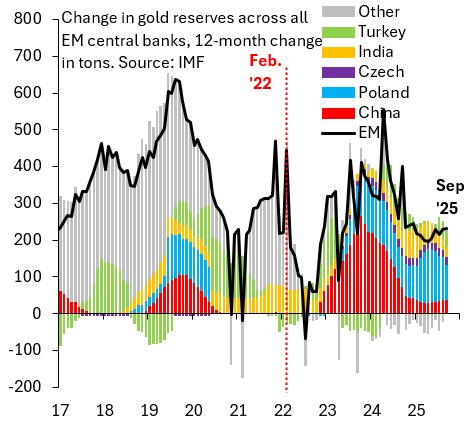
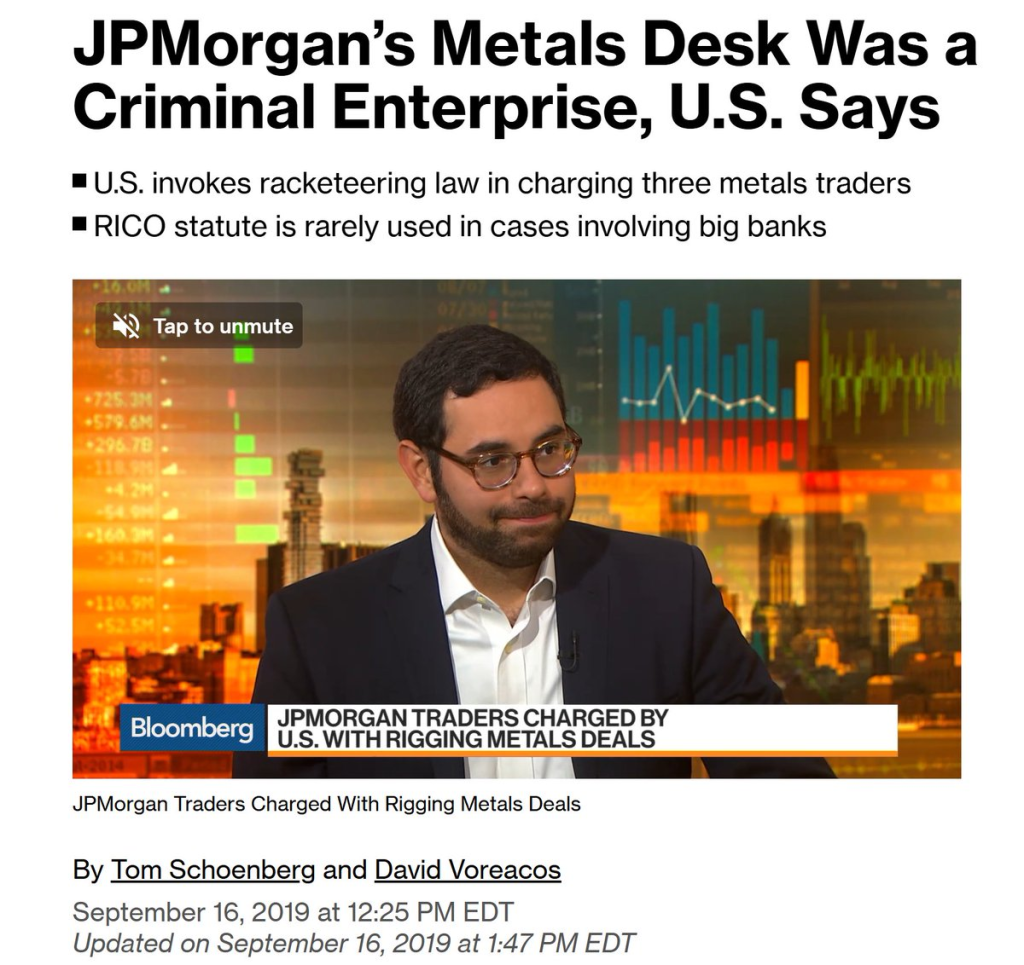
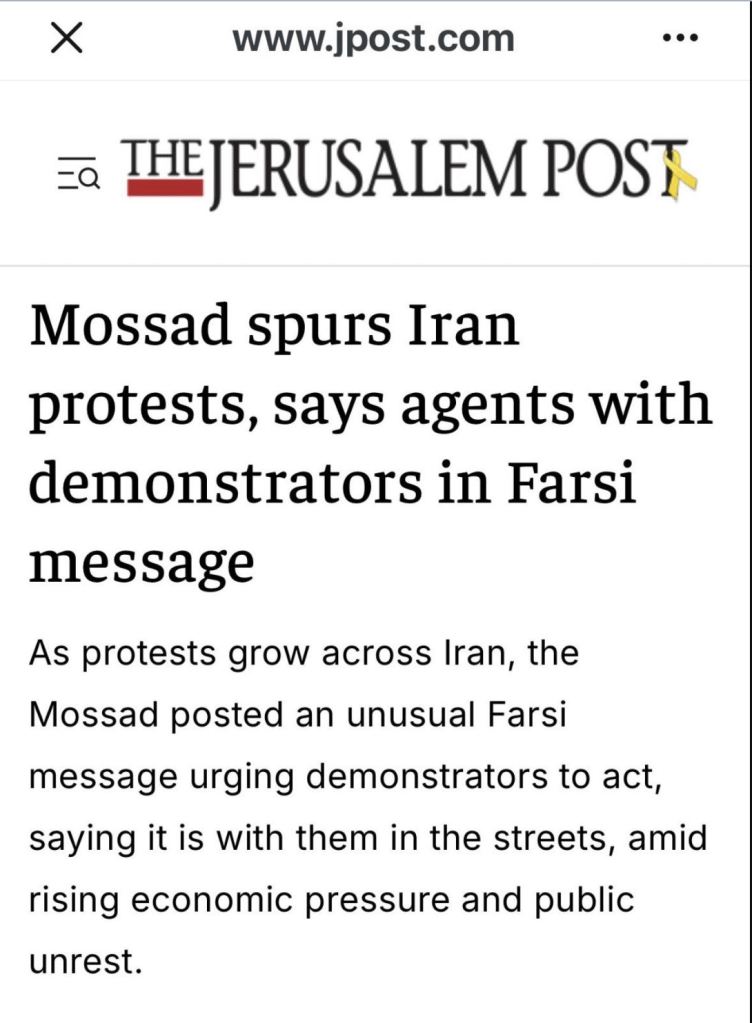
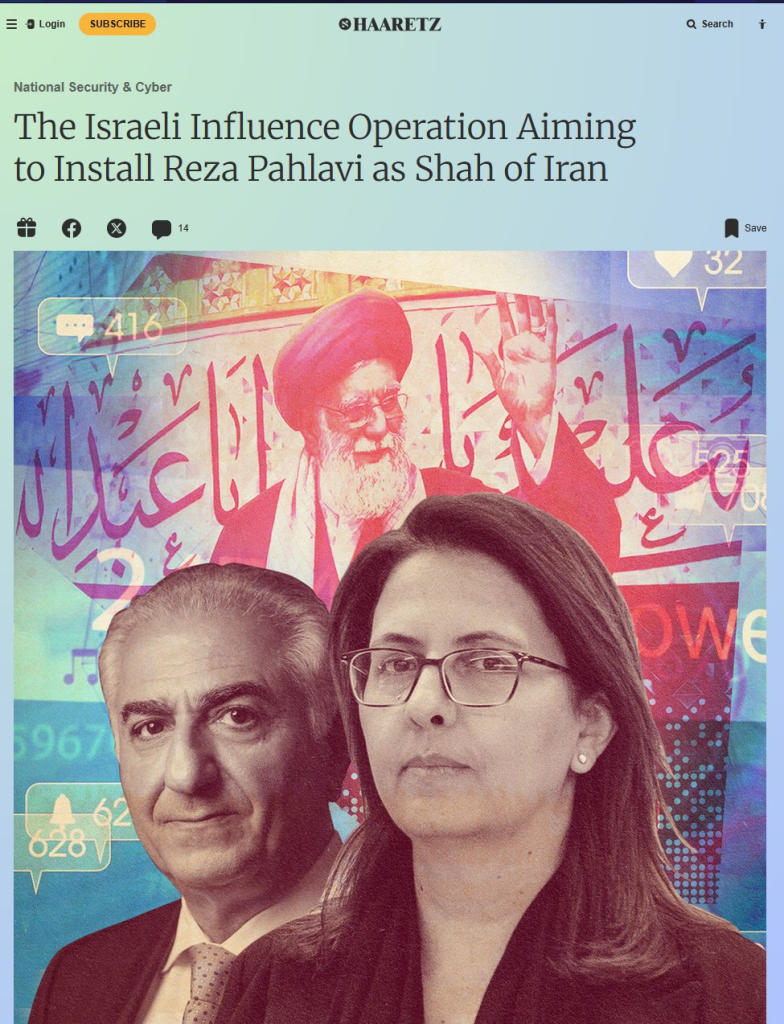
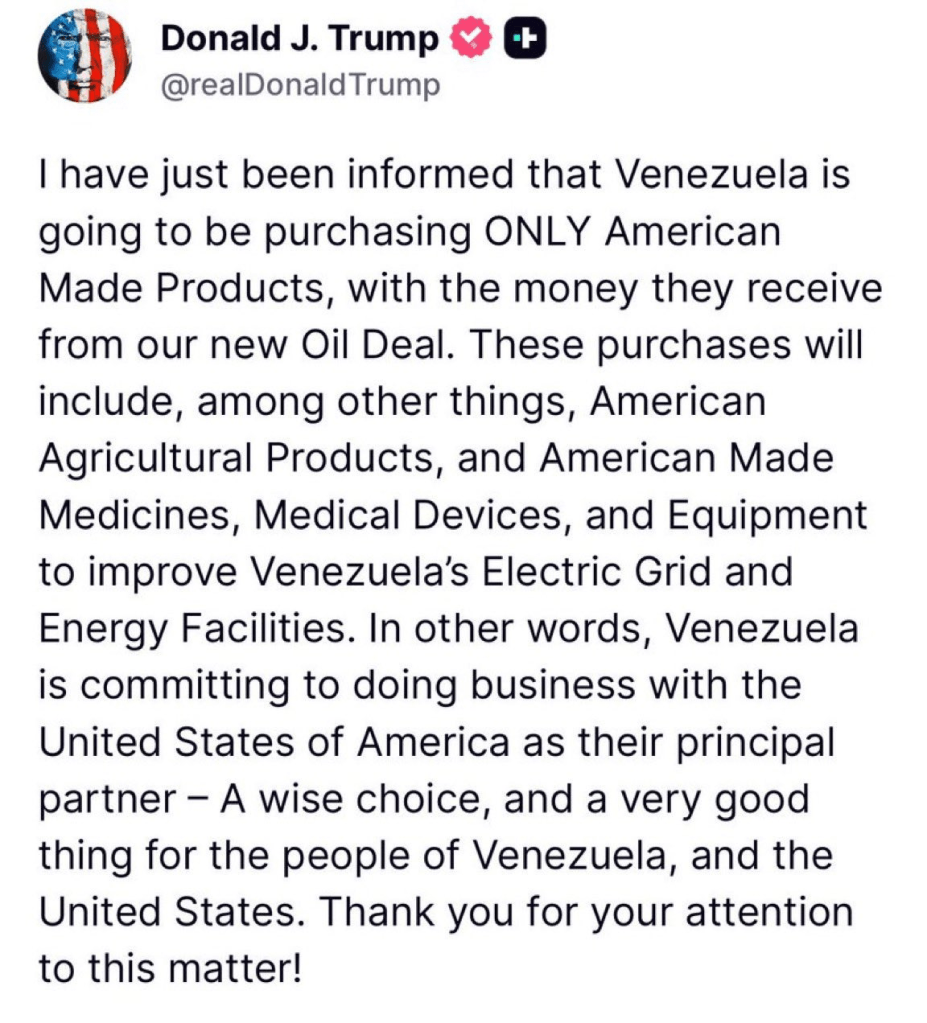
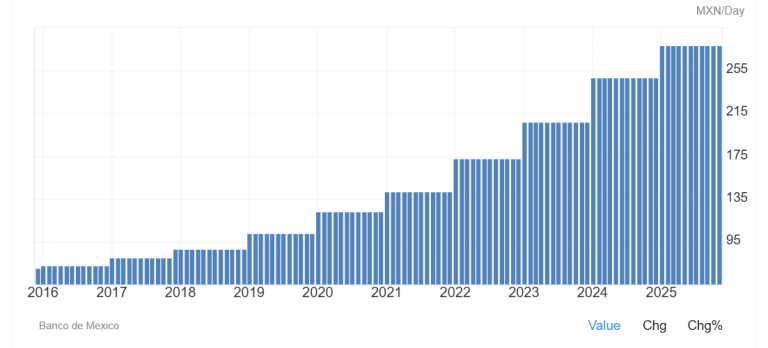
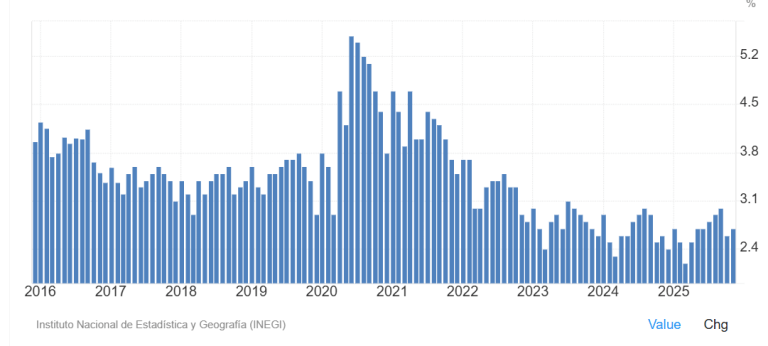
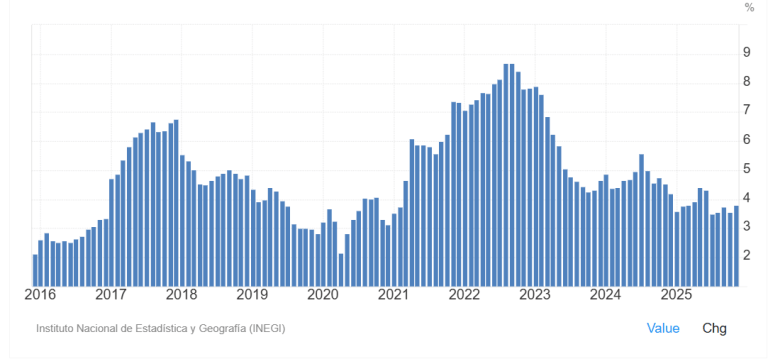
 Nick Corbishley