Journalist covering global financial, economic, and political developments
What Mexico Can Teach Its Northern Neighbour About Combatting Child Obesity, Diabetes and Other Chronic Health Conditions
“The economic burden… of not intervening in the prevention and reduction of childhood overweight and obesity is up to $1.8 trillion in the case of Mexico.”
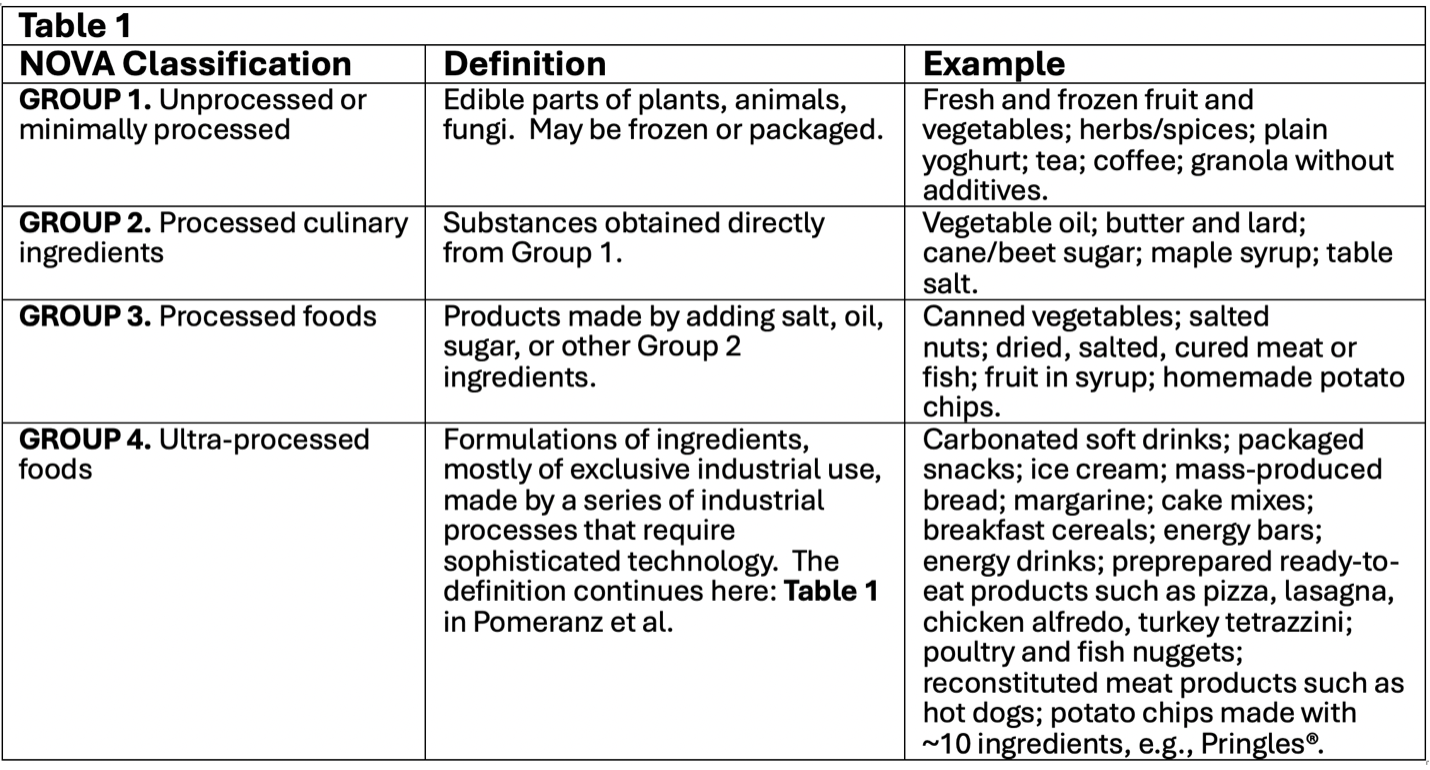
The Trump Administration has, to its credit, produced a wide-ranging report on what it sees as the main drivers of disease in American children — something that has been sorely lacking from its predecessors. Those drivers include lifestyle factors, such as widespread addiction to smart phones, tablets and lack of exercise, the increase in routine immunisations given to children, which is debatable, and over-dependence on ultra-processed foods, which now account for almost 70% of the calories consumed by children and adolescents in the US.
There is no debate about that. As the New York Timesnotes, “these industrially manufactured foods and drinks, like sodas, chicken nuggets, instant soups and packaged snacks, have been linked with a greater risk of obesity, Type 2 diabetes, heart disease and other conditions”.
For the lowdown on ultra-processed foods and the myriad harms they can cause, I turn to one of our two senior resident medical experts, KLG (the other, of course, being IM Doc), and his excellent March 2024 article, Ultra-Processed People in an Ultra-Processed World:
This makes both intuitive and scientific sense. And it stands to reason after minimal consideration that a diet comprising NOVA Groups 1, 2, and 3… will be a healthy diet. This case has been made very well in Ultra-Processed People: The Science Behind Food That Isn’t Food (Norton, 2023), which will be our guide. The author Chris van Tulleken has a PhD in Molecular Virology and a medical degree (MBBS: Bachelor of Medicine, Bachelor of Surgery). He is currently a practicing physician in infectious disease in London and a well-known, award-winning presenter on British television…
UPF is designed to be overconsumed (Chapter 18 of the book “Ultra-Processed People: The Science Behind Food That Isn’t Food”, by Norton). A summary on the science of UPF and the human body:
Destruction of the food matrix by physical, chemical, and thermal processing softens UPF so that they are eaten fast, with the consumption of more calories per minute without feeling satiated.
UPF generally have a high calorie density because they are dry, high in fat and sugar, and low in fiber, which means more calories per mouthful.
UPF displace diverse whole foods in the diet, especially among low-income groups (UPF is cheap at the cash register but only there) and are often micronutrient-deficient despite the normal load of additives. The proper measures of a diet lie in food, not in the individual chemical compounds and minerals that are essential for life. These are often not particularly useful in any case. Fish is good if it is not farmed or loaded with mercury. Fish oil (omega-3 fatty acids) in capsules from the supplement store, not so much.
The mismatch between taste signals and nutrition content of UPF alter metabolism by mechanisms not completely understood, but the obesity epidemic of the past 50 years is clear indication this happens. Artificial sweeteners may have a role in this.
UPF are designed essentially to be addictive, so binges are unavoidable. See Sugar Salt Fat. How many of us have consumed, not eaten, an entire bag of potato chips or a tube of Thin Mints at one sitting?
The emulsifiers, preservatives, modified starches, and other additives are likely to damage the gut microbiome. The microbiome is relatively new to biomedical science, slowly coming into focus in the past fifteen years, but it clearly has broad effects on human health from the brain to the heart. The ostensibly harmless additives to UPF are likely to dysregulate the gut microbiome and lead to inflammation. Chronic inflammation, a concomitant of obesity, is a risk factor for cancer and a host of other diseases.
Convenience, price, and marketing of UPF are intentionally designed to prompt us to eat recreationally. Snack, snack, snack.
Additives and physical processing required for the palatability of UPF dysregulate our satiety system. Other additives probably affect brain and endocrine function. Plastics are essential to the marketing of UPF and are another negative externality altogether.
The production of UPF requires expensive subsidies (i.e., negative externalities associated with Big Ag production of GMO corn and soybean as commodity crops) that lead to environmental damage caused by industrial agriculture. This includes damage to the human and built environment of rural areas and chemical pollution caused by runoff of pesticides, herbicides, nitrogen, and phosphorous. The dead zone at the mouth of the Mississippi River is the most glaring example of the latter.
Back on the topic of the Trump report, even the Times mustered praise for its focus on UPF.
Marion Nestle, an emerita professor of nutrition, food studies and public health at New York University with an unfortunate surname, said the report “did a phenomenal job” explaining how ultra-processed foods are harming children’s health. But she questioned the government’s willingness to act on these findings, given that “in order for them to do anything about this, they’re going to have to take on corporate industry,” including Big Ag, Big Food and Big Chem.
It hardly helps matters, notes Dr. Georges Benjamin, executive director of the American Public Health Association, that while the report calls for “gold-standard research,” the Trump administration has drastically cut funding for science while also halting payments to universities like Harvard and Columbia.
“They’re not walking the walk,” Benjamin told the Times. “They’re just talking.”
If the Trump Administration was genuinely serious about tackling child obesity and all its offshoot conditions, taking on Big Food, Big Ag and Big Chem in the process, it already has an example to follow — from its next door neighbour and largest trade partner, Mexico.
Government Strikes Back
Less than two months ago, Mexico’s Claudia Sheinbaum’s implemented a nationwide ban on the sale of unhealthy food in schools. Under the new regulations, titled “Vida Saludable” (Healthy Living), schools at the basic, upper secondary and higher levels have had to phase out the sale in school stores of ultra-processed foods, with high levels of sugar, fats or sodium such as soft drinks, fried foods, sweets or chocolates.
In their place, schools must offer healthy eating options and drinking water for students as well as sports activities. However, the success of “Vida Saludable” will depend largely on the ability of schools to adapt and the willingness of parents to change their own — and by extension, their children’s — eating habits. As Louisa Rogers writes for Mexico News Daily, that will be easier said than done:
A 2016 study, for example, showed that while Mexican mothers correctly perceived their overweight children to be overweight, they weren’t concerned about it because they viewed it as something temporary that the child would outgrow. By and large, this is not true: One study found that 70% of kids who were overweight at age seven remained overweight as adults.
A 2015 study of 1380 low-income households in Mexico City found that childhood overweight was seen as a normal, even desirable condition: overweight children were seen as “taller, stronger, more of a leader, healthier and smarter than normal and thin children.” The study’s authors noted that mothers and grandmothers tended to define nutrition practices and that grandparents were strongly influenced by memories of a time when overweight children had better chances of surviving malnutrition and disease.
While schools that don’t comply with the new rules can face stiff financial and administrative penalties, the government has repeatedly stated it has no intention of sanctioning parents who put junk food in their children’s lunchboxes. Instead, it will focus on explaining the harmful effects of these foods and the importance of eating a balanced diet. The ban on school sales of UPF is also accompanied by an education campaign that includes proposals for healthy meals.
But the logistical challenges are immense. At most of Mexico’s 255,000 public schools, free drinking water is not available to students. Since 2020, only 4% of them have managed to install drinking fountains.
As Rogers notes, the law prohibiting schools from selling “comida chatarra” (junk food) does not extend to vendors outside the school grounds. According to a report by the Education Ministry (SEP), 77% of schools had such junk food stands nearby. As we warned in October last year, the government’s ban has already given rise to a lively black market in comida chattara (junk food) as well as armies of mini dealers plying their wares at break time.
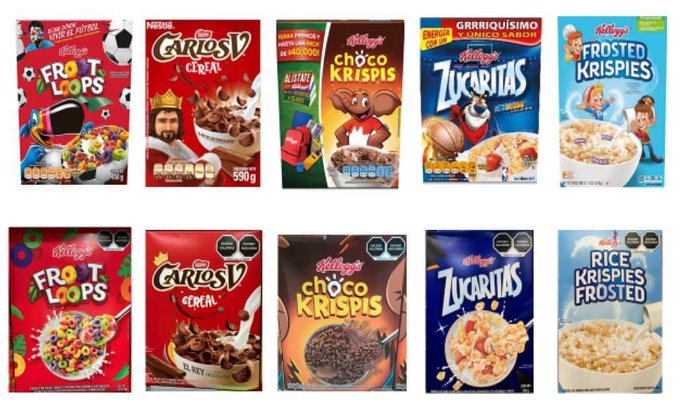
“Vida Saludable” is not the first step Mexico’s government has taken to try to improve Mexicans’ food habits. In October 2020, at the height of the COVID-19 pandemic, the AMLO government passed one of the strictest food labelling laws on the planet. From that date, all soft drinks cans and bottles, bags of chips and other processed food packages must bear black octagonal labels warning of “EXCESS SUGAR”, “EXCESS CALORIES”, “EXCESS SODIUM” or “EXCESS TRANS FATS” — all in big bold letters that are impossible to miss.
Today, more than half of Mexican food and beverage products have a nutritional warning label — more than any other country in Latin America. The government also banned cartoon food packaging aimed at children. Spot the difference:
Big Food lobbies tried to block both of these measures, of course — just as they tried to block “Vida Saludable”. The Interamerican Association for the Protection of Intellectual Property and the Mexican Association for the Protection of Intellectual Property complained that food labelling was unconstitutional and violated the provisions that Mexico had signed at the international level such as the North American Free Trade Agreement — a tactic that has apparently been used in other jurisdictions where food labelling laws have been passed.
After the food labelling law came into force, several junk food companies filed more than 170 injunctions against the new measure. For almost four years the lawsuits dragged on…
 Nick Corbishley