As the world’s largest soft drinks manufacturer faces a consumer boycott in its largest global market, Mexico, its marketers just came up with a cunning plan. But will it work?
For a company whose sales depend so heavily on brand perception, Coca Cola has a serious image problem. In the Middle East, for example, its close ties to and support of Israel appear to be putting a drag on sales in many Arab countries. According to Palestinian activists in Gaza and many BDS activists in the wider Arab world and in some European countries as well, Coke is finally becoming one of its priority targets:
“[T]he BDS movement has always considered Coca-Cola boycottable but has not prioritized it as a target based on its careful and strategic target-selection criteria. This has changed now the local alternatives to Coca-Cola have been gaining market share across the world, including in Palestine, China, Bangladesh, Sweden, Egypt, India, South Africa, Turkey, Lebanon and elsewhere.”
What began as a Palestinian-led boycott movement against companies perceived as supportive of Israel has apparently gained momentum across the region. In the West Bank, the local manufacturers of rival brand of Chat Cola have seen sales soar as shopkeepers “relegate Coke cans to the bottom shelf — or pull them altogether”, reports ABC:
“When people started to boycott, they became aware that Chat existed,” Fahed Arar, general manager of Chat Cola, told The Associated Press from the giant red-painted factory, nestled in the hilly West Bank town of Salfit. “I’m proud to have created a product that matches that of a global company.”
With the “buy local” movement burgeoning during the war, Chat Cola said its sales in the West Bank surged more than 40% last year, compared to 2023.
While the companies said they had no available statistics on their command of the local market due to the difficulties of data collection in wartime, anecdotal evidence suggests Chat Cola is clawing at some of Coca-Cola’s market share.
“Chat used to be a specialty product, but from what we’ve seen, it dominates the market,” said Abdulqader Azeez Hassan, 25, the owner of a supermarket in Salfit that boasts fridges full of the fizzy drinks…
The Coca-Cola Company did not respond to a request for comment.
Whether or not the movement brings lasting consequences, it does reflect an upsurge of political consciousness, said Salah Hussein, head of the Ramallah Chamber of Commerce.
“It’s the first time we’ve ever seen a boycott to this extent,” Hussein said, noting how institutions like the prominent Birzeit University near Ramallah canceled their Coke orders. “After Oct. 7, everything changed. And after Trump, everything will continue to change.”
To meet the rising demand for non-Coke Cola, Chat Cola is looking to expand its operations to other parts of the Middle East, beginning in Jordan. Meanwhile, it was just announced in Scotland that Coca-Cola will no longer be served at the Glasgow Film Theatre after workers at the cinema said they would no longer handle any goods connected to the BDS (Boycott, Divestment and Sanctions) movement, including Coca Cola brands. A statement said:
Following discussions between Unite the Union and the Glasgow Film Theatre, we have come to an agreement to remove Coca-Cola products from the cinema bar, for the duration of the Glasgow Film Festival.
After the festival, the remaining Coca-Cola stock will be used up – as this has already been purchased – before permanently switching to an ethically-sourced alternative. This ensures that no more money will be spent on Coca-Cola.
“Made in Mexico”
The Coca Cola company is also facing a gathering consumer backlash on the other side of the Atlantic, albeit for wildly different reasons, including in one of its most important global markets, Mexico. According to a 2022 study from the University of Yale, Mexico is the leading consumer of soft drinks in the world with an average consumption of 163 litres per person per year — 40% more than the US in second place, with 118 litres. But that market could be at risk.
In early February, rumours began circulating that Coca Cola had fired Latino workers in Texas and reported them to US Immigration and Customs Enforcement (ICE). The allegations, which the company has denied, spread rapidly on TikTok, spawning a movement called the “Latino Freeze” that, among other things, urges consumers to stop purchasing Coca-Cola products and support Latino-owned businesses instead.
The Latin Freeze movement is a US nationwide spending boycott, specifically targeting companies that have rolled back their policies on diversity, equity and inclusion (DEI) as the Trump administration has ramped up its deportations. When Trump began threatening Canada, Mexico and Europe with tariffs on US imports of their products, consumer boycotts of US products began spreading far beyond US borders.
These boycotts are already having a notable effect on some US products. For example, sales of Teslas are down sharply in some European countries including France and Sweden. In a recent poll, 78% of Swedes said they were willing to boycott US products.
In mid-February, as Trump’s threats of 25% tariffs hung over Mexico’s economy like a sword of Damocles, Mexico’s Ministry of Economy decided to relaunch the famous “Made in Mexico” label, with the aim of promoting and giving greater recognition to the products that are made in the country. The “Hecho en México” seal, in addition to shining a light on national manufacturers, seeks to raise public awareness about the importance of strengthening the local value chain and supporting companies that generate jobs and development opportunities in each region.
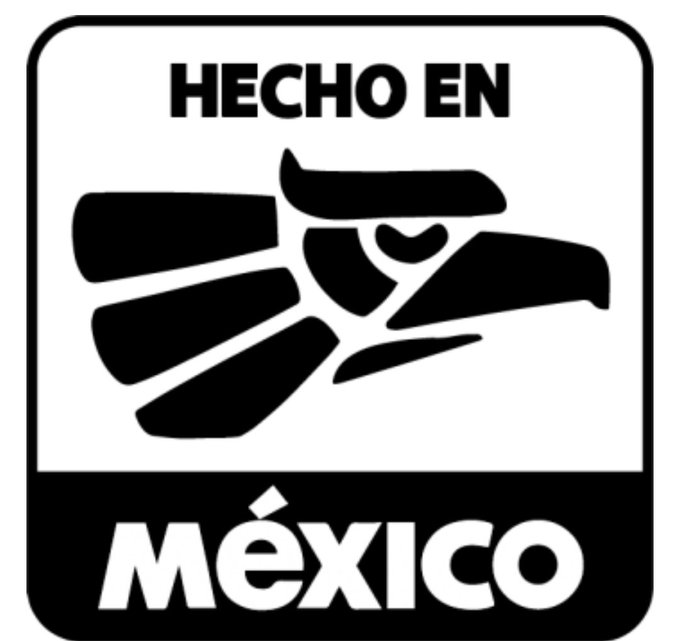
However, it’s not just local companies that are blazoning the above stamp on their products. So, too, are US multinationals including Coca Cola and Walmart, which is by far the largest retail chain in Mexico after spending decades buying up most of the local competition. The grocery giant was recently fined by Mexico’s competition authorities a risible $4.3 million for alleged anti-competitive practices involving suppliers. The agency that issued the fine, known as the Federal Competition Commission, cited concerns about “a relative monopolistic practice.”
Like Walmart, Coca Cola may not be Mexican by origin but its suite of products that are consumed in Mexico are certainly made there — using, of course, huge volumes of Mexico’s scarce fresh water supplies. Any product that is manufactured or assembled in Mexico, and has quality and excellence standards that enhance the identity and reputation of the origin of its raw materials, can use the “Hecho en México” label.
For the moment, only two Coca Cola brands will carry the label — the original Coca Cola and Coca Cola Sin Azúcar — but the initiative is expected to be extended to other brands in the coming months.
The Mexican Coca-Cola Industry (IMCC), consisting of 11 companies including FEMSA, which operates the largest independent Coca-Cola bottling group in the world and the largest convenience store chain in Mexico, has 73 bottling plants, 350 distribution centres and more than 13,000 delivery routes, with which it serves its millions of highly addicted customers. It directly employs more than 100,000 people and claims to generate more than 1.6 million jobs indirectly. FEMSA alone directly and indirectly employs 300,000 people.
So large is Coca Cola’s economic footprint in Mexico that some legacy media articles have even begun warning about the potential economic blowback of the boycotts. On social media, the company reaffirmed its commitment to the Latino and Mexican community:
- “Since we were born in Mexico with our first bottling plant in 1926, we have been and are part of every Mexican family.”
- “Our products are produced locally by local hands and hearts. Buying a Coca-Cola product in Mexico directly supports local economies and jobs.”
- “We are proud to support hundreds of thousands of Mexicans, shopkeepers, farmers and retailers.”
What Coca Cola doesn’t mention is that its bottling subsidiary FEMSA, like Walmart’s Mexico unit, essentially refused to pay any of the corporate taxes it owed in Mexico for more than 30 years. They were apparently able to get away with this because the governments prior to that of Andrés Manel López Obrador (2018-24) had essentially no desire to collect taxes from certain companies, as Raquel Buenrostro, who headed the SAT tax authority under AMLO, told El País:
“Some businessmen were surprised to be summoned [to the tax office] because they had never had to pay the taxes. They told me that every three years they would simply waive the unpaid taxes.”
That all changed when Buenrostro took over as the head of Mexico’s SAT tax authority in 2019 and began pro-actively pressuring multinational companies to finally settle their tax bill.
“When we spoke to Walmart the first time, they said, ‘look, as we’re nice guys (buena onda) we’re going to give you $30 million,” Buenrostro recently recalled in an interview. “I told them it’s not a question of what you give us, it’s what you owe us. There was a serious battle with Walmart, which at one point said: I prefer to litigate for 30 years than pay taxes.”
It was only when Buenrostro threatened to hold the companies and their executives criminally responsible for their tax avoidance policies that they finally agreed to cough up. Years-long and in some cases decades-long legal claims were resolved in a matter of days. But not everybody was happy with the new set-up. The American Bar Association lambasted the Mexican government for using heavy handed tactics. Four ambassadors, from the US, Canada, Japan and France, paid Buenrostro a visit, all in the hoping of convincing her to back off a little, to no avail.
Now, with its strategy of joining the “made in Mexico” bandwagon, the Mexican Coca-Cola Industry (IMCC) seeks to reinforce the brand’s identity in the country and strengthen the bond with its consumers. However, its success will depend on the public perception of the political and social context facing the Coca-Cola Company globally…
Continue reading on Naked Capitalism
 Nick Corbishley