Brazil Mulls Phasing Out Physical Cash, As Central Bank Prepares to Launch CBDC

How did Brazil, a country that until recently was heavily dependent on cash, reach a point where its politicians are now considering eliminating it altogether? The most likely answer is a three letter word: Pix.

It is interesting to watch the starkly different approaches being taken by governments around the world when it comes to managing the role of cash in today’s rapidly digitising economies. The government of Sweden, one of the world’s most cashless economies, has passed legislation to protect access to cash while neighbouring Norway is considering strengthening the right to use cash in retail settings, after cash usage in both countries has dropped to an alarming low.

Slovakia’s government has enshrined the right to pay in cash in the national constitution. Other governments, including Switzerland’s and Austria’s, could end up doing the same. In the US, the state of Florida has passed legislation seeking to prohibit the use of a federally sanctioned central bank digital currency as money. Italy’s Meloni government has raised the ceiling for cash payments to €5,000, from €2,000, despite sharp criticism from the Bank of Italy and the European Commission. Austria refuses to place any ceiling at all.

Other governments, like the UK’s, are happy to stand by and watch as cash dies a slow, quiet death at the hands of the banks, tech giants, fintechs, big box retailers and payment processors. In Australia, the big banks are withdrawing cash services from many of their branches and imposing all sorts of restrictions on cash withdrawals without even a whimper of complaint from the government or regulators. As in the UK, a public backlash is brewing.

Calling for an End to Cash

In Ukraine, one of Europe’s most cash-dependent economies, the Zelensky government has unveiled plans to eliminate physical money altogether, as part of a hare-brained scheme to stamp out rampant corruption. Zelensky is reportedly “very determined” to move Ukraine, a country still suffering from waves of rolling power blackouts and internet outages, towards a cashless economy as swiftly as possible. And he apparently has the full support of Australia’s richest man.

Latin America’s largest economy, Brazil, may be on a similar path, with probably greater likelihood of actually reaching the destination. Last week, it was revealed that the country’s Chamber of Deputies is mulling a number of legislative proposals calling for an end to the printing, minting and circulation of physical notes and coins. According to Brazilian online newspaper R7 Notícias, three of the bills in question call for all financial transactions to be exclusively digital as demand for physical currency dwindles.

The first proposal, presented way back in 2016 by deputy Gilberto Nascimento of the Social Democratic Party, seeks to eliminate the use of coins and cash bills completely. All financial transactions, it says, should be carried out virtually, through applications and electronic platforms. The bill is under consideration by the Constitution, Justice and Citizenship Committee.

The second proposal, tabled by Paulo Ramos in 2020, a former deputy of the Democratic Labour Party, prescribes a more incremental approach. First, the three largest denomination bills (R$50, R$100 and R$200) should be abolished, and then over the next two years the remaining banknotes and coins should be gradually phased out, This project has been under discussion in the Finance and Taxation Committee since last year.

The third proposal, also from 2020, is under the purview of the Economic Development Commission. Proposed by Reginaldo Lopes, the current leader of the governing PT caucus in the Chamber of Deputies, recommends setting a “deadline for the elimination of all production, circulation and use of cash and that all financial transactions after that date take place only through the digital realm.”

The Power of Pix

Although all three of the proposals were presented by current or former members of Brazilian President Luiz Inácio Lula da Silva’s PT party or its coalition partners, it is not clear, at least to me, what Lula’s government’s position is on the future of cash.

Nonetheless, one can’t help wondering: how did Brazil, an emerging market economy that was heavily dependent on cash until just three years ago, reach a point where the amount of cash in circulation is steadily falling and at least three legislative committees are considering proposals to eliminate cash altogether in the not-too-distant-future? The most likely answer is a three-letter word that has rapidly become ubiquitous throughout Brazil: Pix.

Continue reading on Naked Capitalism

Could New BRICS Member Argentina Become First Country to Receive a Full-Scale BRICS Bailout?

The country is once again in deep crisis mode, with decades high inflation, a crumbling currency and no foreign currency reserves. It is shackled to the IMF but now faces the possibility of being able to tap alternative sources of finance.

What a difference a day can make. On Wednesday afternoon, it seemed that Argentina would not be admitted to the BRICS grouping following months of speculation that it was a virtual shove in. Mercopress even reported that Argentina’s President Alberto Fernández had called off his scheduled trip to Johannesburg to attend the summit after learning that his country would not be joining the BRICS during this round of admissions.

By Wednesday evening, news outlets around the world were reporting that Argentina was no longer on the list. One of the key participants of the Argentine government’s visit to the IMF’s HQ in Washington this week said “the Fund and the BRICS are two very different families,” suggesting a clash of interests between one group and the other. Even as late as Wednesday night, Reuters was reporting that divisions persisted among BRICS members on how much to expand the bloc’s membership and how quickly:

An agreement had been meant to be adopted following a plenary session earlier on Wednesday, but the source said it had been delayed after Indian Prime Minister Narendra Modi introduced new admission criteria.

Asked about the delay, an Indian official aware of the details of the talks told Reuters late on Wednesday that the discussion were continuing.

“Yesterday … India pushed for consensus on criteria as well as the issue of (candidate) names. There was a broad understanding,” he said.

By Thursday morning, that “broad understanding” had given way to full, unanimous agreement. For the first time since late 2010, the BRICS’ doors was open to new members, those members being Saudi Arabia, the United Arab Emirates, Iran, Egypt, Ethiopia and Argentina. Four countries from the Middle East, a region that until now the US and Western Europe have collectively dominated for over a century and another from Africa (though Egypt is also, of course, an African country). Look at a map and you will see what the Rev Kev noted in comments yesterday:

[T]he Persian Gulf is now flanked on both sides by BRICS members as is the Suez Canal. And Ethiopia seems to be in a pretty strategic place too for that matter.

Half a World Away

The other new member, Argentina, is half a world away. And for the umpteenth time, it is in the grip of a very serious financial crisis.

Though much anticipated, the enlargement of the BRICS will have myriad potentially game-changing ramifications. The fact that three of the six countries (Saudi Arabia, Iran and the United Arab Emirates) are among the world’s eight biggest oil producers while another, Argentina, could (and should) become a major natural gas exporter in the coming years is a sobering reminder of the enduring importance of fossil fuels.

The BRICS alliance now includes two of the world’s three preeminent oil producers, Saudi Arabia (#2) and Russia (#3), which will probably further erode the influence of the US (#1) over global energy markets in the future. Also hugely significant as well as welcome is the fact that Iran and Saudi Arabia, two countries whose bitter rivalry has played an important part in destabilising the Middle East in recent decades, appear to have put their differences aside to join the BRICS. Lest we forget, it was Beijing that brokered the initial reconciliation between the two regional powers.

There are many other wide ranging ramifications of the BRICS enlargement (some of which were discussed in this cross-posted piece by Andrew Korybko), but for the sake of this article, I am only interested in exploring one: the possibility that Argentina, once again in deep crisis mode, could soon become the first recipient of a full-scale BRICS bailout.

The country is grappling with inflation of over 100% as well as an acute dollar shortage after a historic drought caused total agricultural losses of €17.6 billion, or 3% of Argentine GDP. In fact, it would have probably already defaulted on its $44 billion IMF bailout if it hadn’t been for the $18.2 billion currency swap arrangement Argentina’s government signed with Beijing back in April, which enabled it to continue servicing the debt.

In recent weeks, Argentina, a country wearily accustomed to upheaval, has been rocked by multiple political and economic shocks. First came the news that Javier Milei, a fake libertarian populist with close ties to Koch-sponsored think tanks as well as one of Argentina’s richest monopolists, had come out on top of the recent primary elections, largely on the back of widespread disaffection with the two mainstream parties. Milei is promising to “burn down” the central bank, put the Argentine peso out of its misery and fully replace it with the US dollar, privatise all assets still in the public domain, endorse sanctions on Russia and realign Argentina’s foreign and economic policies with the US and Israel.

Shortly after the elections, the outgoing Alberto Fernández government devalued the Argentine peso by 18% and raised the benchmark interest rate by 21 percentage points to 118%, which will inevitable push Argentina’s three-digit inflation rate (113 % at last count) even closer to hyper inflationary levels. Reuters described the government’s two measures as “politically costly moves amid a presidential campaign.” This is especially true given that the man who executed them, Economy Minister Sergio Massa, is the governing Peronist coalition’s candidate in the presidential election.

Eerie Echoes of 2001

So it has transpired. The spectre of even faster rising prices, especially of food and other essentials, has allegedly triggered a wave of looting in cities such as Mendoza, Cordoba and Nequen that bear eerie echoes of the chaos that gripped Argentina during the economic crisis of 2001-02. I use the word “allegedly” because some government figures deny that the looting is happening, insisting that the images are fake and are being generated by opposition forces intent on further destabilising the country. From El País on Wednesday:

The governor of the province of Buenos Aires, the Peronist Axel Kicillof, has pointed to “an organised campaign” that began at the weekend spreading “false denunciations” and “fake images”… The presidential spokesperson, Gabriela Cerruti, went a step further. “This is an operation carried out by the people of Javier Milei, whose objective is to destabilise, generate uncertainty and undermine democracy,” she said in a live broadcast on Tuesday night.

Argentina’s latest devaluation of its currency and hike in interest rates is seen as positive by the IMF and Wall Street. As Mexico’s El Financiero reported, Bank of America strategists called the devaluation “broadly positive” given the currency was “highly overvalued”, and said it was good that the current government was bearing the burden of some of the necessary macroeconomic adjustment. “It should be favourable to the IMF deal pending IMF Board approval for a $7.5 billion loan disbursement,” they wrote.

And so it proved to be. On Wednesday, the Fund approved the disbursement of $7.5 billion for Argentina after completing the fifth and sixth reviews of their $44 billion program, which is essentially a 2020 restructuring of the $57 billion bailout requested by Macri in 2018.

That Massa was in Washington negotiating another instalment in Argentina’s IMF loan at the same time that the five original BRICS members were debating whether to admit Argentina as a new member speaks volumes about Argentina’s current place in the world. It is shackled to the IMF, an institution with which it has a long, painful relationship and to whom it still owes $46 billion, making it the IMF’s largest debtor. But it also faces the possibility, for now undefined, of being able to tap a new source of funding, from the BRICS’ New Development Bank…

Continue reading on Naked Capitalism

The Moment of Truth Arrives for Mexico’s Anti-GM Corn Laws

This may be an important battle for Big Ag lobbies and biotech companies but it is an existential one for Mexico, for whom corn is the cornerstone not only of its cuisine and diet but also its culture.

Following months of failed negotiations, the U.S. government has escalated its food fight with Mexico by calling for the formation of a dispute settlement panel under the USMCA North American trade deal. The cause of the dispute is a decree passed by Mexico’s government that seeks to prohibit the use of genetically modified (GM) yellow corn for human use. Its reasons for doing so include protecting the health of the population, the environment and Mexico’s genetic diversity of maize.

The U.S. Trade Representatives Office, or USTR, argues that Mexico’s restrictions on GM corn imports are not only not based on “science” but “they undermine the market access [Mexico’s government] agreed to provide in the USMCA.”

Mexico is the birthplace of corn as well as the world’s richest repository of corn varieties. But it is also the second largest buyer of US-grown GM yellow corn, which is used almost exclusively for animal feed. This is thanks largely to NAFTA, which eliminated the Mexican government’s protection mechanisms for Mexican farmers while preserving U.S. corn subsidies for US farmers.

The largest buyer, China, is also trying to wean itself off US corn, partly by buying from other major suppliers, such as Brazil and Argentina, but also by expanding its own cultivation of yellow maize. It has its own set of reasons for wanting to do so, including its ever escalating trade war with the US. If Mexico were to do the same, as it is trying to, US corn growers could have serious difficulty finding replacement markets, with big knock-on effects for Big Ag,  biotech firms and the four of five US states that depend heavily on the corn industry.

A Long, Legal Battle

This is a battle that has been raging since at least 2002, when transgenic traits were found in native maize varieties in the southeastern state of Oaxaca. As Timothy A Wise, a senior research fellow at Tufts University’s Global Development and Environment Institute and a senior advisor at the Institute for Agriculture and Trade Policy (IATP), recounts in chapter 7 of his book, Eating Tomorrow, “Not only had the transgene migrated on the wind, through maize’s open pollination, it had done so despite a nationwide ban on the planting of transgenic maize.”

Since then the world’s biggest GM seeds company have been trying to get official approval for the experimental and commercial planting of GM crops, including maize, in Mexican soil. In 2005, they finally got what they wanted when the Vicente Fox government lifted a seven-year moratorium on the cultivation of GM crops in Mexico. For the first time ever, GM maize could be planted in the country, but only in areas that were not considered “centres of origin for the crop.”

This stipulation would later become pivotal when new scientific research revealed that more or less all of Mexico, including the fields earmarked for GM crop trials in the northern borderlands, were centres of origin for maize.

Corn is the cornerstone not only of Mexico’s cuisine and diet but also its culture. In 2007, a mass social movement emerged bringing together more than 300 peasant organisations, environmentalists, human rights defenders, small and medium-scale producers, consumers, academics, women’s groups and chefs. They gathered under one unifying slogan: “Sin maíz, no hay país” (without maize, there is no country). Their mission was (and still is) to preserve Mexico’s native maize varieties as well as avert legislation that would apply brutally rigid intellectual copyright laws to the crop seeds they are able to grow.

In 2013, a collective of 53 scientists and 22 civil rights organisations and NGOs brought a suit against the GMO giants. And won. In September of that year, Judge Jaime Eduardo Verdugo issued a precautionary injunction on all further permits of GM crops, citing “the risk of imminent harm to the environment.” Shortly after that, another brave judge, Marroquín Zaleta, suspended the granting of licenses for GMO field trials sought by Monsanto, Syngenta, Dow, Pionner-Dupont and Mexico’s SEMARNAT (Environment and Natural Resources Ministry), as I reported for WOLF STREET at the time:

In defending his ruling, Zaleta cited the potential risks to the environment posed by GMO corn. If the biotech industry got its way, he argued, more than 7000 years of indigenous maize cultivation in Mexico would be endangered, with the country’s 60 varieties of corn directly threatened by cross-pollination from transgenic strands. Monsanto’s response was as swift as it was brutal: not only did it – and its lackeys in the Mexican government – appeal Zaleta’s ruling, it also demanded his removal from the bench on the grounds that he had already stated his opinion on the case before sentencing.

However, Monsanto’s bullying tactics failed to impress the judges [of Mexico’s federal appeals court]. On August 15, the court convened to review Zaleta’s alleged bias ruled against the US corporation’s legal suit. Also spurned by the Mexican courts was the world’s third largest GMO seed manufacturer, Syngenta, whose reapplication for a license to run test trials of its maize crops was rejected.

Phasing Out GM Corn Imports

Andrés Manuel López Obrador (aka AMLO) is the first Mexican president in a long time to have prioritised Mexico’s food sovereignty. Even on the campaign trail, in 2018, he said:

“We buy over 14 million tonnes of corn. (…) This is a contradiction, an aberration. Corn originally comes from Mexico and it now turns out that Mexico is one of the biggest importers of corn in the world. This cannot go on.”

Once in office he began putting his words into action. In late 2020, he passed a decree to phase out all imports of GM crops, including corn, and the herbicide glyphosate by January 2024. The decree enjoyed the support of many agricultural, environmental, public health and consumer groups.

But it also prompted a concerted push back from Big Ag lobbies and global biotech behemoths, which ultimately prompted a partial retreat from AMLO. In February this year he issued a new decree reiterating plans to block GM corn imports for human consumption but eliminating the deadline for imports intended for livestock feed and industrial use, which encompasses almost all US corn. The government reserved the right to substitute GM corn for animal feed some time in the future.

In other words, the process of weaning Mexico off GM corn would take longer than originally envisaged. One reason for this is that Mexico was struggling to build up its own production of non-GM yellow corn. What this meant is that the new decree would have minimal impact on US farmers, at least for some years to come, as Mexico gradually reduces its imports of . Only four percent of US corn exports are white corn, and most of that does not go into tortillas. Yet even that did not placate the US government…

Continue reading on Naked Capitalism

Better Late Than Never? Spain’s El País Sounds Alarm Over Consequences of Ukraine “Proxy War” for EU’s Future

After enthusiastically selling the war since its inception, the mainstream media in Europe may be beginning to change its tune.

As the undeniable failure of Ukraine’s much-anticipated counter offensive begins to sink in on the old continent, another crack in the media narrative around the conflict has appeared — and what’s more in one of Europe’s newspapers of record, Spain’s El País. On Monday, the newspaper published an op-ed (behind paywall) by José Luis Cebrián titled “Defending Ukraine to the Death… of Ukrainians.” The article raises serious concerns about the real objectives of the war, the way it is being waged and its impact on the European Union, much of which is encapsulated in the article’s sub-heading:

“The war is a proxy war between NATO and Russia that has roots that predate the invasion whose immediate consequence has been the subordination of the EU project to the objectives of the [NATO] military alliance.”

This one sentence makes three points that are hardly news to NC readers but may be to many loyal El País readers: first, what is happening in Ukraine is not a David versus Goliath struggle between an aggressive superpower and a small but plucky neighbour, as newspapers like El País have been claiming for the past year and a half, but rather a proxy war between the world’s two largest nuclear powers; second, its roots long predate Russia’s Special Military Operation of February 2022; and third, the EU project has essentially been subordinated to NATO’s military goals, which are essentially Washington’s military goals.

A Very Influential Man

Granted, the article is an opinion piece, meaning it does not reflect the newspaper’s official editorial line. But Cebrián is not your average contributing op-ed writer. He is the co-founder and honorary president of El País, as well as former CEO and chairman of Grupo Prisa, the Spanish media conglomerate that owns the newspaper. He is also vice president of the Asociación de Medios de Información, a Spanish media lobbying group. According to Wikipedia, “Cebrián has been considered by various international media as one of the ten most influential Spaniards in Spain and Latin America for 44 years (from 1976 to 2019).”

He is also, as Wikipedia notes, “the only Hispanic academic member of the Bilderberg Club and the only Spanish-speaking member with executive functions in that organisation.”

In other words, anything Cebrián writes in El País, the newspaper he helped create, holds weight. It also means that the message conveyed in this op-ed, which represents a stark departure from the prevailing media narrative of the last 18 months and is based on a speech Cebrián recently gave to the participants of a program organised by Madrid’s Complutense University and the Institute for Strategic Studies, comes from the very highest levels of Europe’s media establishment.

Now, a few choice excerpts (comments in brackets my own):

We are facing a transcendental issue for the future of Europe upon which the political class has avoided any debate in recent electoral campaigns, despite the implications for the security and development of our country.

In order to analyse the effects of the war, it is necessary to look at its causes (NC: what a smart idea!! If only El País and other influential media had done this 18 months ago!), both the deep-rooted and the more recent ones. I began (my speech) by evoking John L. O’Sullivan, an American journalist who in 1845 proclaimed the “manifest destiny” of the as yet inexistent US empire. Said destiny was to spread throughout the continent, “allotted by providence for the development of a great experiment in freedom and self-government.” This is how he justified the annexation of Texas, Oregon and California, before the United States seized more than 50% of the territory of Mexico and intervened in the Cuban and Philippine revolutions against the Spanish crown.

After describing the westward expansion of the fledgling United States and the early spasms of the US empire, Cebrián proceeds to plot the US’ passage through two world wars, for which, he says, Western Europe owes “the people and government of the United States” a “debt of gratitude.” But he also discusses the US’s many military misadventures, from Vietnam to Afghanistan, to Iraq, Libya and Sudan, and their heavy toll, including 500,000 deaths in Iraq alone.

Mackinder and Brzezinski

After that, Cebrián brings in Halford Mackinder’s World Island theory — the idea that “whoever rules the continental heartland (of Eurasia) controls the World Island, and whoever rules the World Island controls the world.” He then recounts how the former US National Security Adviser Zbigniew Brzezinski used that theory to push for NATO expansion right up to the borders of the newly formed Russian Federation. Most controversially, the plan included incorporating the former Soviet republics of Ukraine and Georgia into the military alliance (two glaring red lines for Russia’s political and military establishment):

 [Brzezinski] recognised that Russian public opinion and broad segments of Ukrainian society considered the shared origin, and therefore destiny, of both countries inviolable. Against this backdrop, there was at least one verbal agreement between the United States and Moscow that guaranteed that Kiev would not join the Alliance, as an unwritten condition for prompt German reunification.* Brzezinski argued that the new European security framework should be based on a close alliance between France, Germany, Poland (his native country) and Ukraine. That would be the way to dominate the heart of Eurasia and by extension control the world. This is the path we are on…

In 2013, the White House sponsored the Euromaidan coup and popular revolution against the pro-Russian Ukrainian president. Moscow’s response was to invade Crimea in 2014. That same year Jens Stoltenberg was appointed Secretary General of NATO, who has pursued out an opportunistic policy of publicly arguing for cooperation with Russia while deploying forces in the countries of central Europe, despite concerns, flagged by Kissinger among others, that no government in the Kremlin would allow the installation of potentially offensive bases 300 kilometres from Moscow.

Russia, A Country in Decline

Russia, Cebrián then says, is a country “in decline,” with a shrinking population and gross domestic product, before adding that “it remains the world’s leading nuclear power.” This is a bizarre statement given that Russia’s autarkic economy has weathered 18 months of all-out war against it from both the US, the world’s [declining] economic superpower and the EU. It also just overtook Germany to become the fifth wealthiest economy in the world and the largest in Europe on PPP (purchasing power parity) terms.

This, I suppose, goes to show that even as Europe’s elite begins recrafting a new narrative around the Ukraine war — which is beginning to happen as that same elite finally realises that Ukraine has zero chance of recapturing its lost territory while the damage to Europe’s economic health continues to mount — they will continue to downplay Russia’s strengths. The fact that Russia’s largely autarkic economy has withstood all 11 rounds of EU sanctions against it far better than the EU’s own economy is by the by…

Continue reading on Naked Capitalism

Argentina Just Took a Step Closer to Dollarising Its Economy, And Away from the BRICS

There is a lot riding on the outcome of the upcoming general elections, not just economically but geopolitically, and not just for Argentina but across Latin America and perhaps even the globe.

Amid its worst economic crisis since the the depression of 1998 to 2002, Argentinians went to the polls this past weekend for primary elections, just two months before the generals. The results were, to put it mildly, a shock. Javier Milei, an avowed libertarian with big hair and far-right sympathies who is on a mission to rid Argentina of its political caste, won 30% of votes, more than both the main conservative “Macrista” bloc (28%) and the ruling Peronist coalition (27%).

In a stunning rejection of the two main political blocs that have governed Argentina for the past two decades, voters opted for an unknown quantity. Once again, the opinion polls got the outcome completely wrong.

A Dress Rehearsal

Voting in the primaries is obligatory for most Argentine adults, each of whom gets one vote. As Al Jazeera notes, this effectively makes it a dress rehearsal for the October 22 general election, giving a clear indication of the favourite to win the presidency. And that favourite this time round is Javier “the Wig” Milei, until recently a virtual nobody who can now more or less rest assured that he will at least make it to the second ballot (like France, Argentina has a two-round system of voting for its presidential election.

The two other main candidates are Sergio Massa, the current economy minister who is closely tied to the Clintonite core of the US Democratic Party but is likely to continue to pursue BRICS membership, dedollarisation and the expansion of bilateral trade with both China and Brazil, its two largest trading partners; and Patricia Bullrich, of Together for Change, a pro-US liberal-conservative bloc that helped propel Mauricio Macri to the presidency in 2015. Bullrich was minister of labour, employment and human resources during the disastrous de la Rúa government (2000-01) and in a recent speech in Miami called for the creation of a “NATO of the South” to combat organised crime in Latin America.

Milei’s political party, La Libertad Avanca (Freedom Advances), is only two years old but it could be on the verge of taking power, either on its own or as part of a coalition, presumably with the Macristas. If that happens and Milei is able to form a government and actually honours many of his main campaign pledges and is able to build broad enough support in Congress to enact his reforms (probably the biggest “IF” of all), it will have repercussions not only in Argentina but across Latin America and perhaps even globally.

But before we discuss Milei’s campaign pledges and their broader potential ramifications, let’s first take a look at who he is. What are his political ideas and principles? Does he actually have any? Where did he suddenly sprout from? How did he get from being a political nobody to becoming the presidential front runner in just seven years?

”Politics is the means by which men without principles lead men without memory.” Voltaire (allegedly).

Whether the above quote is Voltaire’s or not, it nicely sums up Milei’s rise to prominence. Not only does he appear to be a man without principle but many of his followers appear to have completely forgotten what happened to Argentina the last time someone made similar promises. Spoiler alert: it didn’t end well (more on that later).

Until seven years ago, Milei made his living as an economist working for and with different organisations, some of which one might think would clash with the libertarian principles he espouses (disclaimer: I myself am not a libertarian). For example, Milei is a member of the World Economic Forum, which serves the global plutocrat class, proudly describes itself as the “international organisation for public-private partnerships” ( i.e, corporatism), and is one of the biggest proponents of centralised, technocratic, top-down governance on the planet.

Milei has also worked as senior economist at the Argentinian subsidiary of HSBC as well as head economist for Corporación America, a conglomerate belonging to Eduardo Eurnekián, one of Argentina’s richest men. The company has virtual monopoly control over the airports of Argentina and other LatAm countries. Again, any genuine, self-respecting libertarian would oppose, with every sinew of their being, the very existence of monopolies and monopolists, let alone work for one for over ten years.

Milei also owes his political career to Eurnekián, who also owns part of Grupo América, one of Latin America’s biggest media conglomerates. When Eurnekián realised that Milei had a certain gift of the gab, Grupo América began inviting Milei on its news and chat programs, where he would rip into Argentina’s then-President Mauricio Macri, with whom Eurnekián had a history of beefs. In effect, Eurnekián and his partners gave Milei an enormous soapbox from which to project his views, which is how he became a media sensation, then an MP and now a presidential candidate with a real chance of becoming president.

Perhaps worst of all, Milei worked for Antonio Bussi, a military general who tortured and killed untold numbers of people during the dictatorship, including a 16-year old girl. After the transition to democracy, in the mid-’80s, all indictments against Bussi were dropped as part of the “full-stop” law (though the charges would be reinstated decades later, leading to a sentence of life imprisonment). A free man in a new world, Bussi ran for governorship of the state of Tucaman and won, becoming the only senior figure of the previous dictatorship to be elected to public office in the democracy that replaced it.

In the mid-’90s, by which time Bussi’s grisly crimes were common knowledge, Milei worked on two contracts for the governor. Asked about it in an interview, Milei said: “I did my work, it came to an end and I left.”

Milei also has ties to the US-based, Koch-funded Atlas Network, which since its inception in 1981 has forged loose partnerships with more than 450 “free-market” think tanks around the world, including many in Latin America. As Lee Fang reported for The Intercept in 2017, the network has operated “as a quiet extension of U.S. foreign policy, with Atlas-associated think tanks receiving quiet funding from the State Department and the National Endowment for Democracy, a critical arm of American soft power.”

A Blast from the Past

Milei’s campaign proposals range from classic neoliberal fare (charging poor people for public healthcare, cutting retirements and pensions, removing currency controls and “taking a chainsaw to public spending”) to more radical proposals such as “blowing up” the central bank (which I suppose is one way of forestalling central bank digital currencies); selling off all public assets; abolishing the Argentine peso and adopting the US dollar as the official currency; to the outright macabre, such as legalising human organs sales.

“If you want to end the scam of monetary emission to cover for the treasury and end inflation, given that Argentine politicians are thieves, the only way is to close down the Central Bank and, at least at the beginning, dollarise [the economy],” Milei tweeted a few months ago.

By contrast, the outgoing Alberto Fernández government, like many governments not fully aligned with the US, has been trying to reduce its dependence on the dollar by dedollarising Argentina’s trade with China and Brazil, its two largest trading partners. But Milei wants to take the country in the exact opposite direction, with potentially disastrous consequences, as I noted in my May 23 article, Could Argentina Become the Next Latin American Country to Dollarise Its Economy?:

Currently, 11 foreign nations and non-US overseas territories use the dollar as their official currency of exchange. Six of them are in Latin America and the Caribbean: Ecuador, Panama, El Salvador, the British Virgin Islands, Turks and Caicos, and Bonaire. Milei would like Argentina to be the next.

The idea enjoys support among certain US economists [but is]… opposed by roughly 60% of voters, but has gained traction among a certain segment of the population as Argentina’s currency crisis deepens….

Argentina’s economy is already heavily dollarised given the Argentine peso’s more-or-less uninterrupted fall in value over the past 23 years. At the beginning of the century it was fixed by law at parity with the dollar but is now worth less than half a cent in US dollar terms. As El País puts it, “Argentina is a country with two currencies that keeps whatever dollars it can get under the mattress.” Not only are savings kept in dollars; many real estate transactions are conducted in the US currency. Even rentals and smaller transactions often require greenbacks.

But there is a huge difference between having a dual-currency regime — as is the case with many emerging market economies with weak local currencies — and abandoning your national currency altogether. Many see dollarisation as a quick fix to resolving Argentina’s chronic financial and economic troubles, pointing to Ecuador’s history of relatively low inflation since adopting the dollar in 2000. But many other countries in Latin America, including Mexico, Brazil, Peru, Paraguay and Bolivia, have also managed to keep inflation in check without having to eliminate their currency and adopt the dollar. In fact, both Brazil and Mexico’s inflation rates are currently below the EU average.

“Argentina is not in a position to undertake dollarization because this requires Central Bank dollar reserves it doesn’t have,” said economist Julián Zícari, who wrote a book on the history of Argentina’s economic crises, adding that “trying to [dollarize] would cause a complete evaporation of wages and pensions.”

It would also mean the end of any semblance of Argentinean sovereignty, as the South Korean economist Ha-Joon Chang warned during a recent visit to the country:

If you want to adopt dollars as your official currency you should apply to become a colony of the United States of America because that’s what it makes you. This means your macroeconomic policies will be written in Washington DC…

This is a lesson that Ecuador is learning the hard way. Since adopting the USD as its official currency, Ecuador has suffered periodic social and economic crises that have come to a head since 2019. To what extent this is due to dollarisation is impossible to gauge, but one thing that is clear is that it significantly hampers any crisis response. When a crisis begins, the State’s hands are almost completely tied. It cannot distribute income and has limited capacity to protect or promote domestic industries. What’s more, the decision to tie oneself to the dollar, once made and acted upon, is difficult to reverse…

Continue reading on Naked Capitalism
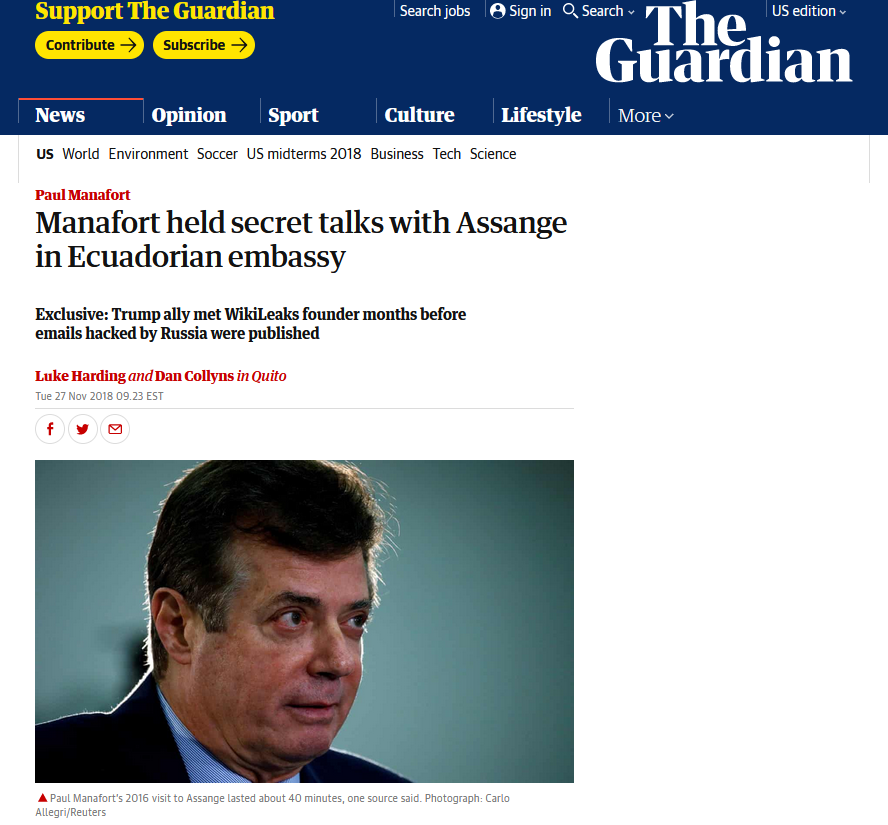
Ecuador Descends Deeper Into Chaos Following Assassination of Presidential Candidate Fernando Villavicencio

Ecuador was already in a major crisis; now it is in an even bigger one.

In what appears to have been a highly professional hit job, Fernando Villavicencio, one of the eight candidates in Ecuador’s upcoming presidential election, on August 20, was assassinated on Wednesday (Aug 9). The candidate was shot three times in the head by sicarios while boarding his campaign vehicle after a political rally in Quito. Nine people were wounded in the shooting. The police arrested six people in relation to the assassination, one of whom died in police custody after reportedly sustaining a bullet wound during the hit.

Villavicencio’s death was confirmed by Ecuador’s outgoing President Guillermo Lasso, who posted the following message on his Twitter (X) account:

“My solidarity and condolences to his wife and daughters. Because of their memory and their struggle, I assure you that this crime will not go unpunished.”

The Ecuadorean police say the six suspects arrested in connection with the assassination are Colombian, which prompts the question: are they ex-military? This may explain their ability to pull off three head shots from a distance in the middle of a crowd. It’s also worth recalling that Colombian mercenaries were also behind the assassination of Haitian President Jovenel Moïse in 2021.

“Time for the Brave”

Before his assassination, 59-year old Villavicencio was placing fourth or fifth in most polls. He took a particularly hard line on the drug cartels that have made life insufferable for everyday Ecuadorians over the last two years. “Being silent and hiding in moments that criminals kill citizens and officials is an act of cowardice and complicity,” he said. “I double down on my decision to go on fighting daily to defeat the mafias.”

Before entering politics, he was a muckraking journalist who made a name for himself exposing the corruption of the government of former leftist President Rafael Correa, currently in exile in Belgium. On the campaign trail Villavicencio portrayed himself as an anti-corruption crusader and campaigned under the slogan, “It’s time for the brave.”

But as notes former British diplomat Craig Murray on his blog, Villavicencio’s anti-corruption campaigning was “selective and aimed only at making accusations against left wing figures.” By contrast, he bitterly opposed the judicial process against President Lasso on corruption charges, calling it “a legal atrocity” that leaves the constitution “in rags”.

He also helped Luke Harding and Dan Collins fabricate the Guardian’s infamous front page story that Paul Manafort and Julian Assange had held pro-Trump meetings in the Ecuadorean Embassy, which was never corroborated by any other newspaper. As Murray points out, the story was fabricated in order to breathe new life into Clinton’s flagging “Russiagate” invention.

Wikileaks has described Villavicencio as a “serial fabricator” of news stories. He has also made enemies along the way, including, it seems, some of Ecuador’s biggest drug cartels. In the clip below, Villavicencio told the crowd that he “has no fear”, calling his “brave” voters his “bulletproof vest” and declaring that the time for threats is over. “The drug lords,” he said, “can come. Bring them on. The sicarios can come…They can bend me. They can never break me.”

For the moment, it is not clear who is responsible for Villavicencio’s death, and like many other political assassinations in Latin American it may never be. Murray speculates that Villavicencio may have paid the ultimate price for coming out of the shadows and seeking the political limelight after spending years helping the CIA forge documents, distribute them and spread corruption allegations against left-wing figures. It’s an interesting theory, backed up by decades of CIA-backed coups and political assassinations in the region, but for the moment that is all it is…

Read the full article on Naked Capitalism

“Big Four” Banks in Both UK and Australia Escalate Their War of Attrition Against Cash

British banks are now making it harder for customers to even deposit cash in their own accounts, while three of Australia’s Big Four banks are eliminating cash services altogether from many of their branches.

First up: the UK. Given the self-inflicted harm NatWest has already sustained in the still-simmering Nigel Farage debanking scandal, the latest revelation from which suggests that more than one million bank accounts have been closed in the past four years, one might expect that the “Big Four” lender would be doing all it can to win back the hearts and minds of its customers. But no. Instead, NatWest has decided to make life even harder for them by imposing new conditions “giving [the bank] the right to set limits on inbound and outbound payments”. As the Daily Telegraph reports, the bank has awarded itself “sweeping new powers” to limit cash deposits and withdrawals, fuelling fears that banks are steering customers towards a “cashless society”:

In a leaflet [Natwest] said [the new conditions] could include imposing “daily and annual” cash withdrawal and deposit limits and “limiting the amount of cash” paid in or taken out.

The move has raised fears that increasing curbs on the use of paper money across the system could have negative consequences for consumers.

It comes amid a wider scandal over “de-banking” after Nigel Farage revealed that Coutts – which is owned by NatWest Group – had closed his account because it disagreed with his political views.

NatWest said it was making the change to “protect our customers from the risk of fraud” and that it was nothing to do with limiting customers’ access to cash.

Of course not, what a thought!

Worth recalling is the fact that the UK government is still NatWest’s largest shareholder with a whopping 39% stake — a lingering hangover from the State’s £45 billion bailout of the lender, then known as Royal Bank of Scotland, in 2008. As such, the government, which claims to be working on legislation to “protect” access to cash while allowing retailers of all sizes to reject cash payments, is, at the very least, tacitly complicit in NatWest’s latest hostile act against its own customers. It could also be argued that UK taxpayers are, to a certain extent, funding their own financial repression.

Leading the Charge Toward a Cashless Future

The UK is already one of Europe’s most cashless economies, with physical money accounting for just 17% of retail payments, compared to 56% in 2010. As in many countries, the move away from cash accelerated sharply during the first two years of the pandemic, largely due to the explosion in online purchases during the lockdowns and overblown fears about the health risks of using cash — fears first raised by the World Health Organization and then seized upon and massively magnified by the media, banks, payment processors, fintech firms and other cash assassins.

But as I reported this time last year in “Is Cold, Hard Cash Making a Comeback?“, the trend may have already reached its apogee. Survey after survey has shown that the overwhelming majority of UK citizens do not want to live in a fully cashless economy. In fact, only 3% of the population have gone fully cashless, according to a recent YouGov poll commissioned by the ATM network provider LINK. Only 12% want to live in a cashless society while 69% oppose it. In a similar survey by BusinessComaparison, 74% of respondents reported using cash over the previous month.

The volume of notes in circulation has actually increased by around £11 billion since 2020, to the current total of just over £81 billion, though this is apparently more due to people “hoarding” cash (as the central banks call it) during the early months of the virus crisis than actually spending it. That said, cash remains the preferred choice of payment for millions of people and is the only choice for an estimated 6% of the population, with this figure increasing to 9% for those in vulnerable circumstances, according to UK Finance.

In other words, the pandemic may have accelerated the shift from cash to digital, but cash is still hanging on in there. So, the cash assassins are doubling down. And leading the charge, as always, are the country’s biggest banks.

They have motives aplenty for wanting to kill off cash. For a start, cash is expensive to manage, store and transport. Banks would much prefer their customers to use their digital payments and digital banking infrastructure, which are cheaper to run, require far less labour, generate fees and interest and have the added bonus of generating reams of data about their customers’ earning, spending and saving habits. Also, people tend to spend a lot more with digital payment methods, as Brett Scott, a journalist, financial analyst and cash advocate notes in his book Cloud Money:

“[O]ne of the big reasons why the cashless society is promoted is that people spend 25-40% more with digital payments — this is good for big business, but not good for ordinary humans.”

The Big Nudge

In the UK, the banks have already closed some 5,000 bank branches over the past eight years — at a rate of around 54 per month — and 15,000 cashpoints, or ATMs, over the past five, with hundreds more scheduled to close this year. This has created a self-reinforcing feedback loop, noted Scott in a 2018 article for the Guardian:

There is a feedback loop going on here. In closing down their branches, or withdrawing their cash machines, they make it harder for me to use those services. I am much more likely to “choose” a digital option if the banks deliberately make it harder for me to choose a non-digital option.

In behavioural economics this is referred to as “nudging”. If a powerful institution wants to make people choose a certain thing, the best strategy is to make it difficult to choose the alternative…

Financial institutions… are trying to nudge us towards a cashless society and digital banking. The true motive is corporate profit. Payments companies such as Visa and Mastercard want to increase the volume of digital payments services they sell, while banks want to cut costs. The nudge requires two parts. First, they must increase the inconvenience of cash, ATMs and branches. Second, they must vigorously promote the alternative. They seek to make people “learn” that they want digital, and then “choose” it.

It is also true that cash’s days may well be numbered in many countries anyway as a result of technological advances and generational preferences. But there is a whole world of difference between a natural death and euthanasia!

Now, the large banks in the UK are making it increasingly difficult for people to not only deposit cash in their branches but also use the intermediary services offered by the Post Office, which, ironically, were established to fill some of the yawning gaps in basic financial services left behind by the banks’ mass culling of branches and ATMs…

Continue reading on Naked Capitalism

From Covert to Overt: UK Government and Businesses Seek to Unleash Facial Recognition Technologies Across Urban Landscape

The Home Office is encouraging police forces across the country to make use of live facial recognition technologies for routine law enforcement. Retailers are also embracing the technology to monitor their customers.

It increasingly seems that the UK decoupled from the European Union, its rules and regulations, only for its government to take the country in a progressively more authoritarian direction. This is, of course, a generalised trend among ostensibly “liberal democracies” just about everywhere, including EU Member States, as they increasingly adopt the trappings and tactics of more authoritarian regimes, such as restricting free speech, cancelling people and weakening the rule of law. But the UK is most definitely at the leading edge of this trend. A case in point is the Home Office’s naked enthusiasm for biometric surveillance and control technologies.

This week, for example, The Guardian revealed that the Minister for Policing Chris Philip and other senior figures of the Home Office had held a closed-door meeting with Simon Gordon, the founder of Facewatch, a leading facial recognition retail security company, in March. The main outcome of the meeting was that the government would lobby the Information Commissioner’s Office (ICO) on the benefits of using live facial recognition (LFR) technologies in retail settings. LFR involves hooking up facial recognition cameras to databases containing photos of people. Images from the cameras can then be screened against those photos to see if they match.

The lobbying effort was apparently successful. Just weeks after reaching out to the ICO, the ICO sent a letter to Facewatch affirming that the company “has a legitimate purpose for using people’s information for the detection and prevention of crime” and that its services broadly comply with UK Data Protection laws, which the Sunak government and UK intelligence agencies are trying to gut. As the Guardian report notes, “the UK’s data protection and information bill proposes to abolish the role of the government-appointed surveillance camera commissioner along with the requirement for a surveillance camera code of practice.”

The ICO’s approval gives legal cover to a practice that is already well established. Facewatch has been scanning the faces of British shoppers in thousands of retail stores across the UK for years. The cameras scan faces as people enter a store and screens them against a database of known offenders, alerting shop assistants if a “subject of interest” has entered. Shops using the technologies have placed notices in their windows (such as the one below) informing customers that facial recognition technologies are in operation, “to protect” the shop’s “employees, customers and stock.” But it is far from clear how many shoppers actually take notice of the notices.

Facewatch caught in more controversy after closed-door meeting with UK Home Office

As examples of government outsourcing go, this is an extreme one. According to the Guardian, it is happening because of a recent explosion in shoplifting*, which in turn is due to the widespread immiseration caused by the so-called “cost of living crisis” (the modern British way of saying “runaway inflation”).* As NC readers know, runaway inflation is partly the result of corporate profiteering. So far, 400 British retailers, including some very large retail chains (Sports Direct, Spar, the Co-op), have installed Facewatch’s cameras. As the Guardian puts it, the government is “effectively sanctioning a private business to do the job that police once routinely did.”

From Covert to Overt

It is not just retailers that are making ample use of LFR technologies; so, too, is the British police. As I reported in my book Scanned, law enforcement agencies in the UK, specifically London’s Metropolitan Police Service and South Wales Police, and the US have been trialling live facial recognition (LFR) in public places for a number of years. LFR has been used in England and Wales for a number of events including protests, concerts, the Notting Hill Carnival and also on busy thoroughfares such as Oxford Street in London.

In 2019, Naked Capitalism cross-posted a piece by Open Democracy on how the new, privately owned Kings Cross complex in London had used facial recognition cameras to identify pedestrians crossing Granary Square. Argent, the developer and asset manager charged with the design and delivery of the site, then ran the data through a database supplied by the Metropolitan Police Service to check for matches. Kings Cross was just one of many parts of London where unsuspecting pedestrians were having their biometric data captured by facial recognition cameras and stored on databases.

The UK is already one of the most surveilled nations on the planet. By 2019, it was home to more than 6 million surveillance cameras – more per citizen than any other country in the world, except China, according to Silkie Carlo, director of Big Brother Watch.

Until now, the police’s use of LFR has been pretty much covert and each time information has leaked out about that use, there has been a public outcry; now, it is becoming overt. Policing Minister Chris Philip is encouraging police forces across the country to make use of LFR for routine law enforcement, as reports an article by BBC Science Focus (which, interestingly, was removed form the web but not before being preserved for posterity on the Wayback Machine):

Since police offices already wear body cameras, it would be possible to send the images they record directly to live facial recognition (LFR) systems. This would mean everyone they encounter could be instantly checked to see if they match the data of someone on a watchlist – a database of offenders wanted by the police and courts.

The Home Office’s recommendations for much broader use of LFR contradicts the findings of a recent study by Minderoo Centre for Technology and Democracy, at the University of Cambridge, which concluded that LFR should be banned from use in streets, airports and any public spaces – the very places where police believe it would be most valuable.

Unsurprisingly, consumer groups and privacy advocates are up in arms. The civil liberties and privacy campaigning organisation Big Brother Watch has organised an online petition to call on Home Secretary Suella Braverman and Metropolitan Police Commissioner Mark Rowley to stop the Met from using LFR. As of writing, the petition is on the verge of reaching its target number (45,000 signatures).

“Live facial recognition is a dystopian mass surveillance tool that turns innocent members of the public into walking ID cards,” says Mark Johnson, advocacy manager at Big Brother Watch:

Across seven months, thirteen deployments, hundreds of officer hours, and over half a million faces scanned in 2023, police have made just three arrests from their use of this intrusive and expensive mass surveillance tool… Rather than promote its use, the Government should follow other liberal democracies around the world that are legislating to ban this Orwellian technology from public spaces.

Those liberal democracies include the European Parliament which, to its credit, recently decided to ban the use of invasive mass surveillance technologies in public areas in its Artificial Intelligence Act (AI Act). However, that ban does not extend to EU borders, where police and border authorities plan to use highly invasive biometric identification technologies, such as handheld fingerprint or iris scanners, to register travellers from third countries and screen them against a multitude of national and international databases.

Reasons for Concern

UK citizens have plenty of reasons to be concerned about the proliferation of facial recognition cameras and other biometric surveillance and control systems. They represent an extreme infringement on privacy, personal freedoms and basic legal rights, including arguably the presumption of innocence…

Continue reading on Naked Capitalism

The World’s Most Indebted Oil Company, Pemex, Is in Serious Trouble (Or So We Are Told)

At the beginning of July, the AMLO government’s biggest bet on energy self-sufficiency — the Dos Bocas refinery in Tabasco — began processing crude oil. But since then, things have not gone according to plan.

Mexico’s economy is in a relatively sweet spot right now, chugging along at an annual growth rate of around 3%. Granted, that’s partly thanks to all the investments flooding in from multinational corporations, including many from China, seeking to “near-shore” part of their operations to North America. The minimum wage has almost doubled in the past four years, unemployment is at a 20-year low of 2.7%, and public debt, at just over 50% of GDP, is relatively low in today’s terms. Inflation, currently at 5%, is also on its way down. In fact, Mexico is one of the only G20 economies to have had real positive interest rates throughout the past three years.

The Weak Link

But the economy has one major weak link: state-owned oil company Petróleos Méxicanos, aka Pemex. With long-term and short-term debt of $110.5 billion (equivalent to almost 10% of Mexico’s GDP) at the end of the second quarter, roughly $80 billion of which is owed to bondholders, Pemex is the world’s most indebted oil company. And it is not exactly in rude financial health, with production stagnating, profits falling 80% year on year in Q2-22, and debt servicing costs climbing.

The company has been plagued by a litany of problems, all of which took root long before President Andrés Manuel Lopéz Orbrador (aka AMLO) took office in late 2018. They include years of severe budget cuts, shrinking oil reserves, chronic mismanagement, lack of vision, lack of investment, negligence, the huge tax burdens imposed on the company in the years preceding Mexico’s energy privatisation reforms (2013-14), rampant pipeline theft (though that appears to have declined since 2020) and simple, plain white-collar corruption.

Put simply, it has been plundered from all directions, most notably from within. Its former CEO Emilio Lozoya went on the run in 2019 after being accused of serious financial irregularities during his tenure. In 2020, he was arrested in Spain and extradited back to Mexico where he is currently in jail awaiting trial on charges including involvement in the Odebrecht scandal, money laundering and influence peddling. Yet during Lozoya’s tenure, when the company was being systematically plundered from within and without, Pemex’s credit ratings remained more or less the same.

To its credit, Mexico’s current AMLO government has slowed or even partially reversed some of  Pemex’s worst ailments, first by increasing investment in key areas and second by trying to tackle its widespread culture of corruption and the pipeline theft. Nonetheless, Pemex’s debt load remains dangerously bloated while its labour liabilities have risen from 1.28 trillion pesos ($76 billion) to 1.34 trillion ($80 billion). Even more important, its crude output levels continue to stagnate. With ratings agencies piling on the pressure and the cost of servicing the debt rising, the company is now in need of yet more state assistance. From Reuters:

Mexican state energy company Pemex, whose financial debt ballooned to $110.5 billion by the second quarter, said Friday that it received 64.9 billion pesos ($3.8 billion) from the government to meet its obligations and may tap bond markets this year or next.

It made the disclosure in a filing with the local stock exchange.

Chief Financial Officer Carlos Cortez told investors during an earnings call that despite “significant” government support, Pemex was evaluating whether it would tap bond markets this year or next. He gave no details on how those funds would be used.

The good news for Pemex is that, like any state-owned company, it can, if and when needed, receive assistance from the State. The AMLO government has already put together a $4 billion to help tide the company over. As mentioned before, it has quite a lot of fiscal leeway, given it has significantly lower public debt levels (54% of GDP) than most of its emerging market peers, not to mention most advanced economies. It also has $180 billion in foreign currency reserves and has been able to raise new tax revenues in recent years by simply encouraging inveterate corporate tax avoiders such as Walmart, FEMSA Coca Cola, BBVA and América Móvil, to finally settle their debts.

But the pressure is nonetheless rising from US ratings agencies…

Read the full article on Naked Capitalism